In the world of industrial automation and precision measurement, the laser sensor stands as a pivotal technology. Its applications span from automotive assembly lines and semiconductor fabrication to robotics and quality control systems. While the end products are ubiquitous, the journey begins in a specialized environment: the laser sensor source factory. This is not merely a manufacturing facility; it is a hub of advanced engineering, stringent quality protocols, and continuous innovation where the core components of these critical devices are born.
The term "source factory" signifies more than just point of origin. It represents a vertically integrated approach where key photonic and electronic components are designed, fabricated, and assembled under one roof. This control is paramount. The heart of any laser sensor is its emitter—the laser diode itself. Within the cleanroom environments of a source factory, these semiconductors are produced with nanometer-level precision. The process involves epitaxial growth of compound semiconductor materials, photolithography for patterning, and meticulous wafer dicing. The consistency of wavelength, output power, and beam quality is established here, setting the fundamental performance ceiling for the final sensor.
Adjacent to emitter production is the optics fabrication unit. Lenses, collimators, beam splitters, and filters are machined and coated to exacting specifications. Anti-reflective coatings are applied to minimize signal loss, while precise geometries ensure optimal beam shaping. The alignment of these optical elements within a sensor housing is a critical operation, often performed by automated systems with sub-micron accuracy. Even the slightest misalignment can lead to measurement drift or error, underscoring the factory's role in guaranteeing baseline reliability.
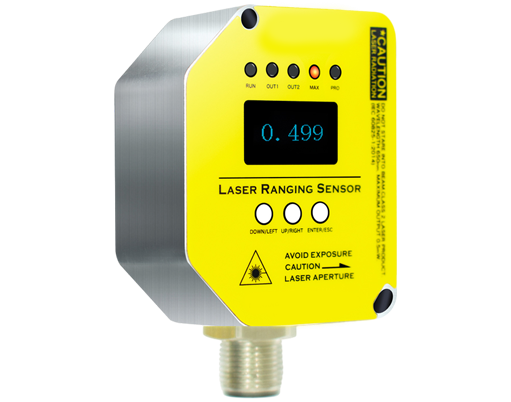
The electronic backbone is concurrently developed. This involves designing application-specific integrated circuits (ASICs) for signal processing, low-noise amplifiers for the receiving photodiodes, and robust communication interfaces (IO-Link, Ethernet/IP, etc.). The source factory's engineering team works on firmware that translates raw optical signals into stable, accurate digital readings. Environmental resilience is baked in at this stage, with components selected and tested for wide temperature ranges, resistance to vibration, and immunity to electromagnetic interference.
Quality assurance is not a final step but a philosophy woven into every process. From incoming material inspection using spectrometry and X-ray fluorescence to in-process testing of beam profiles and divergence angles, data is continuously collected. Each major sub-assembly undergoes functional testing in simulated environmental chambers, subjecting prototypes to thermal cycling, humidity, and shock tests. This relentless validation ensures that the sensors leaving the factory are not just functional but are built for longevity and stability in harsh industrial settings.
Innovation is the lifeblood of a leading source factory. Research and Development departments are focused on pushing boundaries. This includes work on new laser classes for different materials (e.g., blue lasers for copper welding inspection), developing time-of-flight (ToF) sensors with higher frame rates, or integrating artificial intelligence directly into the sensor's logic for edge computing and anomaly detection. Collaboration with university research labs and participation in international photonics consortia are common, ensuring the factory remains at the technological forefront.
The final integration and calibration phase is where the components become a cohesive system. Here, sensors are calibrated against international standards using precision reference gauges and stages. Parameters like linearity, repeatability, and resolution are logged and certified. The output is a calibrated laser sensor, ready for integration into larger machines but carrying with it the inherent quality and performance DNA imprinted at its source.
Ultimately, the laser sensor source factory is a testament to interdisciplinary engineering. It merges photonics, semiconductor physics, precision mechanics, and software engineering. For OEMs and system integrators, partnering with a factory that masters this vertical integration means securing a supply of core components defined by reliability, performance, and traceability. In an era demanding smarter and more precise automation, the strategic importance of these specialized manufacturing centers only continues to grow, illuminating the path forward from the very source.