In the realm of industrial automation and control systems, the 24V proximity sensor stands as a fundamental and ubiquitous component. Its primary function is to detect the presence or absence of an object within its sensing range without any physical contact. Operating on a standard 24 Volts Direct Current (VDC) power supply, which is the most common and safe voltage level in industrial environments, these sensors are the silent sentinels enabling precise, reliable, and maintenance-free operation in countless applications.
At its core, a 24V proximity sensor is a solid-state electronic device. Unlike mechanical limit switches, it has no moving parts that can wear out, leading to significantly longer service life and higher reliability. The sensing principle varies depending on the type. The most prevalent is the inductive proximity sensor, designed to detect metallic objects. It generates an oscillating electromagnetic field from its active face. When a conductive metal enters this field, it induces eddy currents within the target, causing a change in the oscillation amplitude. This change is detected by the sensor's internal circuitry, which then triggers a switching action in its output signal.
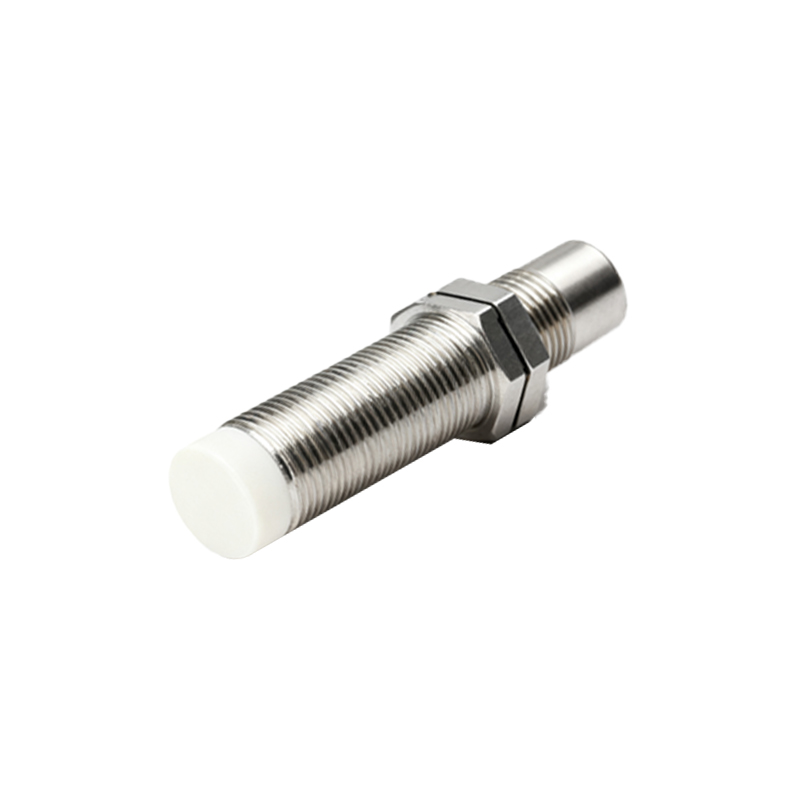
Another common type is the capacitive proximity sensor. These can detect both metallic and non-metallic materials, such as plastics, wood, liquids, and granular substances. They work by generating an electrostatic field. The presence of any material with a dielectric constant different from air alters the capacitance of this field, which is measured and converted into a switching output. For applications requiring detection of transparent objects or specific markings, diffuse reflective photoelectric sensors, also available in 24V versions, use a light beam and receiver.
The output of a 24V DC proximity sensor is typically a solid-state switch. The two main configurations are NPN (sinking) and PNP (sourcing). A PNP sensor switches the positive 24V line to the load, while an NPN sensor switches the negative or 0V line. The choice depends on the control system's input card requirements (e.g., PLCs). Furthermore, outputs can be normally open (NO) or normally closed (NC), defining the circuit state when no target is present. Many modern sensors feature short-circuit and reverse polarity protection, enhancing their robustness.
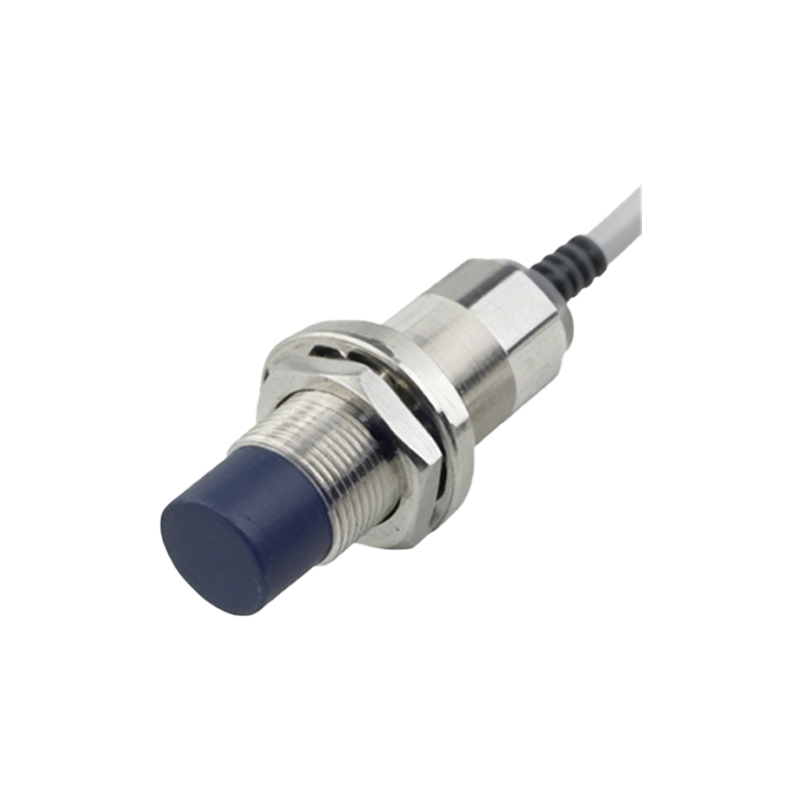
Key specifications define a sensor's suitability for an application. The sensing distance, or nominal range, is crucial and is specified for a standard target (usually mild steel for inductive types). It's vital to note that factors like target material, size, and shape can affect the actual sensing distance. The housing material, typically nickel-plated brass, stainless steel, or PBT plastic, determines environmental resistance to chemicals, oils, and physical impact. The protection rating, denoted by IP (Ingress Protection) codes like IP67 or IP69K, indicates the level of protection against dust and water, making them suitable for washdown areas or outdoor use. Switching frequency defines how many detection cycles per second the sensor can handle, a critical parameter for high-speed counting or positioning tasks.
The applications of 24V proximity sensors are vast and integral to modern manufacturing. They are used for simple object detection on conveyor lines, precise positioning of machine parts (e.g., in CNC machines or robotic arms), end-of-travel detection in actuators, high-speed counting of products, monitoring bin levels, and verifying the presence of tools or workpieces. Their non-contact nature makes them ideal for harsh environments with dust, moisture, or where physical contact could damage the target or the sensor itself.
When selecting a 24V proximity sensor, engineers must consider several factors: the material of the target object, the required sensing distance, the environmental conditions (temperature, exposure to contaminants), the required output type (PNP/NPN, NO/NC), the physical size and mounting style (threaded barrel, rectangular), and the necessary electrical protections. Proper installation is equally important; maintaining the correct gap from the target and adjacent metal surfaces (to avoid flanking interference) ensures optimal performance.
In summary, the 24V DC proximity sensor is a cornerstone of industrial sensing technology. Its reliability, longevity, and versatility, powered by the industry-standard 24VDC supply, make it an indispensable tool for automating processes, ensuring safety, and gathering critical data for control systems. From packaging machines to automotive assembly lines, these sensors provide the essential "eyes" for machines, enabling the seamless, efficient, and intelligent operation that defines modern industry.