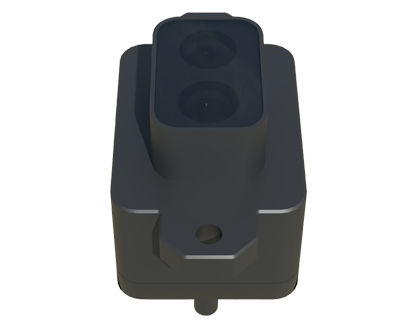
In the realm of industrial automation, robotics, and precision measurement, laser distance sensors have become indispensable tools. At the heart of many advanced sensor systems lies a critical component: the optical thin film. These microscopically thin, engineered layers deposited on sensor optics are not merely passive coatings; they are active enablers of performance, reliability, and miniaturization. This article delves into the pivotal role of thin film technology in modern laser distance sensors, exploring its principles, applications, and the trajectory of future innovation.
The fundamental operation of a laser distance sensor, whether based on time-of-flight (ToF), triangulation, or interferometric principles, relies on the precise emission, reflection, and detection of a laser beam. Any loss, distortion, or contamination of this optical signal directly compromises accuracy. This is where thin films come into play. Applied through sophisticated processes like physical vapor deposition (PVD) or chemical vapor deposition (CVD), these films are designed with specific optical properties. The most common and crucial function is anti-reflection (AR) coating. By depositing multiple layers of dielectric materials with precisely calculated thicknesses—often at a scale of nanometers—thin film engineers can drastically reduce surface reflections at the laser's specific wavelength. For a sensor, this means more laser power is transmitted from the emitter and more reflected light is captured by the detector, enhancing signal-to-noise ratio and extending the effective measurement range.
Beyond AR coatings, thin films serve as robust protective barriers. Sensor optics operating in harsh industrial environments are exposed to dust, moisture, chemical vapors, and physical abrasion. A durable, hydrophobic thin film coating can shield delicate optical surfaces from contamination and corrosion, ensuring long-term stability and reducing maintenance needs. Furthermore, specific thin film designs can act as spectral filters. In environments with strong ambient light, a narrowband pass filter coating, tuned exactly to the sensor's laser wavelength, can be applied to the detector window. This film selectively transmits the laser signal while blocking a vast majority of ambient light interference, allowing the sensor to function reliably even under bright sunlight or in the presence of other light sources.
The drive towards miniaturization and integration in sensor design is heavily dependent on thin film advancements. Traditional discrete optics are giving way to integrated photonic circuits and micro-electro-mechanical systems (MEMS). In these platforms, thin films are not just coatings but are integral structural and functional elements. They can form waveguides, mirrors, and even active components on a chip-scale sensor. This integration leads to sensors that are smaller, lighter, more power-efficient, and potentially lower in cost, opening doors for applications in consumer electronics, advanced driver-assistance systems (ADAS), and compact robotic vision systems.

Looking ahead, the evolution of thin films for laser distance sensors is intertwined with broader material science and nanotechnology trends. Researchers are exploring novel materials like metamaterials—artificial structures with optical properties not found in nature—to create ultra-thin films with exceptional capabilities, such as perfect absorption or extreme angle-of-incidence tolerance. Another promising area is the development of "smart" functional films that can adapt to environmental changes or even perform self-cleaning. As laser sensors push into new frontiers like quantum sensing or ultra-high-precision metrology for semiconductor manufacturing, the demands on thin film performance—in terms of uniformity, low scatter, and thermal stability—will become even more stringent.
In conclusion, thin film technology is a cornerstone of contemporary laser distance sensor engineering. It transcends the basic role of a coating to become a fundamental performance multiplier. From enhancing optical efficiency and ensuring environmental resilience to enabling groundbreaking miniaturization, these engineered layers are critical for achieving the high levels of precision, reliability, and versatility demanded by today's automated and intelligent systems. The continued innovation in thin film design and deposition techniques will undoubtedly catalyze the next generation of even more capable and ubiquitous laser sensing solutions.