In the realm of precision measurement and industrial automation, laser displacement sensors have emerged as indispensable tools. These devices offer non-contact, high-speed, and highly accurate measurement capabilities, making them vital across numerous sectors including manufacturing, robotics, automotive, and aerospace. This article delves into the fundamental principles, key applications, and critical factors for selecting the right laser displacement sensor for specific needs.
At its core, a laser displacement sensor operates on the principle of optical triangulation. The sensor projects a focused laser beam onto the target surface. The reflected light from this point is then captured by a receiving lens and focused onto a position-sensitive detector, typically a CCD or CMOS array. Any change in the distance to the target causes a shift in the position of the reflected light spot on the detector. By precisely calculating this shift, the sensor's internal processor determines the displacement or distance with remarkable accuracy. This method allows for measurements that are immune to the wear and tear associated with physical contact probes, ensuring longevity and consistency.
The advantages of using laser displacement sensors are manifold. Firstly, they provide exceptional resolution, often down to the sub-micron level, enabling detection of minute variations. Secondly, their high sampling speed, sometimes exceeding 100 kHz, allows for real-time monitoring of fast-moving objects on production lines. Furthermore, their non-contact nature is crucial for measuring delicate, soft, or hot surfaces that could be damaged or deformed by tactile methods. This characteristic also eliminates the risk of sensor tip wear, reducing maintenance costs.
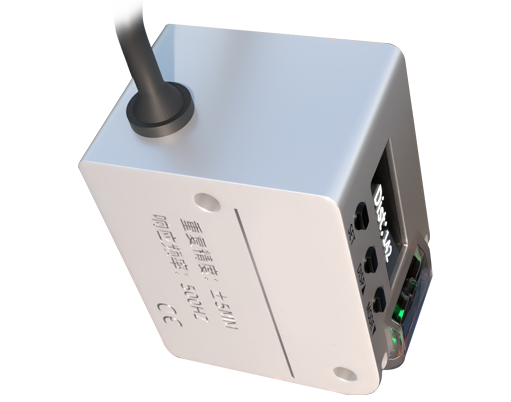
The applications of these sensors are vast and varied. In automotive manufacturing, they are used for precise gap and flush measurement between body panels, ensuring quality and aesthetic standards. In the electronics industry, they verify the coplanarity of chip leads and the thickness of wafer substrates. Robotics heavily relies on them for guidance, positioning, and obstacle detection. In metal processing, they monitor thickness, vibration, and deformation. Even in consumer goods, they inspect packaging dimensions and fill levels. The versatility of laser displacement sensors continues to expand with technological advancements.
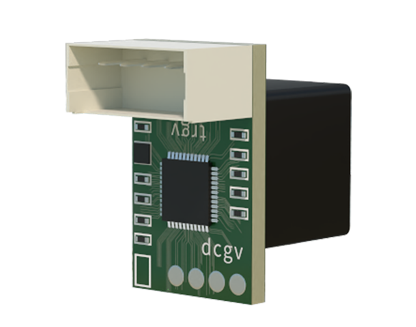
When selecting a laser displacement sensor, several key parameters must be considered to ensure optimal performance. The measurement range defines the minimum and maximum distances over which the sensor can operate accurately. The stand-off distance is the nominal working distance from the sensor head to the target. Resolution indicates the smallest detectable change in distance, while linearity reflects the accuracy across the entire measurement range. The spot size of the laser is critical for measuring small features or textured surfaces. Sampling speed must match the application's dynamics. Environmental factors such as ambient light, temperature fluctuations, and the target's surface properties (color, reflectivity, material) also significantly influence sensor choice. For instance, a highly reflective or transparent surface may require a sensor with specialized algorithms or a different wavelength to ensure reliable readings.
Modern laser displacement sensors often come equipped with advanced features. Analog and digital outputs (like 4-20mA, 0-10V, Ethernet, or RS-232) facilitate easy integration into control systems. Programmable logic and multi-point measurement functions enhance flexibility. Some models offer "teach" functions for easy setup. The choice between a red laser (common, visible) and a blue laser (better for certain materials like copper or organic surfaces) is another consideration.
In conclusion, laser displacement sensors are powerful instruments that bridge the gap between physical dimensions and digital control data. Their ability to deliver precise, rapid, and reliable measurements without contact makes them a cornerstone of modern industrial quality control and automation processes. A thorough understanding of their operating principles, coupled with a careful evaluation of application requirements against sensor specifications, is essential for harnessing their full potential and driving efficiency, quality, and innovation in any technical field.