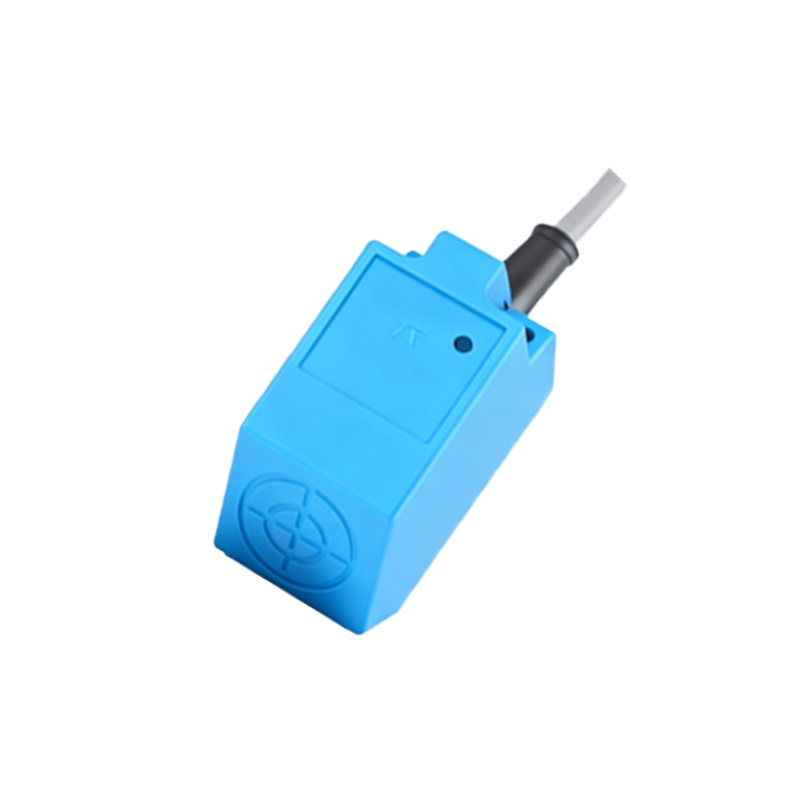
In the intricate world of industrial automation, where precision and reliability are paramount, the 5mm proximity sensor stands as a critical, albeit compact, component. These non-contact sensing devices are engineered to detect the presence or absence of metallic objects within a very short range, typically up to their nominal sensing distance. The "5mm" specification refers to this nominal sensing distance, making these sensors ideal for applications requiring detection in tight, confined spaces where larger sensors cannot be accommodated. This guide delves into the technology, types, selection criteria, and practical applications of 5mm proximity sensors.
The fundamental operating principle of most 5mm proximity sensors is based on electromagnetic induction. These inductive proximity sensors generate a high-frequency oscillating electromagnetic field from their active face. When a metallic target, typically ferrous (like iron or steel) or non-ferrous (like aluminum, brass, or copper), enters this field, eddy currents are induced on the surface of the target. This causes a change in the oscillation amplitude, which is detected by the sensor's internal circuitry. This change triggers a solid-state output switch, signaling the presence of the object. The 5mm sensing distance is precisely calibrated and guaranteed for standard targets, usually a square of mild steel (Fe360) of a specified thickness. It's crucial to note that the effective sensing distance can vary with different metals; for instance, aluminum may reduce the sensing distance to approximately 40-60% of the nominal value due to its lower conductivity and permeability.
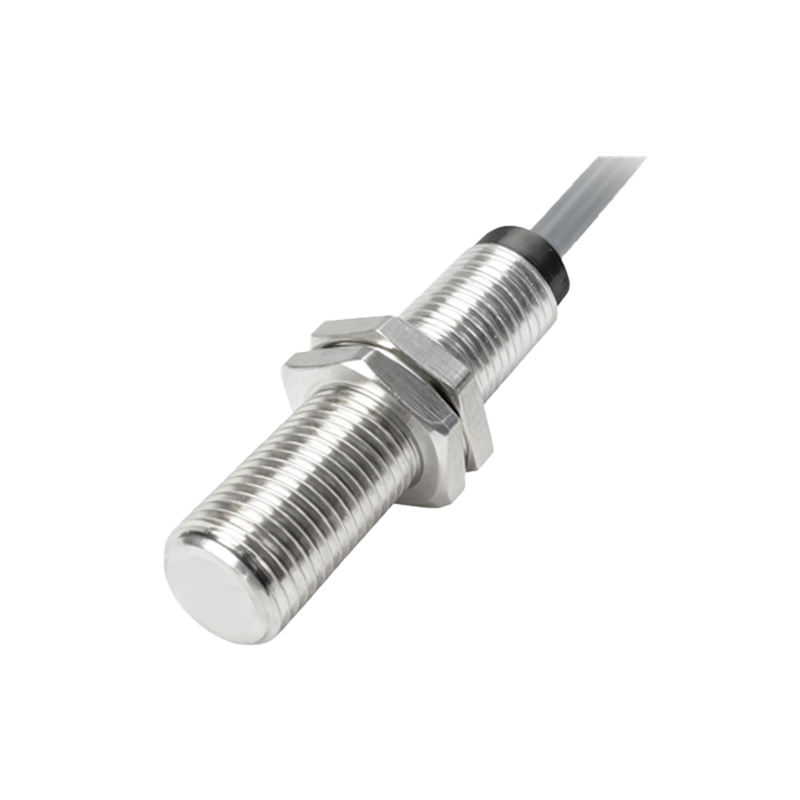
Beyond the common inductive type, 5mm sensors are also available in capacitive variants. Capacitive proximity sensors can detect both metallic and non-metallic materials, such as plastics, liquids, powders, and glass, by sensing changes in capacitance. However, for purely metallic target detection in industrial environments, inductive sensors are overwhelmingly preferred due to their superior immunity to environmental factors like dust, oil, and moisture, and their high switching frequency.
Key specifications for a 5mm proximity sensor extend far beyond its sensing range. The housing material, often nickel-plated brass, stainless steel, or PBT plastic, determines its resistance to chemicals, impacts, and temperature extremes. The electrical output is another critical factor. Common outputs include DC 3-wire configurations (NPN or PNP transistor outputs) and 2-wire AC/DC versions. NPN (sinking) and PNP (sourcing) outputs must be correctly matched with the controller's input card (e.g., PLC). The operating voltage range, current rating, switching frequency (how many on/off cycles per second), and protection standards like IP67 (dust-tight and protected against temporary immersion) or IP69K (high-pressure, high-temperature washdown protection) are all essential selection parameters.
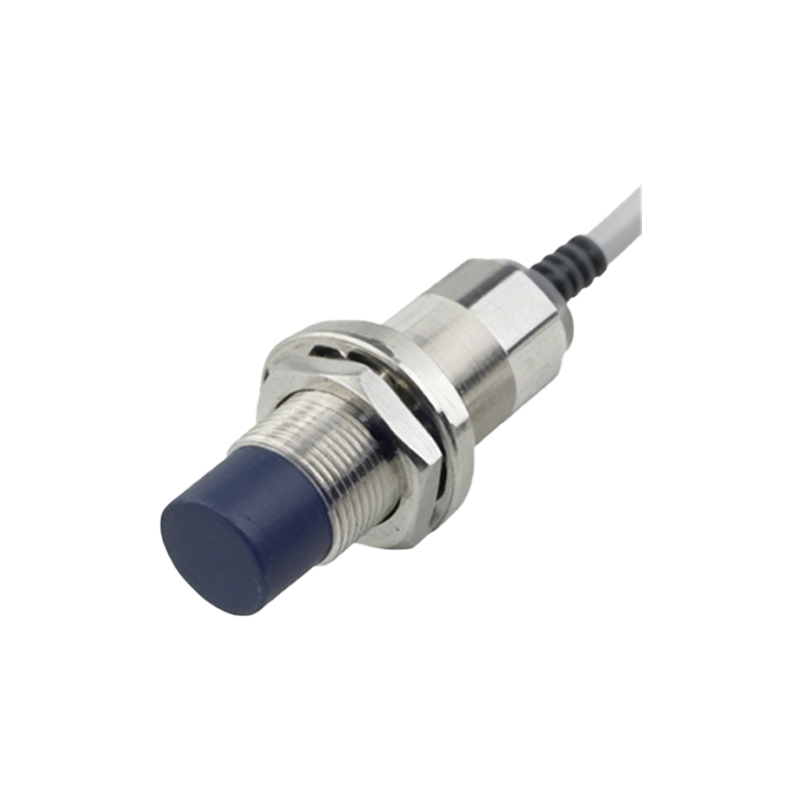
The application spectrum for 5mm proximity sensors is vast and integral to modern manufacturing. They are frequently deployed for precise position verification. For example, confirming a cylinder piston has fully retracted or extended in a pneumatic system, detecting the presence of a tiny metal part on a high-speed assembly line, or verifying the correct seating of a component in a fixture. In packaging machinery, they count metallic items on a conveyor. In CNC machining centers, they serve as tool presence detectors or limit switches for axis movement. Their small size allows them to be embedded directly into mechanical fixtures, molds, and robotic end-effectors, providing real-time feedback without physical contact, thereby eliminating mechanical wear and enabling high-speed operation.
Installation and environmental considerations are vital for optimal performance. The sensor must be mounted securely to prevent vibration-induced false signals. A fundamental rule is to maintain adequate clearance from surrounding metal objects (the "flush-mountable" feature of many cylindrical sensors helps here) to avoid shielding effects that can reduce the effective sensing distance. While inductive sensors are robust, extreme temperatures, strong electromagnetic fields from welding equipment, or direct exposure to cutting fluids can affect performance. Selecting a sensor with an appropriate housing rating and, if necessary, a built-in surge protector for DC models or a snubber circuit for AC models, enhances longevity.
In conclusion, the 5mm proximity sensor is a masterpiece of miniaturized engineering that delivers macro-level impact on automation efficiency. Its role in enabling precise, reliable, and maintenance-free object detection in space-constrained applications is irreplaceable. When selecting a 5mm sensor, engineers must carefully balance the requirements for sensing distance (considering target material), output type, environmental durability, and physical size. By understanding these core principles and specifications, automation professionals can leverage these powerful devices to build more responsive, accurate, and resilient industrial systems, ensuring seamless operation from the smallest assembly cell to the largest production floor.