In modern industrial environments, accurate temperature measurement is critical for ensuring process efficiency, product quality, and operational safety. Among the various technologies available, laser-based temperature sensors have emerged as a sophisticated solution for non-contact, high-precision thermal monitoring. These sensors utilize the principles of infrared radiation and laser targeting to measure temperature from a distance, making them ideal for applications where direct contact is impractical or hazardous.
Laser temperature sensors operate by emitting a low-power laser beam to pinpoint the exact measurement spot on a target surface. The sensor then detects the infrared energy radiated from that spot, converting it into an accurate temperature reading. This method allows for measurements of moving objects, extremely hot surfaces (such as molten metals or high-temperature reactors), or components in electrically noisy environments without interference. Advanced models incorporate features like adjustable emissivity settings, which account for the surface characteristics of different materials, ensuring readings are not skewed by reflectivity or material composition.
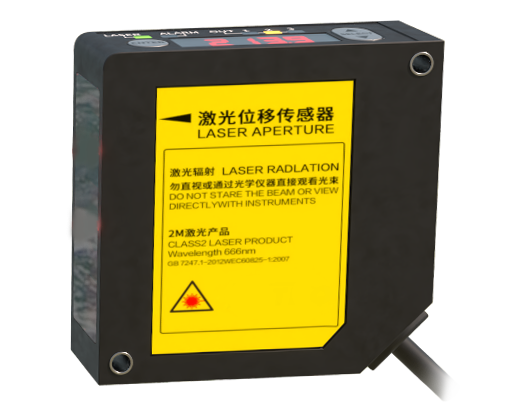
The advantages of laser temperature sensors are numerous. They offer rapid response times, often in milliseconds, enabling real-time monitoring and control in dynamic processes. Their non-contact nature eliminates the risk of contamination or damage to both the sensor and the target, extending equipment lifespan. Furthermore, these sensors can measure small or hard-to-reach areas with high spatial resolution, thanks to the focused laser spot. Industries such as metallurgy, semiconductor manufacturing, automotive, and aerospace rely on these sensors for critical tasks like monitoring furnace temperatures, inspecting electronic components, or controlling thermal treatments.

When selecting a laser temperature sensor, engineers must consider factors like temperature range, spectral response, optical resolution, and environmental conditions. For instance, sensors with shorter wavelengths are suitable for measuring high-temperature metals, while longer wavelengths may be better for plastics or organic materials. Integration with industrial automation systems is also streamlined through standard communication protocols like 4-20 mA outputs, Ethernet, or wireless interfaces, allowing seamless data logging and process adjustments.
Despite their benefits, challenges exist, such as ensuring proper alignment and avoiding interference from ambient light or steam. Regular calibration and adherence to manufacturer guidelines are essential for maintaining accuracy. Ongoing advancements in laser technology and signal processing continue to enhance sensor performance, with developments in multi-wavelength pyrometry and AI-driven analytics pushing the boundaries of precision.
In conclusion, laser temperature sensors represent a pivotal innovation in industrial thermometry, combining non-contact measurement with exceptional accuracy and versatility. As industries evolve towards smarter, more automated operations, these sensors will play an increasingly vital role in optimizing thermal management and driving operational excellence.