Metal proximity sensors are indispensable components in modern industrial automation, playing a critical role in enhancing efficiency, safety, and reliability. These non-contact devices detect the presence or absence of metallic objects without any physical touch, making them ideal for harsh, dirty, or high-speed environments where mechanical switches would fail. Their applications span across diverse sectors, including automotive manufacturing, packaging, material handling, and machine tooling, where they perform tasks such as object counting, position verification, limit switching, and speed monitoring.
The core function of a metal proximity sensor is to generate an electromagnetic field and react to changes caused by a metallic target entering its detection range. When a metal object approaches the active face of the sensor, it induces eddy currents on the metal's surface. These eddy currents absorb energy from the sensor's oscillating circuit, causing a change in its amplitude. This amplitude shift is detected by the sensor's internal circuitry, which then triggers a solid-state output signal—typically switching a load like a PLC input, relay, or indicator lamp. The key advantage is the complete absence of moving parts, leading to virtually infinite operational life, high switching speeds, and resistance to vibration and contamination.
Delving into the principle, most industrial metal proximity sensors operate on the inductive sensing principle. The primary components include an oscillator coil, a ferrite core, a detection circuit, and an output stage, all housed in a robust casing. The oscillator generates a high-frequency alternating magnetic field that radiates from the sensor's face. In the absence of a target, the oscillator runs at a constant amplitude. As a conductive metal object enters this field, the electromagnetic induction phenomenon causes eddy currents to circulate within the target. These currents create their own opposing magnetic field, which loads the oscillator coil. This loading effect results in a measurable energy loss (damping) or a change in the oscillation frequency.
The sensor's detection circuit, often a Schmitt trigger or a specialized IC, continuously monitors this oscillation state. Once the damping or frequency shift exceeds a predefined threshold—corresponding to the sensor's nominal sensing distance (Sn)—the circuit activates the output transistor. For a normally open (NO) sensor, the output switches ON (closes). The point at which the sensor reliably detects the standard target is its rated operating distance. It is crucial to note that the actual sensing distance can vary slightly depending on the target metal's properties; for instance, steel is detected at the nominal distance, while metals like aluminum or copper, due to lower resistivity, are detected at a reduced range (often 60-70% of Sn). This factor is specified as a reduction factor in datasheets.
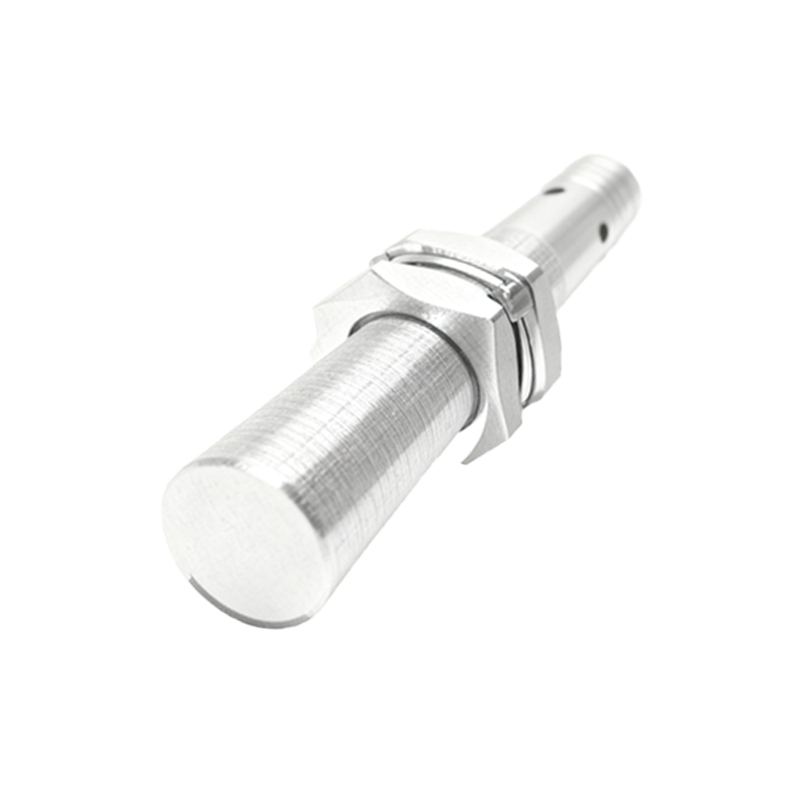
A practical diagram would illustrate these stages: 1) Standby State: The oscillator's magnetic field is stable; output is OFF. 2) Target Approach: A metal object enters the field, inducing eddy currents. 3) Detection Point: Eddy current damping reaches the trigger threshold. 4) Output Activation: The internal circuit switches the solid-state output (NPN or PNP) to ON state. 5) Target Departure: The object moves away, damping decreases below the release threshold, and the output resets to OFF.
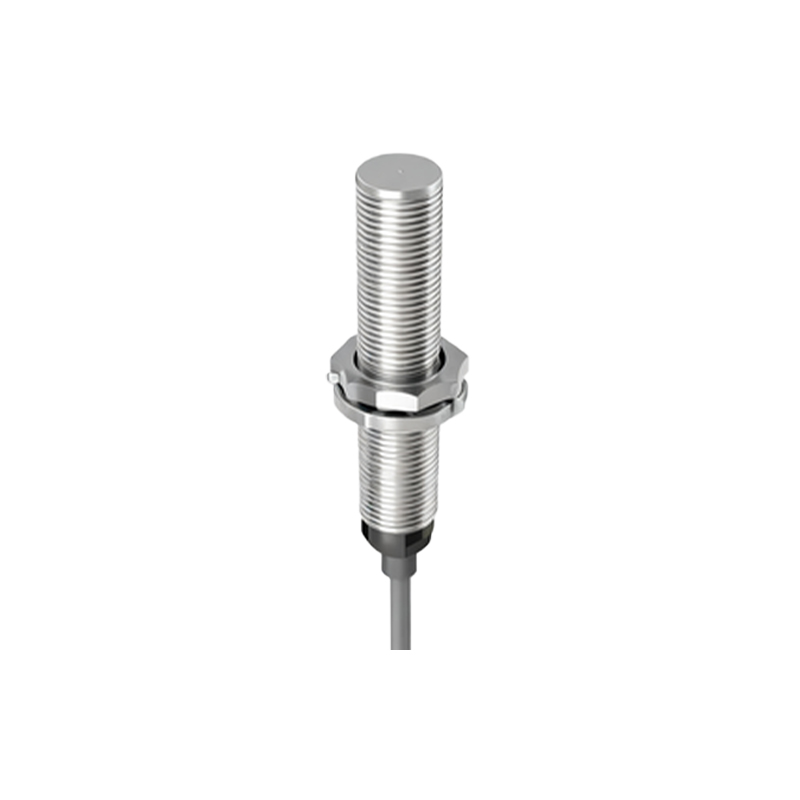
Beyond standard inductive sensors, specialized variants exist. All-Metal sensors are tuned to detect all types of metals with a more consistent sensing distance. Factor-1 sensors are specifically calibrated for non-ferrous metals like aluminum. Furthermore, Shielded (flush-mountable) sensors have a shielded magnetic field, allowing installation flush with metal surfaces without false triggering, while Unshielded (non-flush) sensors offer a longer sensing range but require a non-metallic surround for installation.
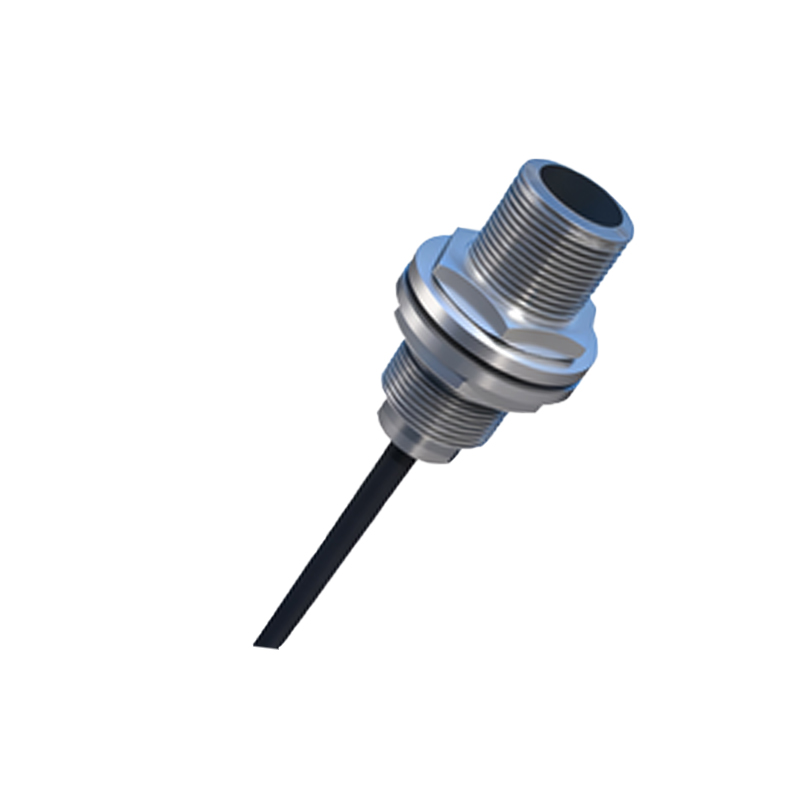
Selection and application require careful consideration of several parameters: the required sensing distance, the target metal type and size (which should be equal to or larger than the sensor's face), the operating voltage (commonly 10-30V DC or 20-250V AC), output type (NPN sinking, PNP sourcing, or analog), and environmental factors like temperature, IP rating, and potential exposure to cutting fluids or metallic dust. Proper installation is key; maintaining the correct gap between shielded sensors and adjacent metal, and ensuring stable power supplies with protection against surge and short circuits, guarantees optimal performance.
In summary, metal proximity sensors are the silent sentinels of automation. By harnessing the principles of electromagnetic induction and eddy currents, they provide a robust, wear-free solution for precise metallic object detection. Understanding their operational principles, as illustrated, empowers engineers to select, integrate, and maintain these sensors effectively, ensuring seamless and reliable operation in complex industrial systems. Their role in enabling just-in-time processes, preventing collisions, and providing essential feedback is foundational to the advancement of smart manufacturing and Industry 4.0 initiatives.