In the world of automation and smart technology, proximity sensors are the silent, unseen heroes. These devices detect the presence or absence of an object within a specific range without any physical contact. Their ability to perform reliably in harsh environments, provide high-speed response, and offer long operational life has made them indispensable across countless industries. From the smartphone in your pocket that turns off the display during a call to the complex robotic assembly lines in automotive manufacturing, proximity sensors are everywhere.
At their core, proximity sensors work by emitting an electromagnetic field or a beam of radiation and then looking for changes in the field or return signal. The object being detected is often referred to as the sensor's "target." The specific technology employed defines the sensor's characteristics, leading to several primary types.
Inductive proximity sensors are perhaps the most common type. They generate an oscillating electromagnetic field. When a metallic target enters this field, it induces eddy currents within the target, which causes a change in the oscillation amplitude. This change is detected by the sensor's circuitry, triggering an output signal. These sensors are exceptionally robust, ideal for industrial environments, and can only detect metals, primarily ferrous metals like steel and iron. Capacitive proximity sensors, on the other hand, can detect both metallic and non-metallic targets such as liquids, plastics, wood, and granules. They function by generating an electrostatic field. Any target that enters this field alters the capacitance of the sensor's circuit, leading to detection. This makes them perfect for applications like liquid level sensing, material handling, and detecting filled vs. empty containers.
Photoelectric sensors use light, typically infrared, to detect objects. They consist of an emitter (light source) and a receiver. There are three main configurations: through-beam, retro-reflective, and diffuse. Through-beam models have separate emitter and receiver units; an object is detected when it breaks the light beam. They offer the longest sensing ranges. Retro-reflective types house the emitter and receiver together, using a reflector to bounce the light back; detection occurs when the beam is interrupted. Diffuse sensors, also with combined components, detect light reflected directly off the target itself. Photoelectric sensors are versatile for detecting a wide variety of materials but can be affected by environmental factors like dust, fog, or color variations.
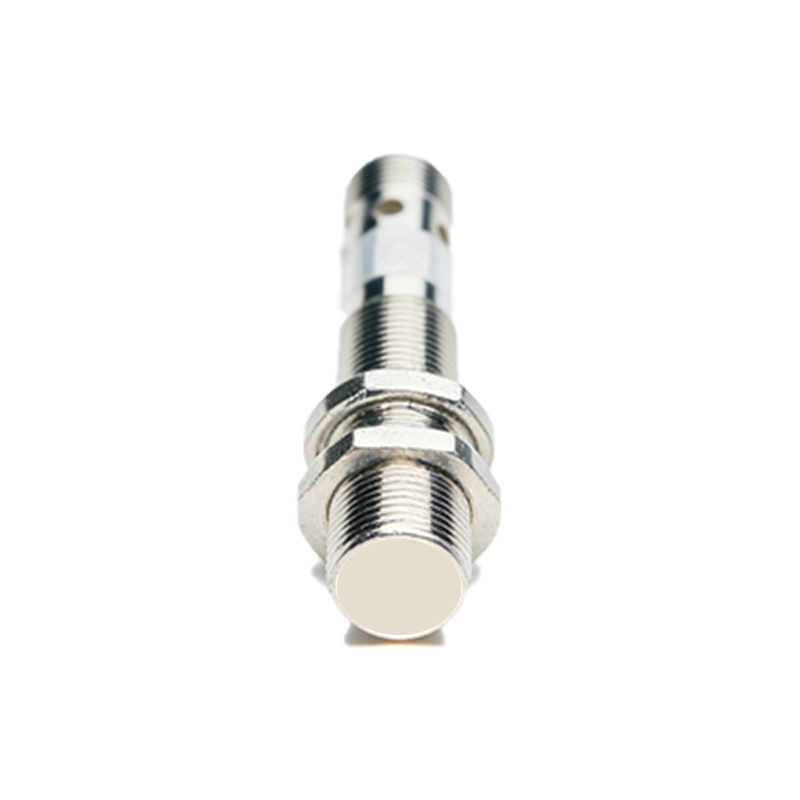
Ultrasonic proximity sensors operate similarly to sonar. They emit high-frequency sound waves and evaluate the echo received back. The time lapse between sending the signal and receiving the echo is calculated to determine the distance to the target. These sensors are excellent for detecting objects of any material, shape, or color, and are particularly useful for distance measurement, level control of bulk materials, and transparent object detection. Finally, magnetic proximity sensors, often called reed switches, are simple devices activated by the presence of a permanent magnet. They are highly reliable for position sensing in safety applications, such as door and window sensors in security systems.
The applications of proximity sensors are vast and varied. In the automotive industry, they are used for position sensing, robotic welding, and part detection on assembly lines. In consumer electronics, they manage touchscreen behavior and power saving. In food and beverage processing, capacitive sensors monitor levels of liquids and powders. In packaging, photoelectric sensors count products and verify label placement. In material handling and logistics, they control conveyor systems and manage warehouse automation. Their role in enabling the Internet of Things (IoT) and smart factories is also growing exponentially, providing critical data for predictive maintenance and process optimization.
Selecting the right proximity sensor requires careful consideration of several factors. First, identify the target material (metal, plastic, liquid), as this dictates whether inductive, capacitive, or another type is needed. Second, consider the required sensing range or distance. Third, evaluate the operating environment—factors like temperature extremes, presence of chemicals, water (IP rating), and electrical noise are crucial. Fourth, the output type (e.g., NPN, PNP, analog, IO-Link) must be compatible with the control system. Finally, physical characteristics like size, shape, and mounting style (flush or non-flush for inductive) play a significant role in integration. Consulting with sensor specialists and reviewing detailed datasheets is always recommended for critical applications.
In conclusion, proximity sensors form a fundamental layer of modern sensing technology. Understanding their different operating principles—inductive, capacitive, photoelectric, ultrasonic, and magnetic—is key to leveraging their full potential. By matching the sensor type to the specific application requirements regarding target, environment, range, and output, engineers and designers can build more efficient, reliable, and intelligent systems. As technology advances, these sensors continue to become smaller, smarter, and more integrated, paving the way for further innovations in automation and beyond.
SEO