In industrial automation and machinery design, proximity switches play a critical role in non-contact detection and position sensing. Selecting the correct proximity switch model is paramount for ensuring system reliability, safety, and efficiency. This guide provides a detailed overview of the primary types, key specifications, and practical considerations for choosing the right model for your application.
The fundamental principle behind a proximity switch is its ability to detect the presence or absence of a target object without physical contact. It does this by emitting an electromagnetic field, light beam, or ultrasonic signal. A change in this field or the return signal, caused by a nearby target, is converted into an electrical output signal. This non-contact operation eliminates mechanical wear and tear, allowing for high-speed operation and long service life.
Proximity switches are primarily categorized by their sensing technology. The most common models include:
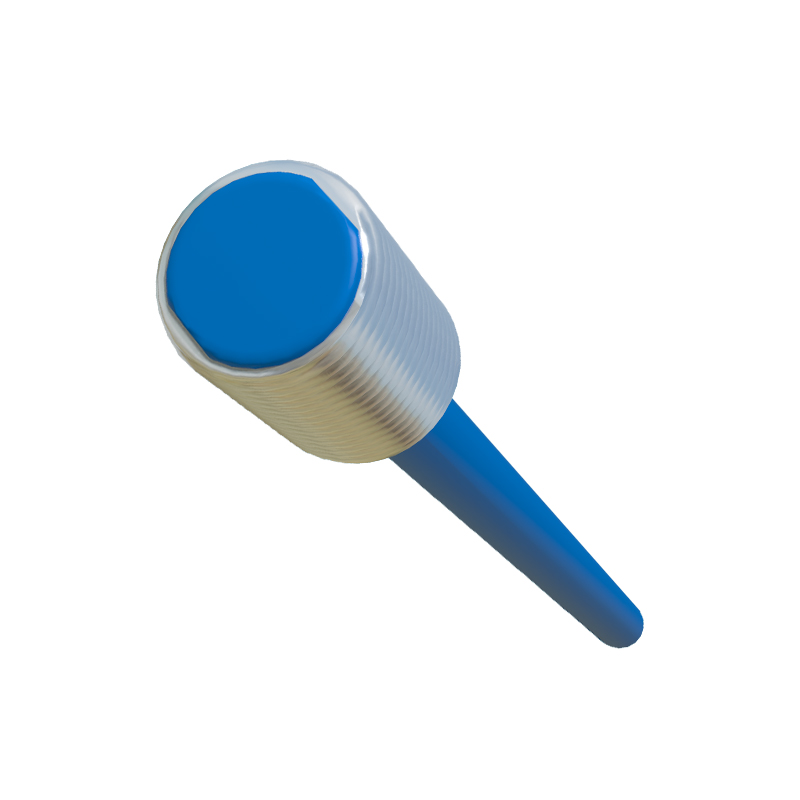
Inductive Proximity Switches: These are the workhorses of metal detection. They generate an oscillating electromagnetic field. When a metallic target enters this field, it induces eddy currents, causing a change in oscillation amplitude that triggers the switch. Models are available for detecting ferrous metals (like iron and steel) and non-ferrous metals (like aluminum, copper, and brass). Key specifications include sensing distance, which is typically standardized (e.g., 2mm, 5mm, 8mm, 10mm) and often rated for mild steel. Shielded (flush-mountable) models have a shorter, more focused sensing range and can be installed flush with metal surfaces. Unshielded (non-flush) models offer a longer sensing range but require clearance around the sensor.
Capacitive Proximity Switches: These sensors can detect both metallic and non-metallic materials, such as liquids, plastics, glass, wood, and granules. They function by generating an electrostatic field. Any object with a dielectric constant different from air will alter the capacitance of the field, triggering the switch. This makes them ideal for level detection in tanks (liquid or powder), material handling, and detecting non-metallic objects on conveyor belts. Their sensing distance can be influenced by the material's density and dielectric properties.
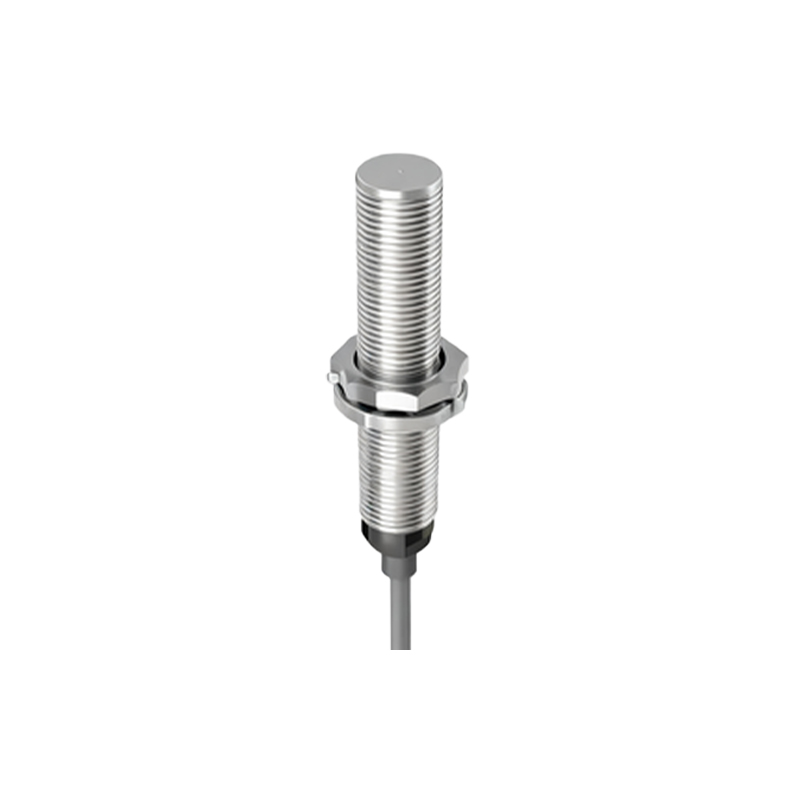
Photoelectric Proximity Switches: Utilizing a light beam (usually infrared, red, or laser), these switches offer the longest sensing ranges, from a few centimeters up to several meters. They are classified by their operating mode. Through-beam models consist of a separate emitter and receiver; detection occurs when the beam is broken. Retro-reflective models use a single unit and a reflector; the target breaks the beam reflected back. Diffuse (proximity) models detect the target by the reflection of its own emitted light. They are excellent for detecting objects of any material, color sensing, and long-range applications.
Ultrasonic Proximity Switches: These sensors emit high-frequency sound waves and evaluate the echo received back. They can detect solid objects and liquids regardless of color, transparency, or material. They are particularly useful for distance measurement, level control of bulk materials or liquids, and detecting transparent objects that photoelectric sensors might miss.
When selecting a model, several critical parameters must be evaluated beyond the basic type:
Sensing Distance (Sn): The nominal operating distance at which the switch is guaranteed to activate. Always consider a safety factor (derating) of 10-20% for reliable operation under varying conditions like temperature fluctuations and supply voltage tolerance.
Output Configuration: This defines the electrical switching element inside the sensor. Common types include NPN (sinking) and PNP (sourcing) transistor outputs for DC models, which are crucial for compatibility with your PLC (Programmable Logic Controller) or control system. Relay outputs are also available for AC/DC switching.
Housing Material and Design: The enclosure must withstand the environmental conditions. Common materials are nickel-plated brass, stainless steel (for corrosive or washdown environments), and PBT or PVC plastic. Form factors include cylindrical barrels (e.g., M8, M12, M18, M30 threaded barrels), rectangular, and limit-switch style housings.
Connection Type: Choices include pre-wired cables (with PUR or PVC sheathing), quick-disconnect (QD) connectors (like M12 connectors for easy replacement), and terminal boxes.
Environmental Ratings: The Ingress Protection (IP) rating (e.g., IP67, IP69K) indicates protection against dust and water. Temperature range, resistance to chemicals, oils, and welding spatter are also vital for harsh industrial environments.
Special Features: Some models offer advanced functions like analog output for distance proportionality, IO-Link communication for smart sensor data exchange, short-circuit and overload protection, and weld-field immunity for use near welding equipment.
Application examples highlight the importance of