Proximity sensors are fundamental components in modern technology, operating silently yet effectively in countless devices we interact with daily. This demonstration aims to illuminate their core principles, showcase their functionality, and explore their diverse real-world applications. Unlike simple touch-based switches, proximity sensors detect the presence or absence of an object within a specified range without any physical contact. This non-contact operation is key to their reliability, durability, and versatility.
The core working principle revolves around emitting a field or beam of electromagnetic radiation, such as infrared light, ultrasonic waves, or an electromagnetic field. The sensor then monitors for changes in this field. When an object enters the detection zone, it alters the field's properties—by reflecting light, absorbing energy, or disturbing the magnetic flux. The sensor's circuitry detects this change and triggers an output signal, typically switching a circuit on or off. For instance, in an inductive proximity sensor, a high-frequency oscillating electromagnetic field is generated at the sensing face. When a metallic object enters this field, eddy currents are induced in the object, causing a measurable drop in the oscillation amplitude, which the sensor detects.
A practical demonstration clearly illustrates this. Consider a common infrared (IR) reflective proximity sensor. It consists of an IR LED emitter and a phototransistor receiver placed side-by-side. In its idle state, the emitted IR light travels outward and dissipates. When an object, like a hand, is brought near the sensor face, the IR light reflects off the object's surface and strikes the phototransistor. The receiver converts this light signal into an electrical current, signaling the presence of the object. The detection range can be a few millimeters to several centimeters, depending on the sensor's design and the object's reflectivity. Another demo involves an inductive sensor and a small metal screw. The sensor remains inactive when a non-metallic object like a plastic bottle or a piece of wood passes by. However, the moment the metal screw comes within range, the sensor's output LED immediately lights up, and its signal pin changes state.
The applications of this technology are vast and critical. In the automotive industry, proximity sensors are integral to parking assist systems, detecting obstacles near the vehicle's bumper and providing audible or visual warnings to the driver. They are also used for seat occupancy detection to control airbag deployment. In consumer electronics, perhaps the most familiar example is in smartphones and tablets, where a proximity sensor (often IR-based) detects when the phone is held to the ear during a call. It then automatically turns off the touchscreen display to prevent accidental cheek presses and conserves battery power.
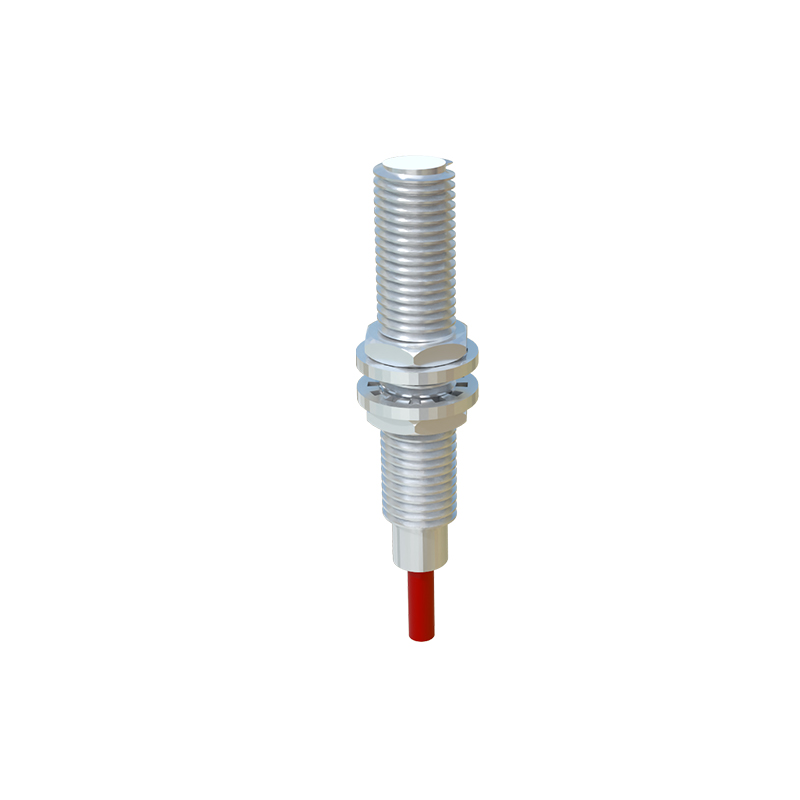
Industrial automation heavily relies on these sensors for precise, non-contact object detection on assembly lines. They count products, verify the position of machine parts, and ensure robotic arms operate safely by detecting human intrusion into restricted zones. Capacitive proximity sensors, which can detect non-metallic materials like liquids, wood, or plastics, are used in liquid level detection in tanks and material handling. In the realm of home appliances, they enable touchless faucets and soap dispensers, promoting hygiene, and are found in automatic doors at supermarkets and airports, providing convenience and accessibility.
When selecting a proximity sensor for a specific task, several factors must be considered. The sensing range, or the maximum distance at which the sensor can reliably detect a standard target, is paramount. The nature of the target material—metal, plastic, liquid, or even a human body—determines whether an inductive, capacitive, ultrasonic, or photoelectric sensor is appropriate. Environmental conditions like dust, moisture, or temperature extremes also influence the choice, with many industrial sensors boasting robust, sealed housings with an Ingress Protection (IP) rating. Finally, the output type, such as a simple digital on/off signal (PNP or NPN) or an analog signal proportional to distance, must match the requirements of the controlling system, like a Programmable Logic Controller (PLC) or a microcontroller.

In conclusion, proximity sensors are indispensable enablers of automation, safety, and user-friendly interfaces. From the smartphone in your pocket to the massive robotic arms in a factory, their ability to detect presence without contact makes systems smarter, more efficient, and more reliable. This demonstration of their basic operation underscores the elegant simplicity of the underlying physics, which engineers have harnessed to create solutions for an enormous spectrum of technological challenges. Understanding their function is the first step in innovating new applications that will continue to shape our interaction with machines and the environment.