In the world of industrial automation and smart devices, a small but mighty component works silently to detect presence, measure distance, and trigger actions without any physical contact. This component is the proximity sensor switch. Unlike mechanical limit switches that require a physical bump or press, proximity sensors perform their duty through invisible fields, offering reliability, speed, and longevity that are critical for modern systems.
At its core, a proximity sensor is a non-contact device designed to detect the presence or absence of an object within its sensing range. It does this by emitting an electromagnetic field, beam, or radiation and then looking for changes in the field or return signal. The primary advantage is the elimination of wear and tear associated with mechanical contact, leading to virtually infinite operational life in many applications. These sensors are ubiquitous, found in factory assembly lines, automotive systems, consumer electronics, and safety installations.
The technology behind these sensors is diverse, leading to several main types, each with unique principles and ideal use cases.
Inductive proximity sensors are perhaps the most common in industrial settings. They generate an oscillating electromagnetic field. When a metallic object enters this field, it induces eddy currents within the object, which in turn dampens the sensor's oscillation amplitude. This change is detected, and the sensor's output switch is triggered. They are exceptionally reliable for detecting metals like steel, aluminum, or copper, but are ineffective for non-metallic materials. Typical applications include machine tooling, position verification of metal parts, and rotary speed monitoring.
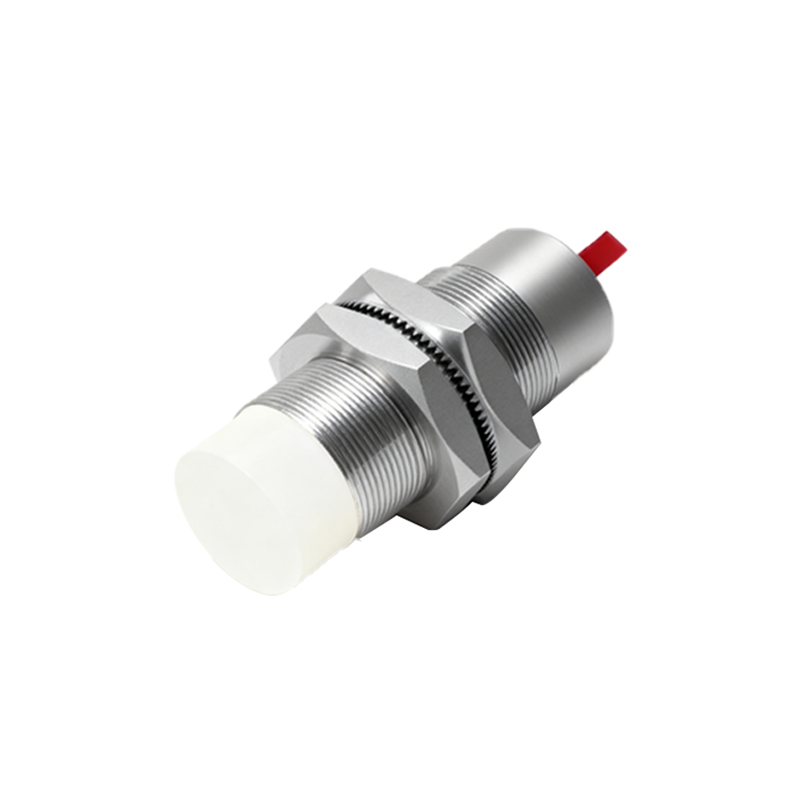
Capacitive proximity sensors operate on a different principle. They can detect both metallic and non-metallic objects—liquids, plastics, wood, or granules. The sensor forms one plate of a capacitor, with the target object acting as the other plate. As the object approaches, the capacitance between the sensor and the object increases. An internal oscillator starts when this capacitance reaches a threshold, triggering the output. This makes them perfect for level detection in tanks (for liquids or powders), material handling, and detecting filled containers on conveyor belts.
Ultrasonic proximity sensors use sound waves beyond human hearing. They emit high-frequency ultrasonic pulses and measure the time it takes for the echo to return from a target object. By calculating this time-of-flight, they can determine both presence and distance with high accuracy. They are excellent for challenging environments with dust, smoke, or varying light conditions, and are used in parking assistance systems, object profiling, and bulk material level sensing.
Photoelectric sensors, while sometimes categorized separately, function as proximity devices. They consist of a light emitter (usually LED) and a receiver. In the proximity-sensing mode (diffuse or reflective type), the sensor detects the presence of an object when the emitted light beam is reflected back to the receiver. They offer long sensing ranges and can detect virtually any material, making them ideal for packaging, bottling, and automated warehousing.
Magnetic proximity sensors, often called reed switches or Hall-effect sensors, detect the presence of a permanent magnet. They are simple, cost-effective, and used in applications like door/window security sensors, cylinder position sensing in pneumatic systems, and as limit switches in clean environments.
Selecting the right proximity sensor requires careful consideration of several factors. First, identify the target material: is it metallic, non-metallic, or liquid? This immediately narrows the choice to inductive or capacitive types. Next, consider the required sensing distance; manufacturers specify a nominal range, but real-world conditions like target size, material, and environmental interference can affect performance. The operating environment is crucial—factors like temperature extremes, washdown conditions, exposure to chemicals, or heavy vibration will dictate the required housing material (often nickel-plated brass or stainless steel) and ingress protection (IP) rating.
Output configuration is another key decision. Sensors provide discrete on/off signals via digital outputs like NPN (sinking), PNP (sourcing), or relay contacts. Some analog-output sensors provide a continuous signal proportional to distance for measurement tasks. Finally, the physical form factor—barrel-shaped, rectangular, or ring-shaped—must fit the mechanical installation constraints.
The benefits of implementing proximity sensors are substantial. They enhance system reliability by removing mechanical failure points, increase operational speed by enabling high-speed counting and positioning, and improve safety by allowing detection in hazardous areas without contact. Their maintenance is minimal, often limited to periodic cleaning of the sensing face.
From ensuring a car door is fully closed to counting thousands of bottles per minute on a production line, proximity sensor switches are the unseen enablers of efficiency and automation. Understanding their technologies and specifications is the first step toward designing a more responsive, durable, and intelligent system. As industries move towards greater connectivity and the Internet of Things (IoT), the role of these robust and versatile sensors will only continue to expand, providing the essential data points that drive