In the rapidly evolving landscape of automotive technology, proximity switches have emerged as fundamental sensory components, quietly enabling many of the safety and convenience features drivers have come to rely on. These specialized sensors are a subset of automotive sensors designed to detect the presence or absence of an object within a specific range without any physical contact. Their operation is based on various principles, including electromagnetic fields, capacitance, and ultrasonic sound waves, each suited for different applications within a vehicle's complex ecosystem.
The primary function of an automotive proximity switch is to provide a simple, binary signal: an object is either "near" or "not near." This seemingly basic information is the critical input for numerous vehicle control systems. One of the most common and recognizable applications is in parking assistance systems. Ultrasonic proximity sensors, typically embedded in the front and rear bumpers, continuously measure the distance to obstacles. The control unit translates this data into the audible beeps that increase in frequency as the vehicle gets closer to an object, providing the driver with an intuitive sense of surrounding space. More advanced systems use this same data to automatically apply the brakes if a collision is imminent, a feature known as Autonomous Emergency Braking (AEB).
Beyond parking, these switches play a vital role in occupant safety and comfort. Capacitive proximity sensors are integrated into door handles, enabling keyless entry systems. They detect the subtle change in capacitance caused by a hand approaching, which then triggers the vehicle to search for the authenticated key fob and unlock the doors. Similarly, sensors in the trunk area allow for hands-free opening with a simple foot motion under the rear bumper, a boon when one's hands are full. Inside the cabin, proximity sensors can monitor the passenger seat to determine if it is occupied. This information is crucial for the airbag control unit, allowing it to deactivate the passenger-side airbag if the seat is empty, preventing an unnecessary and costly deployment during a crash.
The advancement towards higher levels of vehicle automation has further elevated the importance of robust and reliable proximity sensing. In automated parking systems, a dense array of these sensors provides a detailed, real-time map of the vehicle's immediate surroundings, allowing the onboard computer to steer precisely into a parking spot without driver intervention. They act as a vital short-range complement to long-range perception systems like cameras, radar, and LiDAR. For example, while a camera system might identify a lane, ultrasonic proximity switches can detect a low-lying curb or a parking block that the camera might miss, ensuring the vehicle positions itself correctly.
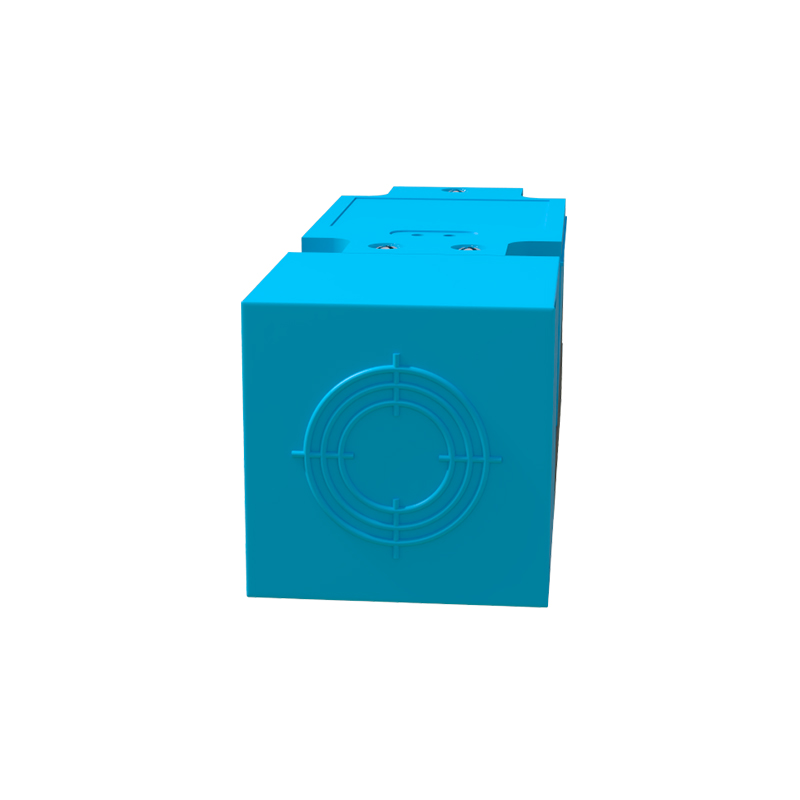
The design and engineering of automotive proximity switches must meet exceptionally high standards. They operate in a harsh environment characterized by extreme temperature fluctuations, exposure to moisture, dirt, road salt, and constant vibration. Manufacturers encapsulate the sensitive electronic components in rugged, sealed housings rated with high Ingress Protection (IP) codes. Electromagnetic compatibility (EMC) is another critical consideration, as the sensor must not interfere with, nor be disrupted by, the multitude of other electronic systems in the vehicle. Reliability is non-negotiable; a failed sensor in a critical system like AEB could have serious consequences, necessitating rigorous validation and testing procedures throughout the development cycle.
Looking forward, the role of proximity sensing will continue to expand. As vehicle exteriors become smoother and handle designs more streamlined for aerodynamics and aesthetics, the integration of inconspicuous, flush-mounted sensors will be key. The development of sensor fusion, where data from proximity switches is seamlessly combined with inputs from cameras and radar, will create more nuanced and context-aware vehicle responses. For instance, a proximity sensor might detect an object very close to the side of the car, and the fused system could determine if it is a stationary mailbox or a moving cyclist, adjusting the vehicle's reaction accordingly.
In essence, automotive sensor proximity switches are the unsung heroes of modern vehicular intelligence. They provide the essential, immediate spatial awareness that bridges the gap between the digital control systems and the physical world. From the simple beep that prevents a scratched bumper to the complex data point that helps avoid a collision, these components are integral to making driving safer, more convenient, and steadily more automated. Their continued refinement and integration will be a cornerstone in the journey toward fully autonomous vehicles, proving that sometimes, the most impactful technology is that which operates quietly in the background, always sensing, always informing, and always protecting.