In the realm of precision measurement and industrial automation, the 2D laser displacement sensor has emerged as a pivotal technology. Unlike its 1D counterpart that measures distance at a single point, a 2D sensor captures a continuous profile of height or displacement across a line. This capability unlocks a vast array of applications, from quality control on manufacturing lines to robotic guidance and surface inspection.
The core operating principle is based on optical triangulation. The sensor projects a visible or infrared laser line onto the target surface. A high-resolution CMOS or CCD camera, positioned at a known angle to the laser emitter, captures the reflection of this line. When the target surface's height varies, the position of the laser line in the camera's field of view shifts. Sophisticated onboard processors analyze this distortion in real-time, converting the captured image into a precise two-dimensional profile consisting of thousands of individual height data points along the laser line. This profile data can be output as analog signals, digital values (e.g., via Ethernet/IP or PROFINET), or as a complete height map for further analysis by a PLC or PC.
The advantages of using 2D laser displacement sensors are compelling. They offer non-contact measurement, which is essential for delicate, hot, or moving surfaces. They provide extremely high-speed data acquisition, often in the microsecond range per profile, making them suitable for high-throughput production environments. Their accuracy and resolution are exceptional, capable of detecting micron-level variations. Furthermore, they are largely immune to ambient light interference and target color variations due to advanced filtering algorithms, ensuring reliable performance in diverse conditions.
Applications for these sensors span numerous industries. In automotive manufacturing, they are used to inspect weld seams, measure panel gaps and flushness, and verify the dimensional accuracy of engine components. In electronics, they check the coplanarity of BGA solder balls, inspect connector pin height, and measure wafer warpage. In logistics and packaging, they verify box dimensions, detect missing items on pallets, and guide robotic arms for picking and placing. They are also indispensable in roll gap measurement in steel mills, tire tread inspection, and even in archaeological digitization of artifacts.
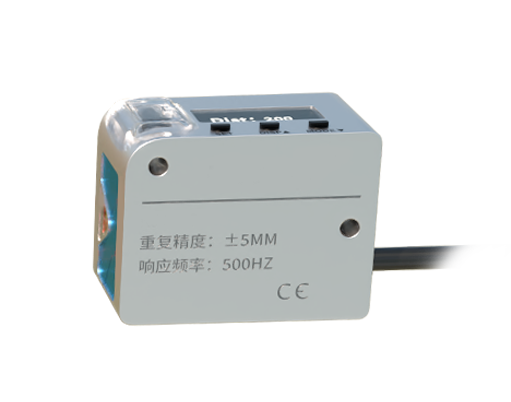
Selecting the right 2D laser displacement sensor requires careful consideration of several key parameters. The measurement range defines the minimum and maximum distances over which the sensor can operate. The Z-axis resolution indicates the smallest height difference it can detect, while the X-axis resolution (or profile point count) determines the density of data points across the laser line. The scanning frequency, measured in Hertz (Hz), dictates how many profiles are captured per second—a critical factor for measuring fast-moving objects. The laser wavelength (typically red or blue) can affect performance on different materials; blue lasers often perform better on organic materials or hot surfaces. Finally, the communication interface and environmental ratings (like IP67 for dust and water resistance) must align with the installation's industrial network and physical conditions.
When integrating these sensors, proper installation is crucial. Factors such as mounting stability, avoidance of vibration, optimal angle to the target, and ensuring a clean lens free from debris directly impact measurement stability. Regular calibration against known standards is recommended to maintain long-term accuracy.
In conclusion, 2D laser displacement sensors are powerful tools that transform physical contours into actionable digital data. Their ability to deliver fast, accurate, and reliable profile measurements makes them a cornerstone of modern automated inspection and process control systems. As technology advances, we can expect these sensors to become even more compact, faster, and intelligent, further expanding their role in building the smart factories of the future.