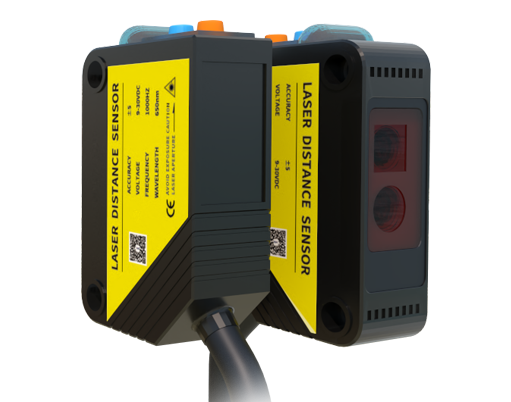
Remote laser position sensors represent a significant advancement in industrial measurement technology, offering non-contact, high-precision detection and positioning capabilities across various applications. These sensors operate by emitting a laser beam toward a target object and analyzing the reflected light to determine precise distance or position. Unlike traditional contact sensors or proximity devices, they eliminate mechanical wear, reduce maintenance needs, and enable measurements in harsh or inaccessible environments.
The core technology typically relies on time-of-flight (ToF), triangulation, or interferometry principles. Time-of-flight sensors calculate distance by measuring the round-trip time of a laser pulse, making them suitable for long-range measurements up to several hundred meters. Triangulation-based sensors use a laser diode, a lens, and a position-sensitive detector (PSD) or CMOS array to determine displacement through geometric angles, excelling in sub-millimeter accuracy at shorter ranges. Interferometric sensors, often used in ultra-precise metrology, analyze interference patterns of laser light for nanometer-level resolution.
Key advantages include exceptional accuracy, often within micrometers, and high-speed response times, which are critical in dynamic processes like robotics, assembly line automation, and material handling. For instance, in automotive manufacturing, these sensors verify component alignment and weld seam tracking without physical contact, ensuring consistent quality. In logistics, they facilitate automated guided vehicle (AGV) navigation and package dimensioning. Additionally, their ability to measure reflective, transparent, or dark surfaces—with adjustable sensitivity and filters—enhances versatility.
Integration with industrial networks (e.g., Ethernet/IP, PROFINET) and IoT platforms allows real-time data monitoring and predictive maintenance, reducing downtime. Modern sensors also feature robust housings (IP67 ratings) for dust- and water-resistance, with temperature compensation for stable performance in fluctuating conditions. However, challenges such as ambient light interference, surface reflectivity variations, and high initial cost require careful selection based on application needs.
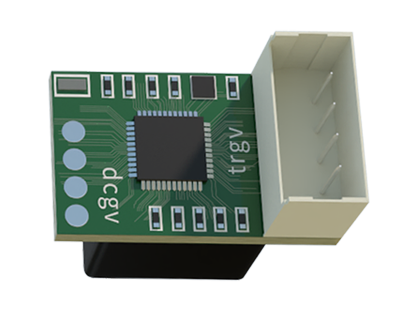
Future trends point toward miniaturization, enhanced AI-driven analytics for adaptive calibration, and multi-sensor fusion for 3D profiling. As Industry 4.0 evolves, remote laser position sensors will continue to be pivotal in smart factories, enabling agile, data-driven production with unparalleled precision. Engineers should prioritize factors like measurement range, resolution, environmental robustness, and compatibility when deploying these systems to maximize ROI and operational efficiency.
In summary, remote laser position sensors are indispensable tools for modern industry, bridging the gap between physical processes and digital control. Their non-contact nature, coupled with advancing optics and electronics, drives innovation in quality assurance, automation, and safety, paving the way for more responsive and intelligent manufacturing ecosystems.