In the realm of industrial automation and machine design, smooth proximity sensors are indispensable components for non-contact detection and positioning. Unlike their threaded or cylindrical counterparts, these sensors feature a flat, smooth housing, making them ideal for applications where space is constrained or where mounting must be flush with surfaces to avoid snagging or accumulation of debris. But what exactly is the operating principle behind these sleek devices?
At their core, most smooth proximity sensors operate on the principle of electromagnetic induction or capacitive sensing, with inductive types being the most prevalent in industrial settings. An inductive smooth proximity sensor generates an oscillating electromagnetic field from a coil housed within its smooth, often plastic or metal, casing. When a metallic target—typically ferrous metals like steel or iron, though some sensors can detect non-ferrous metals—enters this active field, eddy currents are induced on the surface of the target. These eddy currents draw energy from the sensor's oscillator circuit, causing a measurable change in oscillation amplitude or frequency. The sensor's internal circuitry detects this change and triggers a solid-state switch, sending an output signal to the control system. This entire process occurs without any physical contact, ensuring minimal wear and long operational life.
The smooth design is not merely aesthetic; it serves critical functional purposes. By eliminating protrusions like threads, these sensors reduce the risk of mechanical damage and contamination buildup in harsh environments, such as food processing, packaging, or automotive assembly lines. Their flat faces allow for easy cleaning and enable installation in tight spaces where traditional sensors might not fit. Many models are also fully sealed to IP67 or higher standards, providing robust resistance against water, oils, and dust.
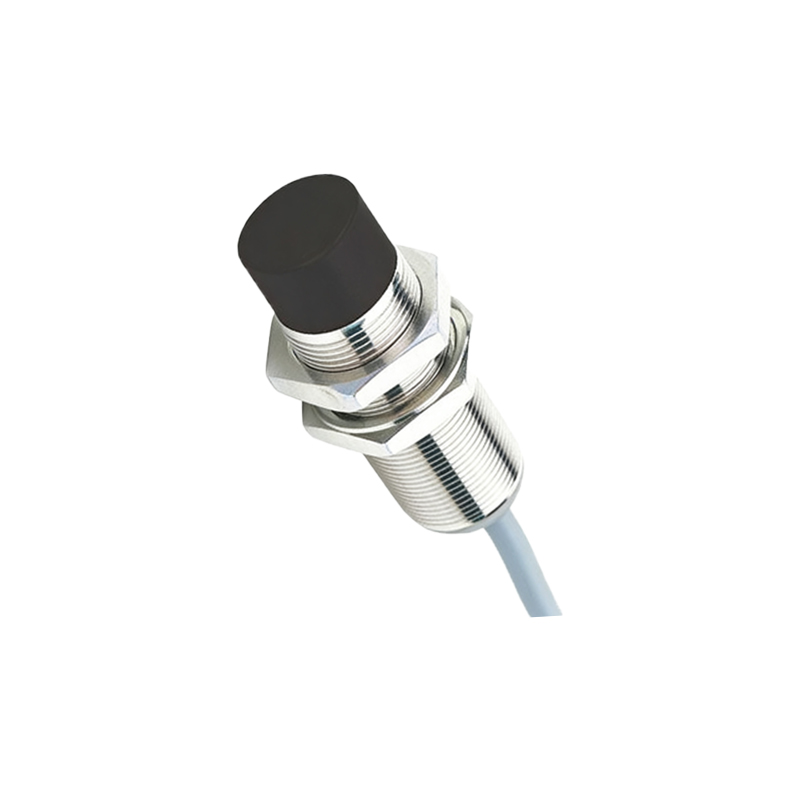
Key performance parameters include sensing range, which is typically shorter than threaded models due to the compact form factor, repeat accuracy, response frequency, and output type (e.g., PNP, NPN, analog, or IO-Link). The sensing range is precisely calibrated based on the sensor's size and the target material; for instance, a standard inductive sensor might have a nominal range of 2 to 15 millimeters for steel. It is crucial to note that the effective sensing distance can vary with different metals and target shapes, so careful selection according to the application is essential.
Beyond inductive types, capacitive smooth proximity sensors are used for detecting non-metallic objects, such as liquids, plastics, or glass. These work by measuring changes in capacitance between the sensor's face and the target. When an object enters the electrostatic field, the capacitance alters, triggering the output. This versatility makes smooth capacitive sensors valuable in industries like chemical processing or material handling.
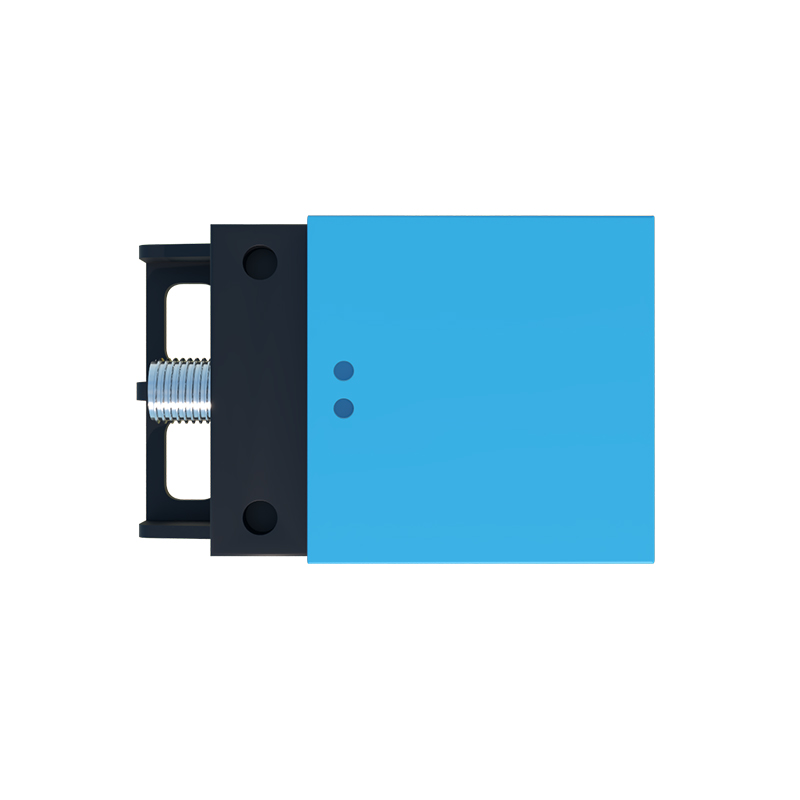
In summary, smooth proximity sensors leverage electromagnetic or capacitive phenomena to enable reliable, non-contact detection in space-sensitive and demanding environments. Their principle of operation hinges on detecting perturbations in an generated field, translating physical presence into electrical signals with high precision and speed. As automation evolves toward more compact and hygienic designs, the adoption of these sensors continues to grow, underpinning efficient and maintenance-free operations across diverse sectors.