Pulse proximity switch sensors represent a critical component in modern industrial automation, offering non-contact detection of metallic objects with high precision and reliability. These sensors operate based on the principle of electromagnetic induction, generating a pulsed electromagnetic field to detect the presence or absence of a target without physical contact. Understanding their working mechanism is essential for engineers and technicians in fields such as manufacturing, robotics, and process control.
At the core of a pulse proximity switch sensor is an oscillator circuit that produces a high-frequency alternating current. This current flows through a coil wound around a ferrite core, creating a pulsed electromagnetic field around the sensor's active face. When a metallic object enters this field, eddy currents are induced on the surface of the target due to Faraday's law of electromagnetic induction. These eddy currents generate their own magnetic field, which opposes the original field produced by the sensor coil. This opposition results in a change in the oscillation amplitude or frequency within the sensor circuit.
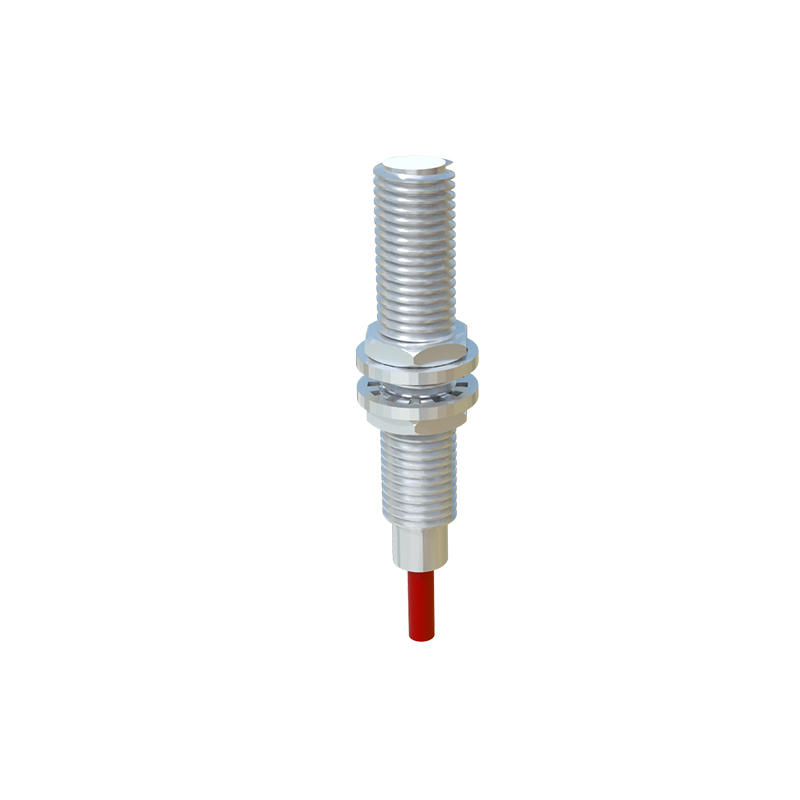
The sensor's electronic evaluation unit continuously monitors these oscillations. In the absence of a target, the oscillator operates at a stable baseline level. As a metal object approaches, the induced eddy currents dampen the oscillations, causing a detectable shift. This shift triggers a switching action—typically, the sensor outputs a digital signal (e.g., a voltage pulse or current change) to indicate detection. The pulse nature of the output allows for precise timing and integration with programmable logic controllers (PLCs) or other control systems, enabling real-time monitoring and automation tasks.
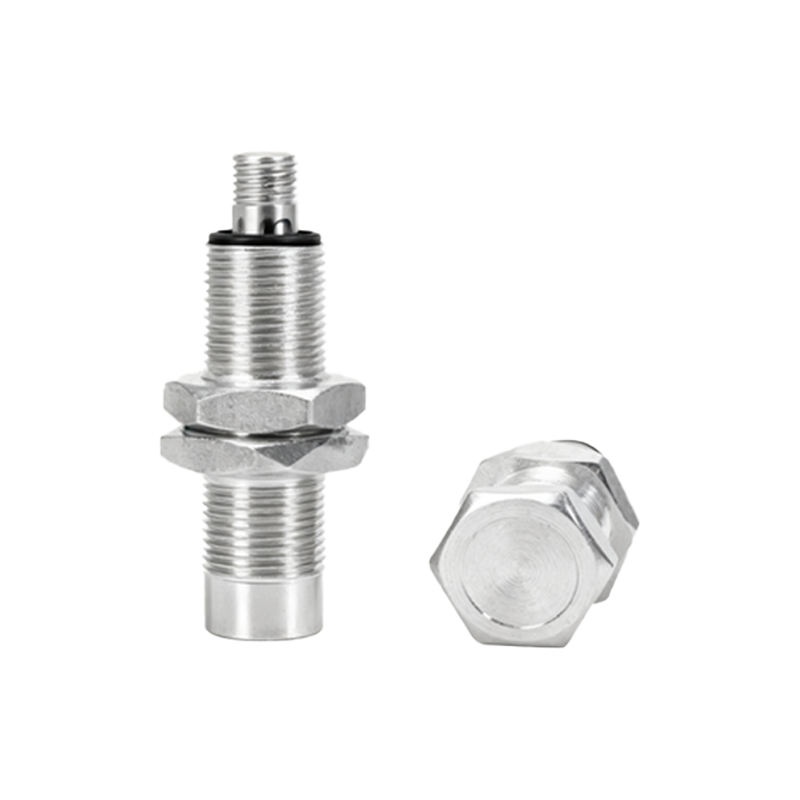
Key advantages of pulse proximity switches include their immunity to environmental factors like dust, moisture, and non-metallic obstructions, as they rely solely on electromagnetic interactions. They are commonly used in applications requiring fast response times, such as counting objects on conveyor belts, detecting position limits in machinery, or ensuring safety in automated equipment. For instance, in automotive assembly lines, these sensors verify the presence of metal components, while in packaging systems, they trigger operations based on object proximity.
Design considerations involve selecting the appropriate sensing range, which depends on factors like coil size, target material (ferrous metals like iron yield longer ranges than non-ferrous metals like aluminum), and operating frequency. Pulse sensors often feature adjustable sensitivity to fine-tune detection thresholds, reducing false triggers. Additionally, they are available in various housing types (e.g., cylindrical or rectangular) to suit different installation environments, with options for shielded or unshielded designs affecting their lateral detection capabilities.
Maintenance is minimal due to the non-contact operation, but engineers should ensure proper alignment and avoid interference from other electromagnetic sources. In summary, pulse proximity switch sensors leverage pulsed electromagnetic fields to provide efficient, durable detection solutions, driving efficiency and safety in industrial automation. Their principle underscores the importance of electromagnetic theory in practical engineering applications, making them indispensable in today's technology-driven industries.