Laser distance sensors have become a cornerstone of modern industrial automation, offering high precision and non-contact measurement capabilities. However, despite their widespread adoption, these devices are not without significant limitations. Understanding these drawbacks is crucial for engineers and system integrators to make informed decisions, optimize performance, and ensure operational reliability.
One of the most prominent disadvantages is their sensitivity to environmental conditions. The performance of a laser distance sensor can be severely degraded by ambient light interference, particularly from strong direct sunlight or other high-intensity light sources operating at similar wavelengths. This can lead to measurement inaccuracies or complete signal loss. Furthermore, the presence of dust, smoke, steam, or fog in the operational environment can scatter or absorb the laser beam, resulting in erroneous readings or failure to detect the target. This makes them less suitable for harsh industrial settings like foundries, welding shops, or outdoor applications without extensive protective enclosures and air-purge systems, which increase cost and complexity.
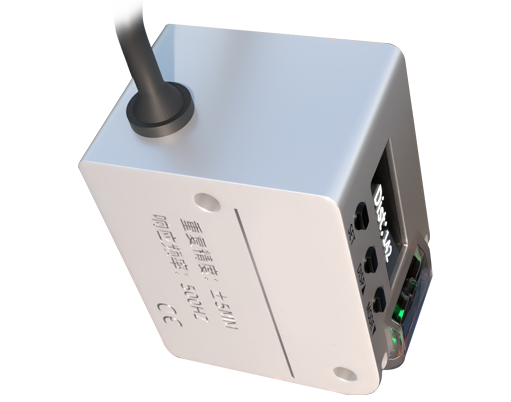
The nature of the target surface itself poses another major challenge. Laser sensors often struggle with transparent materials like glass or clear plastics, as the beam may pass through or produce multiple reflections. Similarly, highly reflective, shiny, or mirror-like surfaces can cause specular reflection, directing the beam away from the sensor's receiver and causing a dropout. Conversely, dark, matte, or light-absorbing surfaces can weaken the return signal to a level below the sensor's detection threshold. While some advanced models employ techniques to mitigate these issues, they often come at a premium price and may not be universally effective.
Cost remains a significant barrier, especially for high-precision models. Compared to ultrasonic or inductive proximity sensors, laser distance sensors represent a substantially higher initial investment. This is compounded by the total cost of ownership, which includes not only the sensor unit but also potential expenses for protective housings, cooling systems for high-power lasers, regular calibration, and specialized maintenance. For applications requiring multiple measurement points, the financial outlay can be prohibitive, leading engineers to seek alternative solutions for less critical measurements.

Safety is a paramount concern that cannot be overlooked. Lasers, particularly Class 3R, 3B, or 4 types used in some industrial sensors, pose inherent risks to human eyesight. Strict safety regulations, such as those from the FDA (CDRH) or IEC 60825, govern their use. Implementing adequate safety measures—including protective enclosures, laser safety interlocks, warning labels, and operator training—adds layers of complexity and cost to system design and deployment. The risk of accidental exposure necessitates rigorous safety protocols, making the installation and operation more demanding than with non-laser-based technologies.
From a technical standpoint, laser sensors have inherent limitations in measurement range and spot size. While they excel at short to medium ranges, extremely long-distance measurement requires more powerful and expensive systems. The laser spot size also increases with distance due to beam divergence, which can reduce accuracy when measuring small objects or edges. Additionally, the sampling speed, though high for many models, may still be insufficient for ultra-high-speed production lines where measurements need to be taken on rapidly moving objects, potentially requiring even more specialized and costly high-speed variants.
Finally, reliability and maintenance present ongoing challenges. The laser diode, as an optoelectronic component, has a finite operational lifetime and can degrade over time, leading to a gradual decrease in output power and measurement stability. This necessitates periodic calibration and eventual replacement. The optical components (lenses, windows) are also susceptible to contamination from oil, dust, or debris in industrial environments, requiring regular cleaning to maintain performance. Vibration and mechanical shock can misalign the sensitive optical system, causing calibration drift.
In conclusion, while laser distance sensors are powerful tools offering unmatched precision in many scenarios, their drawbacks are substantial. Environmental vulnerability, target surface limitations, high cost, safety hazards, and specific technical constraints must be carefully weighed against application requirements. A thorough evaluation often reveals that for many industrial tasks—especially in dirty, volatile, or cost-sensitive environments—alternative sensing technologies like ultrasonic, capacitive, or confocal sensors may offer a more robust, economical, and safer solution. The key to successful implementation lies not in defaulting to the most advanced technology, but in meticulously matching the sensor's capabilities and limitations to the specific demands of the task at hand.