In industrial automation and control systems, proximity sensors are widely used for non-contact detection of objects. A common question among engineers and technicians is whether these sensors require intermediate relays to function effectively within a circuit. The answer depends on several factors, including the sensor type, load requirements, and system design considerations.
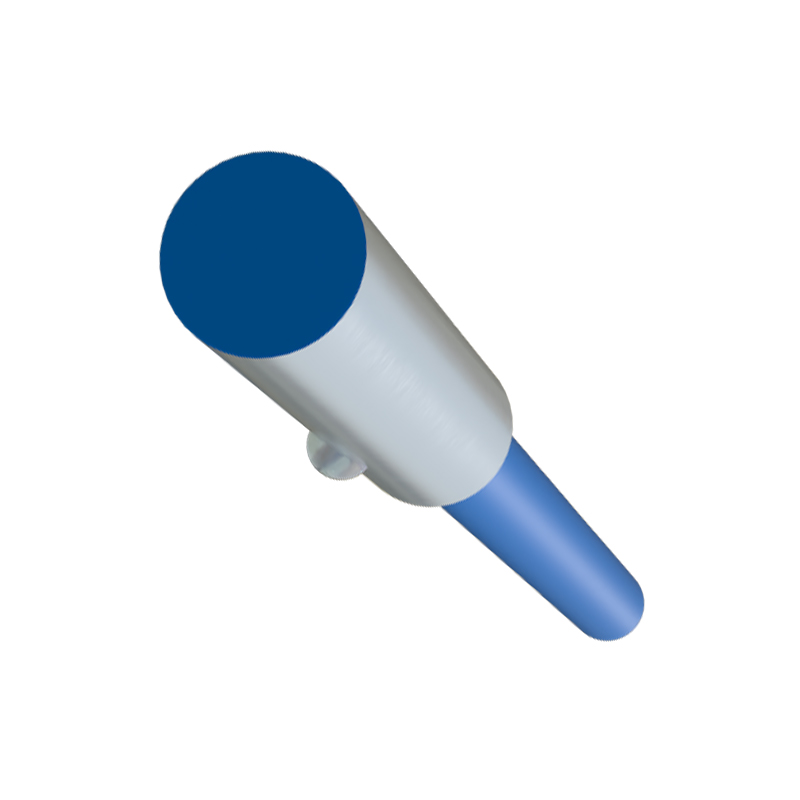
Proximity sensors, such as inductive, capacitive, or photoelectric types, generate output signals when an object enters their sensing range. These outputs are typically low-current signals, often in the range of 100mA to 500mA, depending on the model and manufacturer. While some sensors have built-in switching capabilities sufficient to drive small loads directly, many industrial applications involve controlling higher-power devices like motors, solenoids, or contactors. This is where intermediate relays become relevant.
Intermediate relays serve as amplifiers between the sensor's output and the load. When a proximity sensor detects an object, it sends a signal to the relay coil, which then closes or opens its contacts to control the larger load. This arrangement protects the sensor from overcurrent conditions, extending its lifespan and ensuring reliable operation. For instance, if a sensor rated for 200mA is used to control a 5A motor starter, direct connection would likely damage the sensor. An intermediate relay with appropriate contact ratings bridges this gap safely.
Another key consideration is electrical isolation. Relays provide galvanic isolation between the sensor circuit and the load circuit, which can prevent noise interference, voltage spikes, or ground loops from affecting sensitive control electronics. In environments with heavy machinery or variable frequency drives, this isolation is crucial for stable system performance. Additionally, relays allow for signal multiplication—one sensor output can control multiple relay coils, enabling complex logic functions without additional sensors.
However, not all applications require intermediate relays. Modern solid-state proximity sensors with high-current outputs (e.g., up to 2A) may directly interface with compatible loads. Programmable logic controllers (PLCs) often integrate sensor inputs and relay outputs internally, reducing the need for external components. In such cases, adding unnecessary relays can increase costs, wiring complexity, and potential failure points. Engineers must evaluate the sensor specifications, load characteristics, and control system architecture to make an informed decision.
Best practices include reviewing the sensor datasheet for output ratings, calculating the inrush and steady-state currents of the load, and considering environmental factors like temperature or vibration. When in doubt, using an intermediate relay is a conservative and safe approach, especially in high-reliability or safety-critical applications. Ultimately, the choice balances technical requirements with practical efficiency in industrial electrical design.