Laser sensors are pivotal components in modern industrial automation, offering high precision, non-contact measurement, and robust performance across diverse environments. As an electrical engineer with extensive field experience, I will detail the primary classifications of laser sensors based on their operational principles and applications. Understanding these types is essential for selecting the right sensor to optimize efficiency, accuracy, and safety in industrial systems.
The first major category is Triangulation Laser Sensors. These sensors operate by projecting a laser beam onto a target surface. The reflected light is captured by a detector at a specific angle, and through trigonometric calculations, the distance or displacement of the target is determined. They are renowned for their micron-level resolution, making them ideal for applications such as thickness measurement in manufacturing, surface profiling, and assembly line inspection. However, their performance can be affected by surface reflectivity and color variations, requiring calibration for different materials.
Next, Time-of-Flight (ToF) Laser Sensors measure distance based on the time taken for a laser pulse to travel to a target and back. By calculating the elapsed time and using the speed of light, these sensors provide accurate range measurements over longer distances, typically from a few meters to several hundred meters. They are widely used in logistics for palletizing, autonomous vehicle navigation, and large-scale warehouse management due to their fast response and ability to handle varying environmental conditions. While less precise than triangulation sensors at close range, ToF sensors excel in long-range scenarios.
Laser Confocal Sensors represent a high-precision class, utilizing a confocal optical system to focus laser light onto a point. By detecting the reflected intensity through a pinhole aperture, they achieve sub-micron resolution. These sensors are particularly valuable in industries like semiconductor manufacturing, where they measure minute surface features, film thickness, or microscopic displacements. Their ability to ignore ambient light interference ensures reliability in controlled environments, though they are generally more costly and suited for specialized tasks.
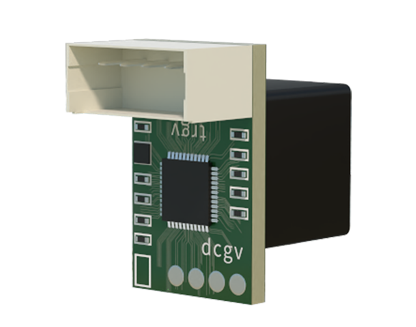
Another critical type is Laser Doppler Vibrometers (LDVs), which measure velocity and vibration by analyzing the frequency shift of reflected laser light due to the Doppler effect. Non-contact and highly sensitive, LDVs are employed in structural health monitoring, automotive testing, and aerospace engineering to detect oscillations or defects without physical contact. They provide real-time data on dynamic movements, aiding in predictive maintenance and quality control.
Additionally, Laser Sheet Sensors project a laser line rather than a single point, enabling 2D or 3D scanning of objects. Coupled with cameras or detectors, they capture cross-sectional profiles for applications in robotics, reverse engineering, and dimensional inspection. This type is integral to automated guidance systems and part verification processes, offering versatility in complex geometries.
In industrial settings, environmental factors like dust, temperature fluctuations, and electromagnetic interference must be considered. For instance, Ruggedized Laser Sensors are designed with protective housings and enhanced optics to withstand harsh conditions, such as in mining or heavy machinery. Selection criteria should include measurement range, accuracy, response time, and compatibility with existing control systems like PLCs or IoT networks.
Emerging trends involve integrating laser sensors with AI for predictive analytics and adaptive control, enhancing smart factory initiatives. Regular maintenance, including lens cleaning and alignment checks, ensures longevity and consistent performance. By leveraging the appropriate laser sensor type, engineers can drive innovation, reduce downtime, and achieve superior operational outcomes in automation projects.