In the vast landscape of industrial automation and process control, the reliable detection of objects is a fundamental requirement. Among the myriad of sensing technologies available, the 0-10V proximity sensor stands out as a robust, analog solution for applications demanding not just presence detection, but also nuanced distance information. Unlike their simple digital (on/off) counterparts, these sensors provide a continuous voltage output signal that is directly proportional to the distance between the sensor's face and the target object. This analog characteristic unlocks a higher level of control and monitoring capability within a system.
The core operating principle of a 0-10V proximity sensor typically hinges on either inductive, capacitive, or ultrasonic technology, with inductive being the most common for metallic targets. An inductive sensor generates an electromagnetic field. When a metallic object enters this field, eddy currents are induced in the target, which in turn dampens the oscillation amplitude of the sensor's internal LC circuit. This change is meticulously converted into a linear analog voltage signal. For a sensor with a nominal sensing range of, for example, 10mm, 0 volts might represent an object at 10mm or beyond (no object), while 10 volts would indicate the object is at the minimum sensing distance, perhaps 0mm. The voltage scales linearly in between, providing a precise analog representation of position.
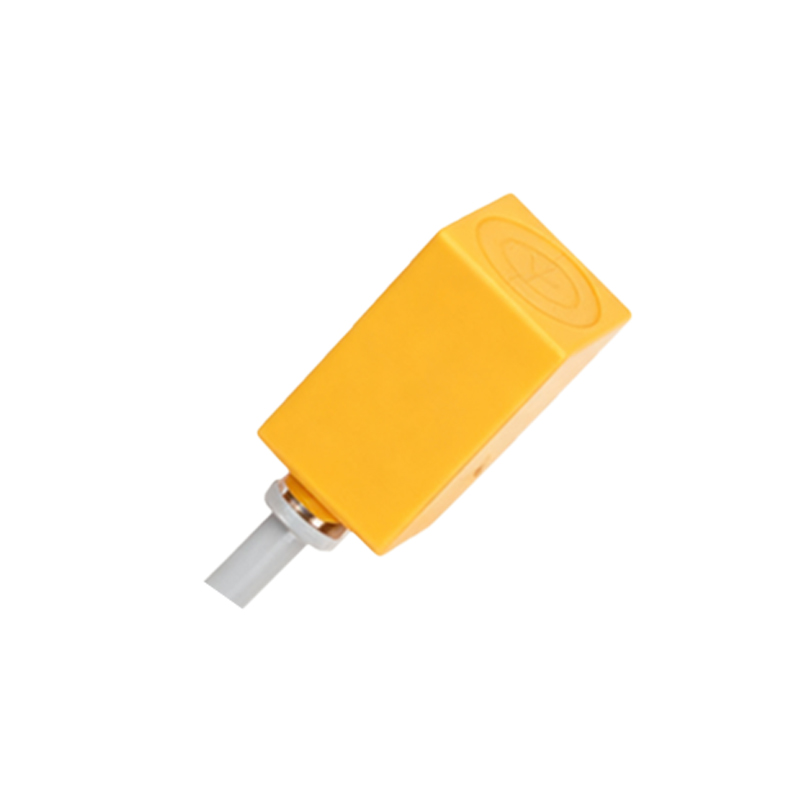
The "0-10V" output standard is a significant advantage. It is a widely adopted, straightforward interface compatible with a vast array of industrial control equipment, including Programmable Logic Controllers (PLCs), analog input modules, data acquisition systems, and process controllers. This universality simplifies integration and reduces compatibility concerns. The continuous signal allows for applications such as gauging thickness, monitoring fill levels in tanks (with appropriate mounting), controlling tension in web processes, or performing precision positioning tasks where the exact distance, not just a threshold, is critical.
When selecting a 0-10V proximity sensor for a specific application, several key parameters must be carefully evaluated. First is the Sensing Range. This is the maximum distance at which the sensor can reliably detect a standard target. It's crucial to choose a sensor with a range that accommodates the required working distance with some margin. Second, the Linearity is paramount. This specification, often expressed as a percentage of full scale, indicates how accurately the voltage output follows a straight line relative to distance. High-precision applications demand sensors with excellent linearity. Repeatability, or the sensor's ability to produce the same output voltage for the same target position repeatedly, is another critical factor for consistent operation.
Target Material and Size directly influence performance, especially for inductive sensors. They are primarily designed for ferrous metals (like steel), with reduced range for non-ferrous metals (like aluminum or copper). The sensor's data sheet will specify correction factors. The target should also be at least as large as the sensor's sensing face for optimal performance. Environmental Robustness cannot be overlooked. Consider the housing material (e.g., stainless steel for harsh environments), ingress protection (IP) rating for dust and water resistance, temperature rating, and resistance to chemicals or washdowns if applicable. Finally, the Electrical Requirements must match the control system: operating voltage (typically 10-30V DC), current consumption, and the load impedance on the output signal to ensure accurate voltage reading without signal drop.
Installation and commissioning require attention to detail. Proper mounting, ensuring the sensor is securely fixed and aligned correctly with the target path, is essential. Electrical wiring must follow the manufacturer's diagram, paying close attention to the connection of the output wire (which carries the 0-10V signal), power supply, and common ground. Shielding the cable may be necessary in electrically noisy environments to prevent signal interference. During setup, it is often necessary to calibrate or scale the 0-10V signal within the receiving controller (e.g., the PLC) to translate the voltage reading into meaningful engineering units, such as millimeters or inches.
In conclusion, the 0-10V analog proximity sensor is a versatile and powerful tool in an engineer's arsenal. It bridges the gap between simple object detection and precise, continuous distance measurement. Its strength lies in its straightforward analog interface, reliable performance, and adaptability to numerous challenging industrial environments. By thoroughly understanding its operating principles and meticulously considering the selection criteria—sensing range, linearity, target material, and environmental factors—engineers can effectively deploy these sensors to enhance system intelligence, improve process control, and gather valuable operational data for automation systems ranging from packaging and material handling to metalworking and automotive assembly.