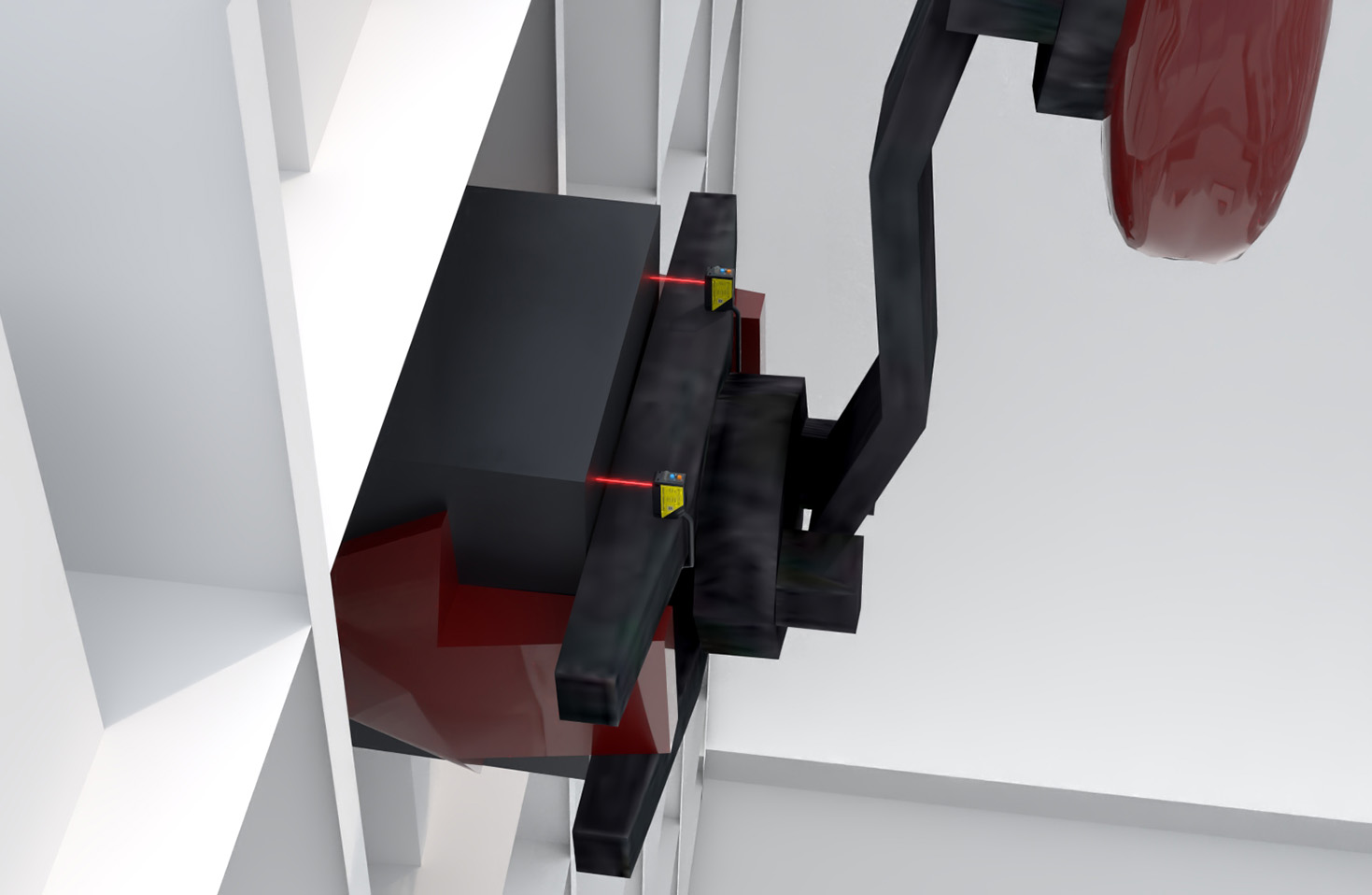
In the rapidly evolving landscape of industrial automation, precision measurement, and smart systems, laser sensor chips stand as critical components enabling high-accuracy, non-contact detection. These chips, often the core of laser sensors, integrate photodiodes, signal processing circuits, and sometimes the laser emitter itself onto a semiconductor substrate. Their "chip" form factor allows for miniaturization, enhanced reliability, and integration into complex systems, from consumer electronics to heavy machinery. This article delves into the fundamental types, operational principles, key applications, and essential selection criteria for laser sensor chips.
The operational principle of a laser sensor chip is rooted in the interaction of laser light with a target. Typically, a laser diode on or connected to the chip emits a focused beam. This beam strikes a target, and the reflected light is captured by a photodetector array on the same chip. The chip's integrated circuitry then analyzes the received signal. Different measurement techniques are employed based on the chip's design. The most common include triangulation, time-of-flight (ToF), and confocal measurement. Triangulation chips calculate distance or displacement by analyzing the position of the reflected laser spot on a linear sensor array. They offer very high resolution for short to medium ranges. Time-of-flight chips measure the round-trip time of a laser pulse to determine distance, excelling in longer-range applications. Confocal chips use chromatic aberration to measure distance with extreme precision, often used for thickness or surface profiling.
Several distinct types of laser sensor chips cater to diverse needs. Position Sensitive Detector (PSD) chips are analog devices that provide continuous position data of a laser spot, ideal for vibration analysis or alignment systems. CMOS or CCD array chips, used in triangulation sensors, provide digital pixel data for high-resolution profile scanning. Single-point ToF chips are dedicated to measuring the distance to one point, commonly found in LiDAR modules and robotics. More advanced chips now incorporate Micro-Electro-Mechanical Systems (MEMS) to steer the laser beam, enabling miniaturized LiDAR for automotive and scanning applications. Furthermore, the integration level varies: some chips are purely receiver-based (photodetector + amplifier), while system-on-chip (SoC) solutions integrate the laser driver, ADC, digital processor, and communication interfaces like I2C or SPI onto a single die.
The applications of laser sensor chips are vast and growing. In industrial automation, they are indispensable for precise positioning of robotic arms, inspection of component dimensions, and detection of minute defects on production lines. The automotive industry leverages them in Advanced Driver-Assistance Systems (ADAS) for obstacle detection, adaptive cruise control, and emerging autonomous driving platforms. Consumer electronics utilize miniature ToF chips in smartphones for autofocus, facial recognition, and augmented reality features. In logistics, they enable rapid parcel dimensioning and warehouse automation through guided vehicles. Medical devices employ them for non-invasive diagnostics and precise surgical guidance. Their non-contact nature makes them perfect for measuring delicate, hot, or fast-moving objects where physical probes would fail.
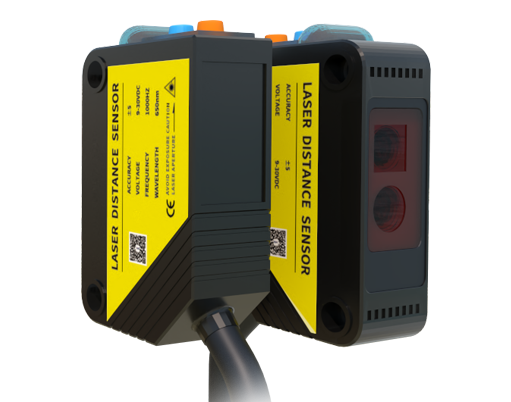
Selecting the right laser sensor chip for an application requires careful consideration of multiple parameters. Key specifications include measurement range, resolution, accuracy, and repeatability. The required sampling speed or response time is critical for dynamic processes. Environmental robustness is another major factor; chips must be evaluated for their operating temperature range, resistance to ambient light interference, dust, and vibrations. The type of output signal (analog voltage, digital serial, PWM) must be compatible with the host system's controller. Physical constraints like package size, power consumption, and mounting options are equally important. For instance, a chip for a handheld scanner demands low power and a tiny footprint, while an industrial machine vision system might prioritize high speed and accuracy over size.
Future trends point toward greater integration, intelligence, and affordability. The drive for smaller, more powerful sensors will push for further miniaturization of chip features. We are seeing the rise of "smart sensor" chips with embedded artificial intelligence algorithms capable of edge processing, such as directly classifying objects from a point cloud. The development of silicon photonics promises to integrate optical waveguides and processing elements even more tightly, potentially revolutionizing sensor design. As costs continue to decrease, high-performance laser sensor chips will proliferate into more everyday applications, solidifying their role as the eyes of intelligent machines.
In conclusion, laser sensor chips are sophisticated enablers of modern technology. Understanding their types, based on principles like triangulation or ToF, and their application-specific strengths is crucial for engineers and system designers. By meticulously evaluating parameters from range and speed to environmental tolerance and output format, one can select the optimal chip to build reliable, precise, and innovative sensing solutions that push the boundaries of automation and measurement.