Proximity sensors, often termed as non-contact detection devices, have become indispensable components in modern industrial automation and control systems. Their core function is to detect the presence or absence of an object within a specified sensing range without any physical contact. This non-contact nature eliminates mechanical wear and tear, ensuring high reliability, long operational life, and the ability to detect fragile or sensitive objects. The underlying principle varies significantly based on the technology employed, each suited for specific materials and environmental conditions.
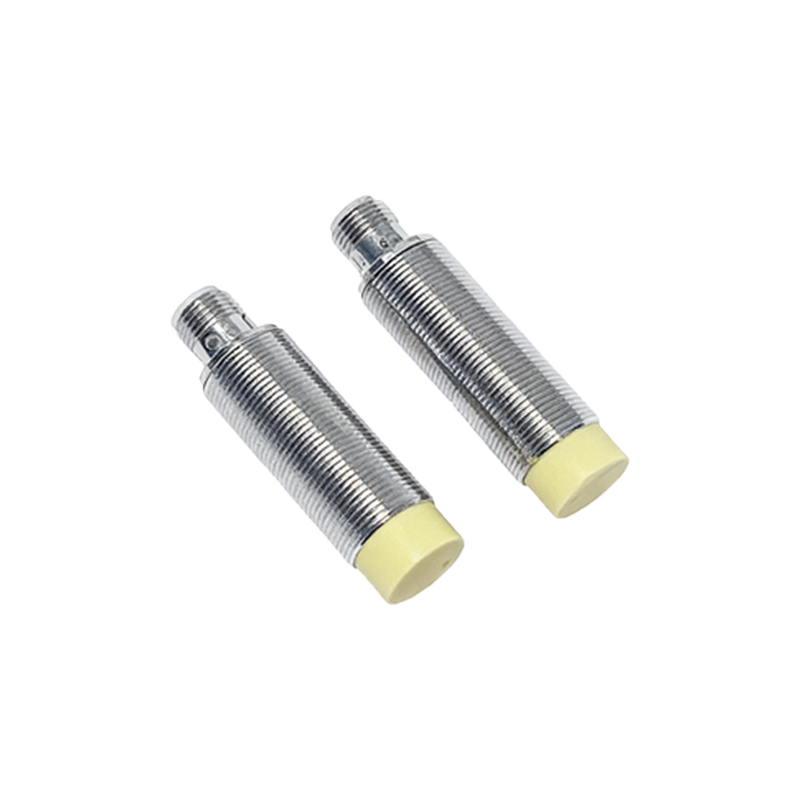
The most prevalent types include inductive, capacitive, ultrasonic, and photoelectric (optical) proximity sensors. Inductive proximity sensors operate on the principle of electromagnetic induction. The sensor generates an oscillating electromagnetic field from its active face. When a metallic object (ferrous or non-ferrous) enters this field, eddy currents are induced within the object, causing a change in the oscillation amplitude. This change is detected by the sensor's internal circuitry, which subsequently triggers a solid-state output switch. These sensors are ideal for detecting metals and are widely used in machine automation, such as counting metal parts, determining piston position in cylinders, or as limit switches.
Capacitive proximity sensors, in contrast, can detect both metallic and non-metallic materials, including liquids, powders, plastics, and wood. They function by generating an electrostatic field. Any object that enters this field alters the capacitance of the sensor's circuit. The sensor monitors this capacitance change and switches its output when the change exceeds a preset threshold. This makes them versatile for applications like liquid level detection in tanks, material presence sensing on conveyor belts (even through glass or thin walls), and detecting filled levels of non-metallic containers.
Ultrasonic proximity sensors utilize sound waves beyond the human hearing range. They emit high-frequency ultrasonic pulses and measure the time taken for the echo to return after reflecting off a target object. By calculating this time-of-flight, the sensor can determine the distance to the object. This technology is excellent for detecting objects of virtually any material, shape, or color, and is less affected by dust, smoke, or ambient light. Common applications include distance measurement, pallet stacking height control, and presence detection of irregularly shaped objects on assembly lines.
Photoelectric sensors, another major category, use a light beam (visible red, infrared, or laser). The basic types are through-beam, retro-reflective, and diffuse (proximity) mode. In the diffuse mode, which functions as a true proximity sensor, the emitter and receiver are housed in the same unit. The sensor detects light reflected directly from the target object. The detection range depends on the target's color, reflectivity, and surface texture. They are perfect for detecting small objects, transparent materials (with specialized models), and for precise positioning.
The selection of a proximity sensor for a specific application hinges on several critical factors: the target material, required sensing distance, environmental conditions (presence of dust, moisture, temperature extremes, or electrical noise), response speed, and output type (PNP/NPN, NO/NC). For instance, an inductive sensor is useless for detecting plastic bottles, just as a standard diffuse photoelectric sensor may struggle with a shiny, reflective metal surface due to specular reflection.
In industrial applications, proximity sensors form the foundational layer of data acquisition for Programmable Logic Controllers (PLCs) and other control systems. They are the "eyes" of automated machinery, providing essential input for sequencing, safety interlocking, counting, and positioning. On high-speed packaging lines, they detect product presence to trigger filling or capping operations. In automotive assembly, they verify the correct positioning of robotic welding arms. Within automated warehouses, they ensure the precise positioning of retrieval systems. Safety curtains on hazardous machinery often employ arrays of photoelectric sensors to create a protective field, instantly halting operation if breached.
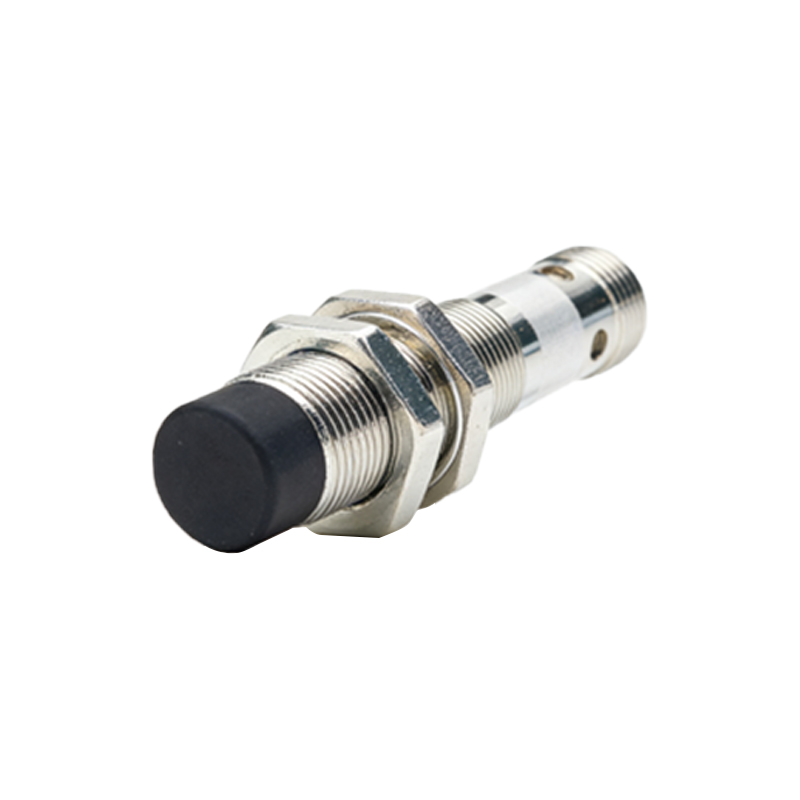
The evolution of Industry 4.0 and the Industrial Internet of Things (IIoT) is further elevating the role of proximity sensors. Modern "smart" sensors come with integrated IO-Link communication, enabling not just binary detection but also the transmission of detailed parameter data (like temperature, signal strength, or operating hours) to higher-level control systems. This facilitates predictive maintenance, remote diagnostics, and seamless integration into digital twin models of production systems.
In conclusion, proximity sensors are critical enablers of efficiency, safety, and flexibility in contemporary industrial environments. Understanding their distinct operating principles—inductive for metals, capacitive for diverse materials, ultrasonic for challenging environments, and photoelectric for precision—is paramount for engineers to design robust and intelligent automation solutions. As technology advances, these sensors will continue to evolve, offering greater intelligence, connectivity, and resilience to meet the demands of increasingly sophisticated smart factories.