Normally open (NO) proximity switch sensors are fundamental components in industrial automation and electrical control systems. These sensors operate on a simple yet effective principle: they remain in an open circuit state when no target object is detected, and close the circuit only when a specified target enters their sensing range. This design makes them ideal for applications where a signal or action is required only upon the presence of an object, enhancing safety and efficiency in automated processes.
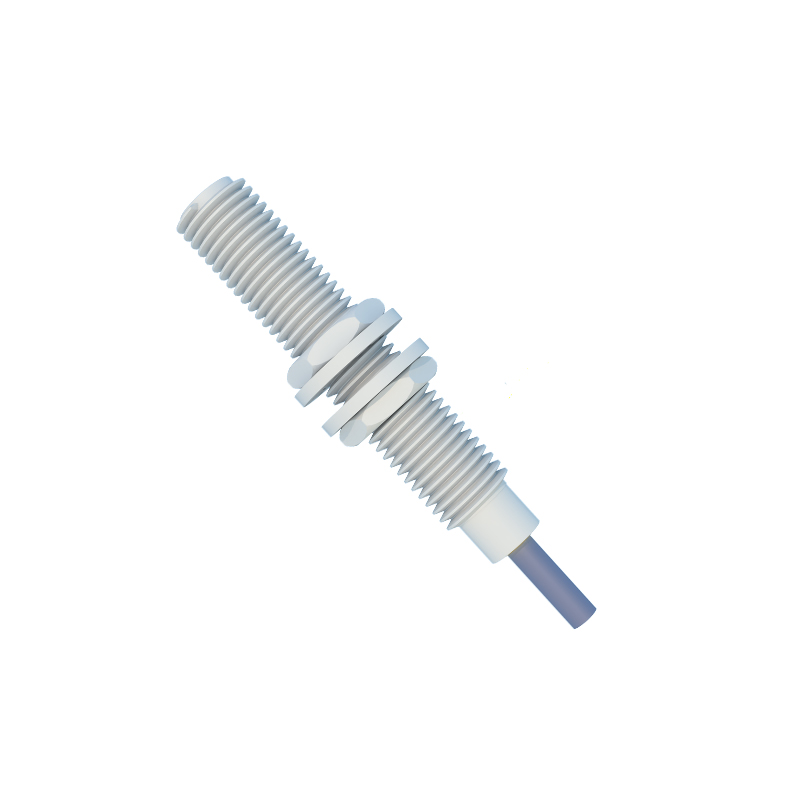
Proximity sensors, including the normally open type, are non-contact devices. They detect the presence or absence of metallic or non-metallic objects without physical contact, relying on electromagnetic fields, capacitance, or ultrasonic waves. The most common variant is the inductive proximity sensor, which generates an oscillating electromagnetic field. When a metallic object enters this field, it causes a change in oscillation amplitude, triggering the sensor's output switch. For normally open sensors, this trigger closes the internal switch, allowing current to flow and sending a signal to a controller like a PLC (Programmable Logic Controller).

The key advantage of a normally open configuration lies in its fail-safe characteristics. In many safety-critical systems, an open circuit during normal operation (no target present) ensures that unintended activation does not occur. For instance, in a conveyor belt system, a NO proximity sensor might be used to stop the belt only when an object is detected at a specific point, preventing jams. If the sensor fails or loses power, it defaults to the open state, often signaling a fault or halting the process to avoid hazardous conditions. This contrasts with normally closed (NC) sensors, which are closed by default and open upon detection, suitable for applications requiring constant signal interruption.
Selecting the right normally open proximity sensor involves several technical considerations. Sensing range, typically from a few millimeters to several centimeters, must match the application's spatial requirements. The sensor's housing material, such as nickel-plated brass or stainless steel, should withstand environmental factors like moisture, chemicals, or temperature extremes. Output types also vary; many NO sensors provide digital transistor-transistor logic (TTL) or analog outputs, compatible with modern industrial networks. Additionally, factors like response time (often in milliseconds), switching frequency, and electrical ratings (e.g., 10-30V DC) are crucial for integration into control circuits.
In practice, normally open proximity sensors are ubiquitous across industries. In automotive manufacturing, they verify part placement on assembly lines. In packaging, they count products passing by, triggering sealing mechanisms when a box is detected. In robotics, they serve as limit switches to prevent over-travel of arms. Their reliability and durability make them preferred for high-cycle operations where mechanical switches would wear out quickly. Installation is straightforward, usually involving mounting, wiring to a power source, and connecting the output to a control device. Regular maintenance includes checking for contamination or misalignment, which can affect sensing accuracy.
Technological advancements continue to enhance these sensors. Modern versions incorporate smart features like IO-Link communication, enabling real-time diagnostics and parameter adjustments without physical access. Some models offer adjustable sensing ranges or immunity to electromagnetic interference (EMI), improving performance in complex environments. As Industry 4.0 evolves, normally open proximity sensors are increasingly integrated into IoT (Internet of Things) systems, providing data for predictive maintenance and operational analytics.
Understanding the function and application of normally open proximity switch sensors is essential for engineers designing automated systems. Their ability to provide reliable, contactless detection with inherent safety benefits makes them indispensable in achieving efficient and secure industrial operations. By leveraging their fail-safe design and adapting to technological trends, these sensors will remain a cornerstone of electrical control for years to come.