Proximity sensors are fundamental components in modern industrial automation, providing non-contact detection of objects within a specific range. Their ability to operate without physical contact makes them ideal for harsh environments, high-speed applications, and scenarios requiring high reliability and long service life. Unlike mechanical limit switches, proximity sensors emit an electromagnetic field or a beam of electromagnetic radiation and look for changes in the field or return signal. The object being sensed is often referred to as the proximity sensor's target. Different sensor types are chosen based on the target material, required sensing distance, environmental conditions, and application specifics.
The most prevalent types are inductive, capacitive, and photoelectric proximity sensors. Each operates on a distinct physical principle. Inductive proximity sensors are exclusively for detecting metallic objects. The core component is a coil wound around a ferrite core connected to an oscillator. When an alternating current is applied, it generates an oscillating electromagnetic field at the sensing face. When a conductive metal target enters this field, eddy currents are induced on the target's surface. These eddy currents draw energy from the oscillator, causing a reduction in its oscillation amplitude. This amplitude change is detected by a threshold circuit, which subsequently triggers a solid-state output switch (typically PNP or NPN). The effective sensing range depends on the actuator material (ferrous metals are detected at greater distances than non-ferrous ones like aluminum or copper), the coil size, and the oscillator frequency. They are robust, resistant to dirt and moisture (often rated IP67 or higher), and are widely used in metal detection, position verification, and counting in machining, assembly, and material handling.
Capacitive proximity sensors can detect both metallic and non-metallic materials, including liquids, powders, plastics, and wood. They function by generating an electrostatic field. The sensor comprises an oscillator circuit where the sensing face (or a plate behind it) acts as one plate of a capacitor, and the target acts as the other plate. As a target approaches, it alters the capacitance of this system, changing the dielectric constant. This change increases the oscillation amplitude. Once the amplitude reaches a predetermined threshold, it triggers the output circuit to change state. The sensitivity is often adjustable via a potentiometer to compensate for different material properties or to ignore certain interferences like container walls. This makes them perfect for level detection of liquids or granular materials, presence detection of non-metallic objects, and applications involving glass or cardboard.
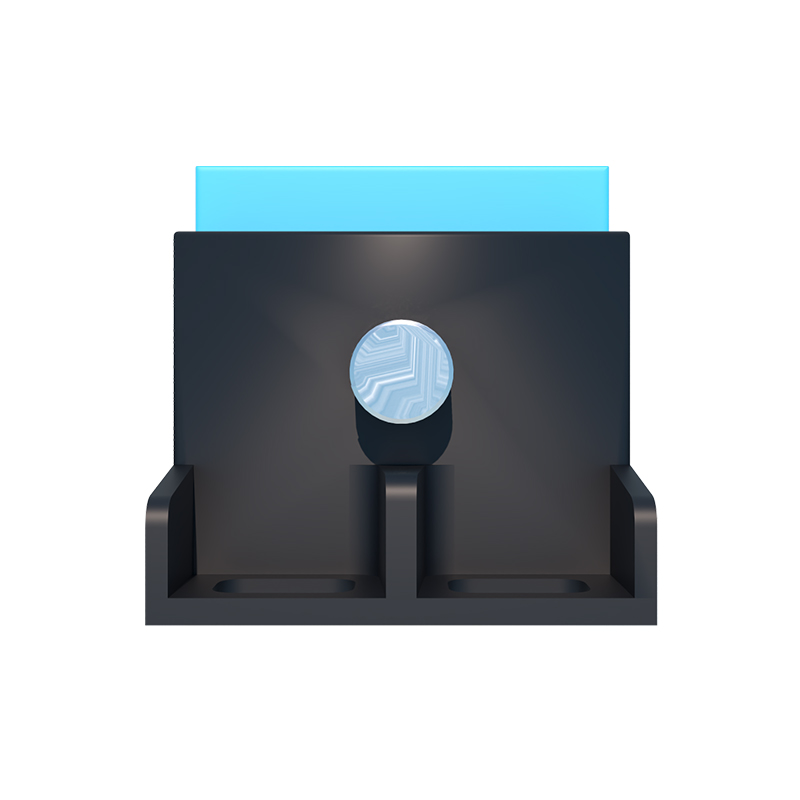
Photoelectric sensors, while sometimes categorized separately, are a crucial proximity sensing technology. They operate by emitting a light beam (usually infrared, red LED, or laser) and detecting its reflection or interruption. For proximity (diffuse reflective) mode, the emitter and receiver are housed in the same unit. The sensor detects light reflected directly off the target. The detection distance depends on the target's size, color, and reflectivity. Background suppression versions use triangulation to only detect objects within a precise field, ignoring reflective backgrounds. These sensors are versatile for detecting objects of various materials at longer ranges than inductive or capacitive types but can be affected by ambient light, dust, or fog.
Magnetic proximity sensors, or reed switches, detect the presence of a permanent magnet. They are simple, low-cost, and used in applications like door/window sensing or cylinder position detection. Ultrasonic sensors emit high-frequency sound waves and measure the time for the echo to return, calculating distance. They are excellent for clear object detection, level sensing, and applications where optical sensors struggle with transparency or color.
The output of a proximity sensor is a critical selection factor. Two-wire AC/DC sensors are simple to wire but have a residual leakage current. Three-wire DC sensors (PNP-sourcing or NPN-sinking) are the industry standard, providing a clear switch signal to programmable logic controllers (PLCs). Analog outputs (4-20 mA or 0-10V) provide continuous distance information. Key specifications include nominal sensing distance (Sn), repeatability, hysteresis (the difference between the switch-on and switch-off points for stability), switching frequency, and environmental ratings.
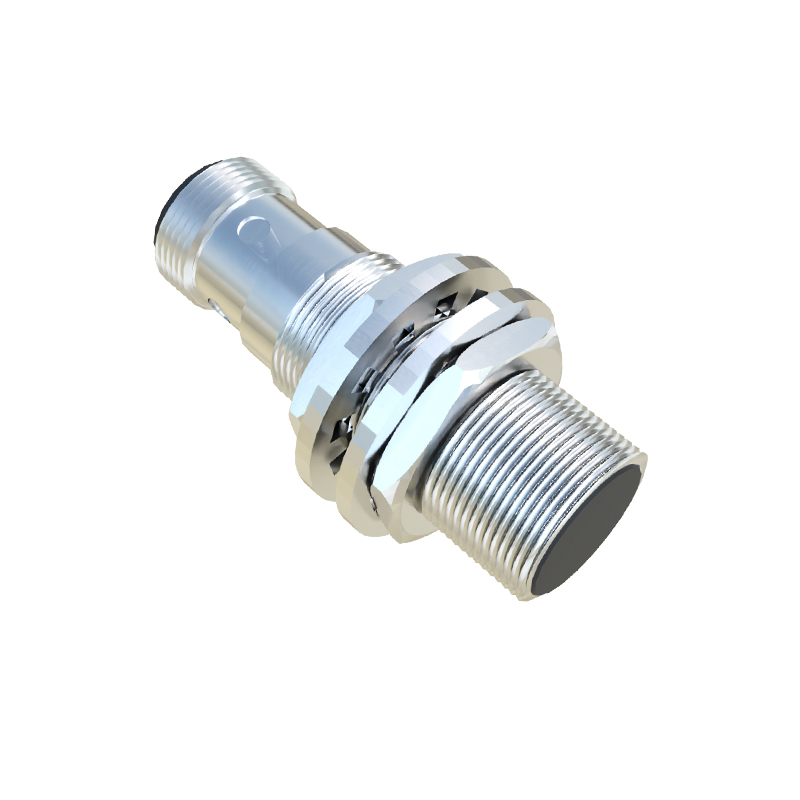
In application, correct installation is paramount. Metal surrounding the sensing face can reduce the effective range (shielding effect). Sensors should be spaced adequately apart to prevent mutual interference. Understanding the principles behind inductive, capacitive, and photoelectric technologies allows engineers to select the optimal sensor for tasks ranging from detecting a metal gear tooth to controlling the fill level of a flour silo, thereby enhancing system efficiency, safety, and reliability in automated processes.