In the realm of industrial automation and electronic device design, a common point of confusion arises regarding the functional identity of proximity sensors and front-facing cameras. While both components are often positioned on the front panel of devices like smartphones, tablets, and industrial HMIs, they serve fundamentally different purposes. This article aims to demystify these technologies, clarifying that a proximity sensor is not a front camera, and detailing their distinct operational principles, applications, and roles within modern systems.
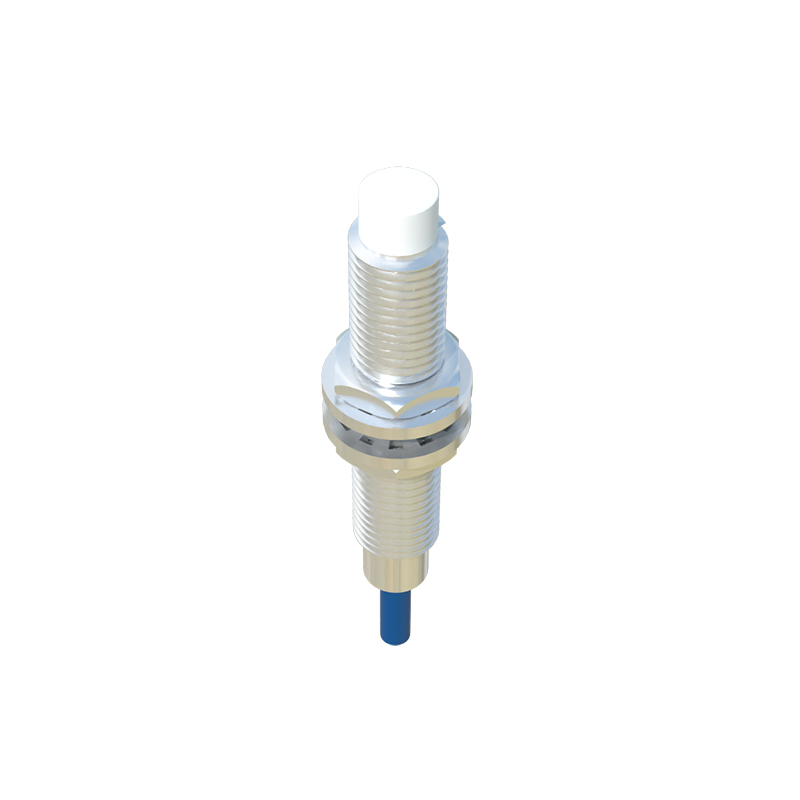
A proximity sensor is a non-contact electronic device designed to detect the presence or absence of an object within a specific range without any physical contact. Common types include inductive, capacitive, ultrasonic, and infrared (IR) sensors. For instance, in a smartphone, an IR-based proximity sensor typically emits an infrared beam. When an object, like a user's ear during a call, comes close, the beam is reflected back to a receiver. The sensor detects this change and signals the system to turn off the touchscreen display to prevent accidental inputs. This is purely a binary detection mechanism: something is near or not. Its output is simple data used to trigger an automated response. In industrial settings, inductive proximity sensors detect metallic objects for tasks like counting, positioning, or safety interlocks on assembly lines, while capacitive sensors can detect non-metallic materials.
Conversely, a front-facing camera is an optoelectronic device whose primary function is to capture visual imagery. It consists of a lens assembly, an image sensor (typically a CMOS or CCD sensor), and supporting circuitry to process and digitize the captured light. Its output is complex image or video data. This data can be used for various purposes: video conferencing, photography, facial recognition for biometric security, or advanced driver-assistance systems (ADAS) in vehicles. Unlike a proximity sensor's simple "on/off" signal, a camera processes a vast array of visual information, enabling pattern recognition, depth perception (in multi-camera setups or with time-of-flight sensors), and environmental mapping.
The confusion likely stems from their co-location. On many consumer devices, the small dark circle near the earpiece often houses both the proximity sensor's IR emitter/receiver and the front camera lens. To the untrained eye, they may appear as a single unit. However, internally, they are separate components on the printed circuit board (PCB), connected to different chipsets and serving entirely independent functions within the device's architecture.
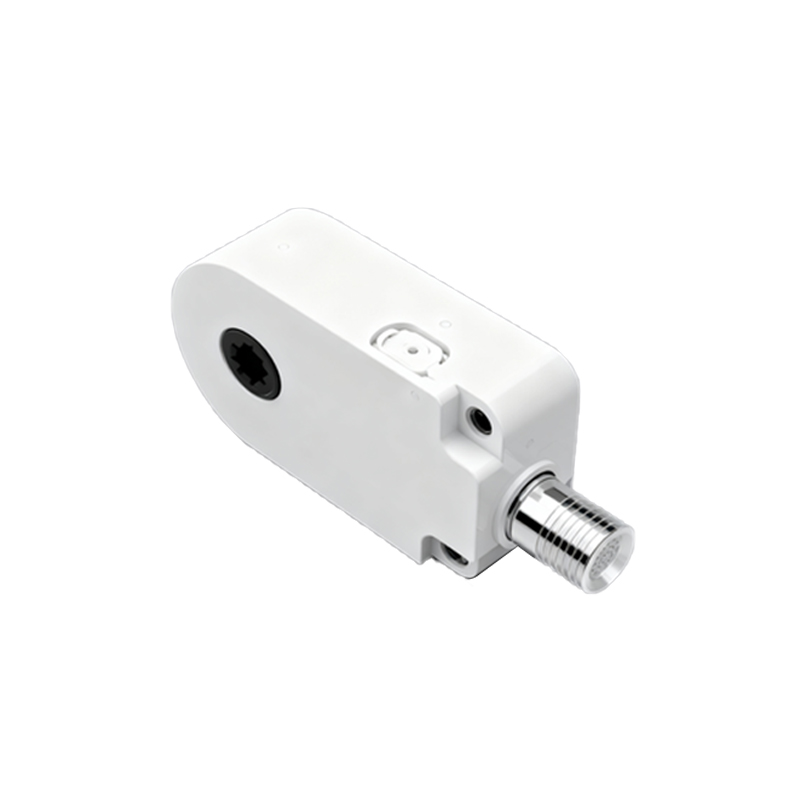
From an engineering and application standpoint, the differences are stark. Proximity sensors are about detection and automation. They are real-time, low-power, and low-data devices crucial for reliability and safety. A malfunctioning proximity sensor might lead to a screen not turning off, causing "cheek dialing." In an industrial machine, it could cause a safety hazard. Front cameras, however, are about capture and analysis. They are higher-power, high-data-throughput devices central to user interaction and complex computational tasks. Their failure affects features like video calls or facial unlock but doesn't typically pose a direct operational safety risk in the same way a safety-gate sensor might.
Furthermore, their technological paths are diverging with advancements. Proximity sensors are becoming more miniaturized and integrated, with some combining ambient light sensing (ALS) into a single package. Modern IR sensors can also provide crude distance estimation. On the other hand, front cameras are evolving with higher megapixels, wider apertures, and the integration of 3D sensing technologies like structured light or time-of-flight (ToF) modules. Notably, a ToF sensor, which measures distance by calculating the time it takes for a light pulse to bounce back, can function as a highly precise proximity sensor or for creating depth maps. This blurring of lines in advanced systems is perhaps the most significant source of contemporary confusion. However, even in a ToF system used for facial recognition, the "proximity sensing" function is a subset of its broader data-capture capability, distinct from a dedicated, single-purpose proximity switch.
In conclusion, while proximity sensors and front cameras may share physical real estate on a device's facade, they are distinct components with unique operational paradigms. A proximity sensor is a detector for automation control, and a front camera is an imager for data acquisition and analysis. Understanding this distinction is crucial for engineers during the design, integration, and troubleshooting phases, and for consumers to better comprehend the sophisticated technology embedded in everyday devices. The next time you see that small dot on your phone, remember it likely hosts two separate worlds of sensing: one that feels presence in the dark and one that sees the light.