In the realm of industrial automation and control systems, proximity sensors are indispensable components. Selecting the right sensor for an application is a critical task, and a fundamental part of this process is deciphering the often-cryptic model numbers printed on the device. These alphanumeric codes are not random; they are a condensed language that conveys vital specifications about the sensor's type, function, physical characteristics, and electrical properties. For engineers, technicians, and procurement specialists, understanding this nomenclature is essential for ensuring compatibility, performance, and reliability in any system.
A typical proximity sensor model number is structured in a logical sequence, with each segment or character group representing a specific attribute. While manufacturers have their own unique coding systems, many follow a similar hierarchical pattern. The first part of the model number usually indicates the sensor family or series. This identifies the core technology. Common prefixes include 'IN' for inductive sensors, 'CA' for capacitive sensors, and 'PR' or 'PM' for photoelectric sensors. Some manufacturers use 'E2E' or 'E2K' for inductive proximity, or 'TL' for photoelectric types. This initial code immediately tells you the sensing principle, which determines what kind of target the sensor can detect—metallic objects for inductive, various materials for capacitive, and presence/absence for photoelectric.
Following the series identifier, the next set of characters often defines the physical form factor and sensing distance. This includes codes for housing shape, such as 'M' for cylindrical (barrel-type), 'F' for rectangular or block-style, or 'Q' for square. The diameter of a cylindrical sensor is frequently embedded here; for instance, 'M18' denotes an 18mm diameter cylindrical housing. The rated sensing distance, a crucial parameter, is also typically included. It might be represented directly (e.g., '5' for 5mm) or via a code (e.g., 'F' might correspond to a 5-10mm range in a specific series). Always cross-reference this with the datasheet for the exact value.
The subsequent part of the model number delves into electrical output characteristics and connection type. This segment is paramount for integration into control circuits. Output type is key: 'N' or 'NPN' indicates a sinking output (negative switching), while 'P' or 'PNP' indicates a sourcing output (positive switching). The number of wires or connection method is also specified: '2' for 2-wire AC/DC, '3' for 3-wire DC, and sometimes '4' for 2-wire DC or devices with two separate outputs. You might also see codes for output function, such as 'NO' for Normally Open or 'NC' for Normally Closed contacts.
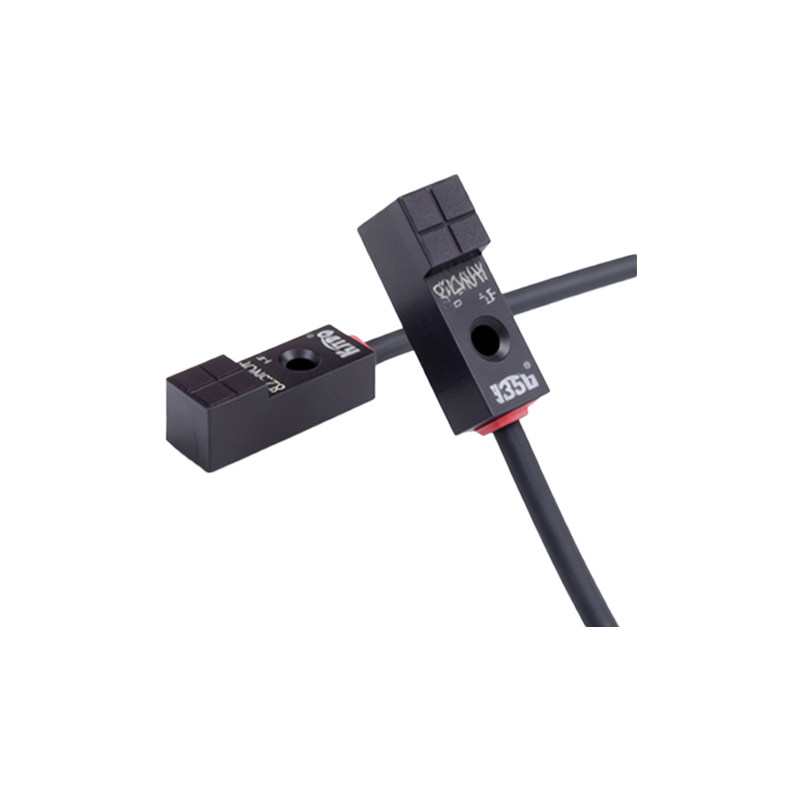
Further suffixes and codes provide additional, often critical, details. These can include:
Voltage Range: Designations like 'DC10-30V' or a code representing a specific voltage class.
Housing Material: 'S' for stainless steel, 'B' for brass, or 'P' for PBT plastic, indicating suitability for harsh environments.
Electrical Protection: Codes for short-circuit protection (SCP), reverse polarity protection, and surge protection.
Output State Indicator: The presence of an LED indicator might be denoted by an 'L'.
Special Features: This could include analog output (e.g., 4-20mA or 0-10V), IO-Link communication capability, high-temperature resistance (e.g., 'H'), or particularly high switching frequencies.
Connection: 'C' might indicate a connector version, while a lack of suffix often means a pre-wired cable outlet.
Let's deconstruct an example model number: IN-M18-AP8X. Breaking it down:
IN: Inductive proximity sensor series.
M18: Cylindrical housing with an 18mm thread diameter.
AP: This manufacturer-specific code likely combines sensing distance (e.g., 8mm) and output type (e.g., PNP).
8X: Could indicate a flush-mountable design and a specific electrical connection or cable type.
To accurately interpret any model number, the manufacturer's datasheet or catalog is the ultimate authority. It provides the definitive "decoder key" for their specific system. Relying on memory or assumptions across different brands can lead to costly errors.
In conclusion, a proximity sensor model number is a powerful