In the realm of industrial automation and control systems, proximity sensors are indispensable components for detecting the presence or absence of objects without physical contact. Among the various configurations, 3-wire and 4-wire proximity sensors are the most prevalent, each offering distinct electrical characteristics and application suitability. This article delves into their operational principles, wiring schemes, advantages, and typical use cases to guide engineers in selecting the appropriate type for their projects.
A proximity sensor, fundamentally, is a solid-state device that emits an electromagnetic field or a beam of electromagnetic radiation and looks for changes in the field or return signal. The object being detected is often referred to as the sensor's "target." These sensors are widely used in manufacturing for positioning, counting, and inspection tasks.
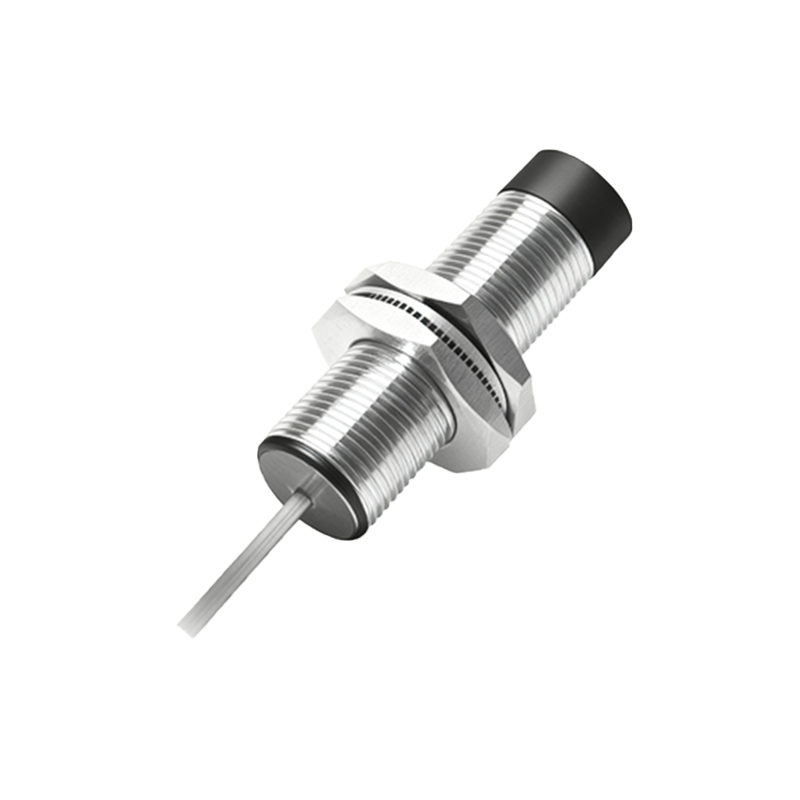
3-Wire Proximity Sensors
The 3-wire sensor is arguably the most common type found in DC applications. Its wiring typically consists of three conductors: one for power supply (V+), one for ground (0V), and one for the output signal. The output can be either NPN (sinking) or PNP (sourcing), which defines how the sensor switches the load relative to the power supply.
NPN Configuration: In this setup, the output wire connects to the load, which is then connected to the positive supply. When the sensor is activated, it switches the output to ground (0V), allowing current to sink through the sensor to complete the circuit. This is often described as a "sinking" output.
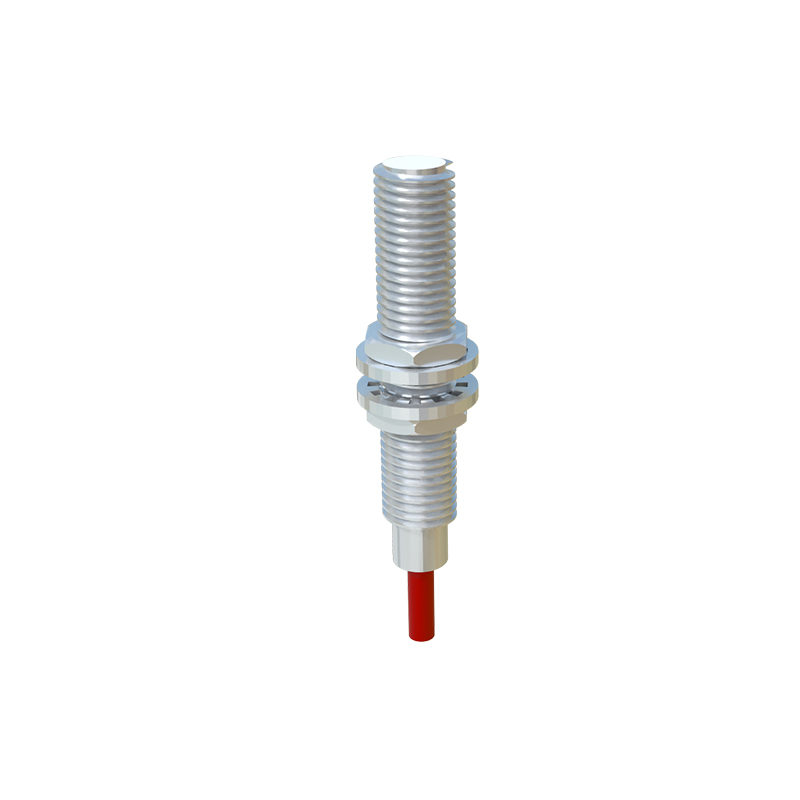
PNP Configuration: Here, the output wire provides the positive voltage from the supply to the load when activated. The load is connected to ground. This is known as a "sourcing" output.
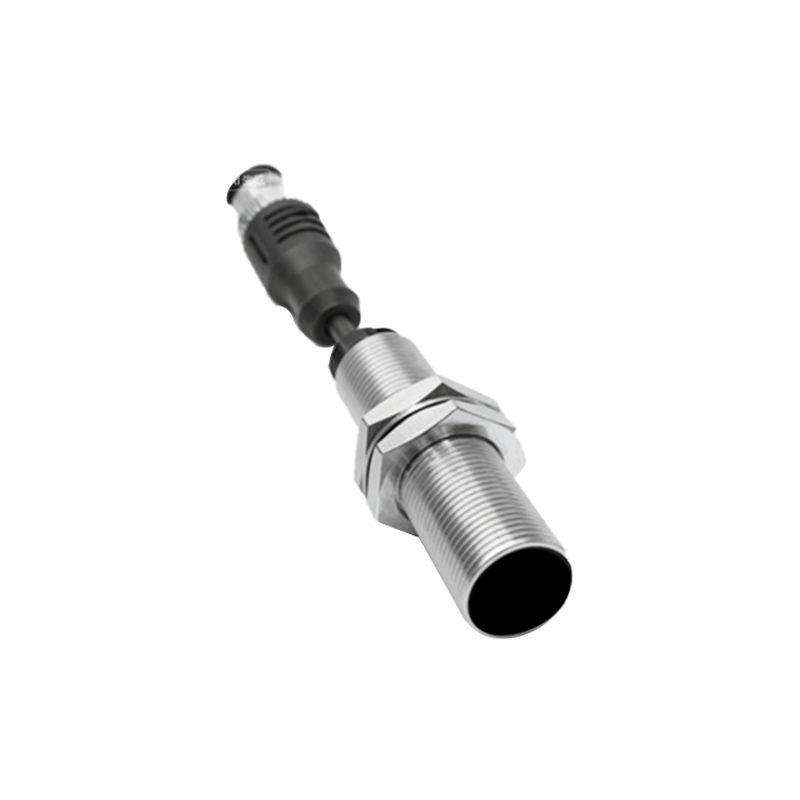
The primary advantage of the 3-wire design is its simplicity and cost-effectiveness for standard switching applications. It provides a clear digital signal (on/off) and is easy to interface with programmable logic controllers (PLCs) and other control devices. However, it requires a dedicated common (ground) connection, and care must be taken to match the sensor's output type (NPN/PNP) with the input configuration of the controller to avoid incompatibility.
4-Wire Proximity Sensors
The 4-wire sensor builds upon the 3-wire design by incorporating an additional wire, resulting in two output channels. Typically, these are configured as one normally open (NO) and one normally closed (NC) contact, or sometimes as two complementary outputs (e.g., a PNP and an NPN output from the same device). The four wires are usually: V+, 0V, Output A, and Output B.
This architecture offers enhanced flexibility. The dual outputs allow for more complex control logic within a single sensor package. For instance, one output can trigger an action when an object is present, while the other can signal an absence or a fault condition. This can simplify cabinet wiring and reduce the total number of sensors required in a system. They are particularly useful in safety circuits or applications requiring a confirmation signal. The main trade-off is a slightly higher cost and a more complex wiring diagram compared to the 3-wire version.
Key Considerations for Selection
Choosing between a 3-wire and 4-wire proximity sensor hinges on several factors:
1. Control System Compatibility: The foremost consideration is the input module of the PLC or controller. An NPN sensor is compatible with a sinking input module, while a PNP pairs with a sourcing input. A 4-wire sensor with dual complementary outputs can interface with both types of inputs simultaneously.
2. Application Logic: Evaluate the required signal logic. Does the application need a simple presence detection signal (3-wire sufficient), or does it require a fail-safe signal, a state confirmation, or control of two different circuits based on one sensing event (4-wire advantageous)?
3. Wiring and Space Constraints: 3-wire sensors use less conduit space and are simpler to wire. In panels with limited space or where installation time is critical, this can be a decisive factor.
4. Cost vs. Functionality: While 3-wire sensors are generally more economical, the added functionality of a 4-wire sensor may justify its cost by reducing component count or increasing system reliability.
In summary, 3-wire proximity sensors are the workhorse for straightforward, high-volume detection tasks, prized for their reliability and simplicity. Conversely, 4-wire sensors provide greater functional integration and are the preferred choice for applications demanding redundant signaling, complementary logic, or interface versatility. A thorough analysis of the electrical requirements and control strategy of the specific application will lead to the optimal, efficient, and reliable sensor selection.