E2B proximity sensors represent a critical component in modern industrial automation, offering non-contact detection capabilities that enhance operational efficiency and reliability. These sensors operate based on electromagnetic principles, detecting the presence or absence of metallic objects without physical contact. Widely utilized across manufacturing, packaging, and material handling sectors, E2B sensors contribute to precision control and safety in automated systems.
The fundamental working principle of E2B proximity sensors involves an oscillator circuit that generates a high-frequency electromagnetic field. When a metallic target enters this field, eddy currents are induced, causing a change in the oscillation amplitude. This alteration is detected by the sensor's circuitry, triggering an output signal. E2B sensors are typically categorized into inductive types, designed specifically for ferrous and non-ferrous metals, with sensing ranges varying from a few millimeters to several centimeters depending on the model and target material.
Key advantages of E2B proximity sensors include their robustness in harsh environments. Encased in durable materials such as stainless steel or nickel-plated brass, they resist dust, moisture, and mechanical impacts. Their non-contact nature eliminates wear and tear, ensuring long service life and minimal maintenance. Additionally, E2B sensors provide fast response times, often in microseconds, making them suitable for high-speed applications like conveyor belt monitoring or robotic assembly lines.
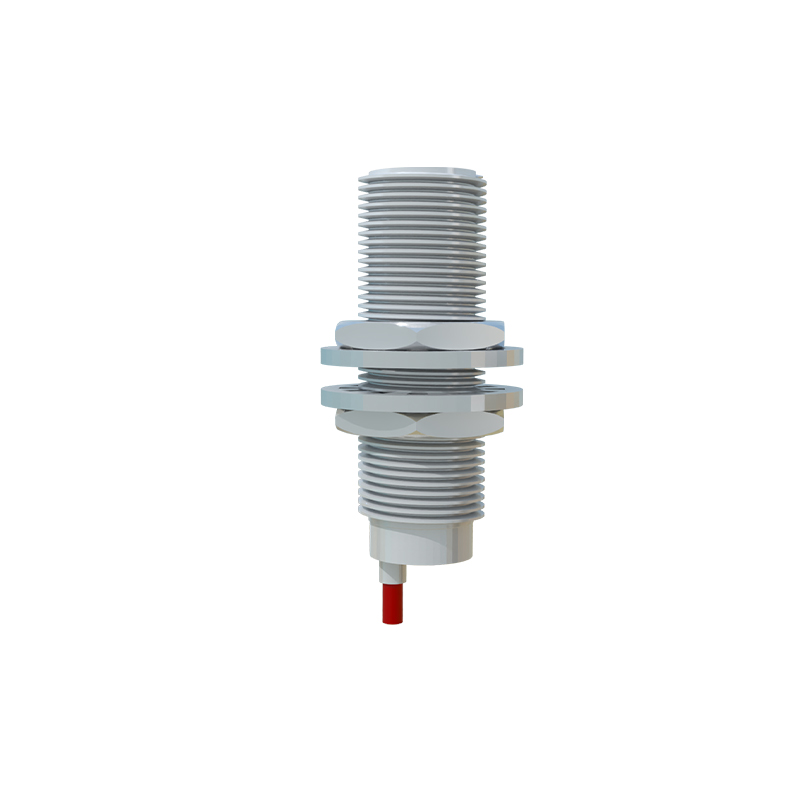
When selecting an E2B proximity sensor, engineers must consider several parameters. Sensing distance, or the maximum range at which a target can be reliably detected, is crucial and should account for target size and material. Output configuration—whether NPN or PNP, normally open or normally closed—must align with the control system's requirements. Environmental factors like temperature extremes, chemical exposure, and electrical noise also influence sensor choice. Proper installation is essential; sensors should be mounted securely, with adequate clearance from other metal objects to prevent interference.
In practice, E2B sensors facilitate diverse functions. They serve as limit switches in machinery, detect part presence in assembly processes, and monitor object positioning in automated guided vehicles. For instance, in automotive manufacturing, E2B sensors verify component placement before welding, reducing errors. In food processing, their hygienic designs prevent contamination while tracking packaging materials. Integration with programmable logic controllers (PLCs) enables seamless data exchange, supporting real-time decision-making in Industry 4.0 setups.
Despite their reliability, challenges may arise. False triggers can occur if non-target metals are nearby, necessitating careful placement. Regular calibration and testing are recommended to maintain accuracy, especially in high-vibration settings. Advances in E2B technology continue to address these issues, with newer models featuring enhanced immunity to electromagnetic interference and broader temperature tolerances.
Looking ahead, the evolution of E2B proximity sensors aligns with smart manufacturing trends. Innovations include IO-Link compatibility for digital communication, allowing parameter adjustments and diagnostics remotely. Miniaturization enables installation in compact spaces, while energy-efficient designs reduce overall system power consumption. As industries embrace automation, E2B sensors will remain indispensable, offering scalable solutions for precision detection.
In summary, E2B proximity sensors are versatile tools that bolster industrial efficiency through reliable, non-contact sensing. By understanding their principles, selection criteria, and applications, engineers can optimize their use in automated systems, driving productivity and safety in dynamic operational environments.