In the realm of industrial automation and quality control, precision is not merely a goal—it is an absolute necessity. Among the array of technologies enabling this precision, laser displacement sensors stand out as a cornerstone. These devices, leveraging the principles of triangulation, time-of-flight, or confocal measurement, project a focused laser beam onto a target surface. The reflected light is then captured by a receiver, and through sophisticated algorithms, the sensor calculates the exact distance to the object with remarkable accuracy. This non-contact measurement capability is pivotal, as it eliminates the risk of surface damage, wear on the sensor itself, and allows for high-speed inspection of moving or delicate components.
The operational efficacy of laser displacement sensors is underscored by their exceptional specifications. Modern units offer resolutions down to the sub-micron level, with sampling rates exceeding 100 kHz. This enables real-time monitoring of dynamic processes, such as vibration analysis on rotating machinery or thickness profiling of fast-moving webs in paper or film production. Their versatility is further demonstrated by their ability to measure a vast range of materials—from highly reflective metals and transparent glass to dark, absorbent surfaces like rubber or carbon composites. Advanced models incorporate auto-exposure and multi-peak detection algorithms to handle these challenging surfaces reliably, ensuring stable data acquisition regardless of material or ambient light variations.
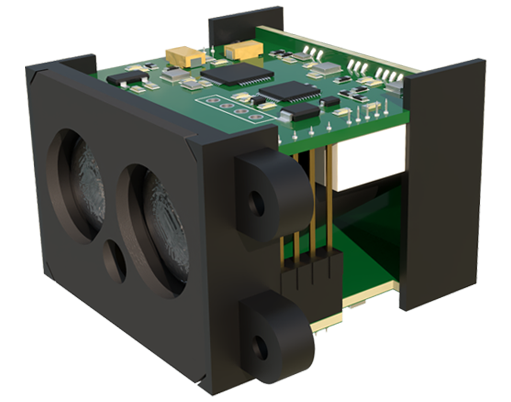
The practical applications span virtually every sector of advanced manufacturing. In automotive assembly, these sensors are deployed for precise gap and flush measurement between body panels, ensuring aesthetic quality and aerodynamic performance. In electronics, they verify the coplanarity of Ball Grid Array (BGA) solder balls and the thickness of wafer substrates. The semiconductor industry relies on them for critical dimension control and wafer warpage analysis. Furthermore, in robotics, laser displacement sensors provide essential feedback for guidance and positioning, enabling robots to perform intricate tasks like bin picking or precise assembly with sub-millimeter repeatability.
Beyond traditional manufacturing, their role in predictive maintenance is transformative. By continuously monitoring the displacement or deformation of critical assets—such as turbine blades, bearing housings, or structural beams—these sensors can detect anomalies indicative of wear, misalignment, or impending failure. This facilitates a shift from scheduled maintenance to condition-based maintenance, dramatically reducing unplanned downtime and operational costs. The integration of these sensors into Industrial Internet of Things (IIoT) frameworks allows for the aggregation and analytics of displacement data across an entire facility, providing unprecedented insights into process stability and equipment health.
However, achieving optimal performance requires careful consideration of several factors. The choice between a red laser or a blue laser, for instance, is crucial; blue lasers, with their shorter wavelength, exhibit less scattering on rough surfaces and perform better on organic materials. Environmental factors like dust, steam, or significant temperature fluctuations can impact performance, often necessitating protective housings or models with built-in environmental resistance. Proper installation, alignment, and calibration are paramount, as is selecting a sensor with a measurement range and spot size appropriate for the specific target and required precision.
In conclusion, laser displacement sensors are far more than simple measuring tools. They are enablers of a new paradigm in industrial precision, quality assurance, and operational intelligence. Their non-contact nature, coupled with high speed, accuracy, and material versatility, makes them indispensable in the push towards smarter, more efficient, and zero-defect manufacturing. As sensor technology continues to evolve with advancements in laser diodes, CMOS detectors, and embedded processing power, their capabilities will only expand, solidifying their position at the heart of the Industry 4.0 revolution. Their effect is clear: they transform intangible requirements for precision into quantifiable, actionable data, driving excellence across the modern industrial landscape.