In the realm of industrial automation and precision measurement, laser sensors have become indispensable tools for tasks ranging from alignment and positioning to quality control and defect detection. However, a critical challenge that engineers and technicians often encounter is laser sensor detection offset. This phenomenon refers to the discrepancy between the actual position of a target object and the position reported by the laser sensor. Understanding the causes, implications, and mitigation strategies for this offset is paramount for ensuring system accuracy, reliability, and overall operational efficiency.
Laser sensors operate primarily on the principle of triangulation or time-of-flight measurement. In triangulation-based sensors, a laser diode projects a spot onto the target surface. The reflected light is captured by a receiving element, such as a CCD or CMOS array. The position of the reflected spot on this receiver changes with the target's distance, allowing for distance calculation. Time-of-flight sensors measure the round-trip time of a laser pulse to determine distance. Despite their advanced technology, several factors can introduce detection offset.
One primary cause of offset is environmental interference. Variations in ambient light, especially strong direct sunlight or light from other high-intensity sources, can saturate the sensor's receiver or create noise, leading to erroneous readings. Temperature fluctuations are another significant factor. Laser diodes and receiver components are sensitive to temperature changes, which can alter the wavelength of the emitted light and the performance of optical elements, causing drift in measurements. Industrial environments often experience such thermal variations, making thermal management a key design consideration.

The characteristics of the target surface itself are a major contributor to offset. Variations in color, reflectivity, texture, and material can dramatically affect how laser light is absorbed, scattered, or reflected. A highly reflective or specular surface may cause a strong but misdirected reflection, while a dark, absorptive surface may return a weak signal. Surface roughness can scatter the laser beam, broadening the spot on the receiver and reducing measurement precision. Inconsistent surface properties across different parts or batches can lead to non-uniform offset, complicating compensation efforts.
Optical contamination is a persistent issue in industrial settings. Dust, oil mist, coolant, or other particulates accumulating on the sensor's protective window or lens can attenuate or distort the outgoing and incoming laser beams. Even thin layers of contamination can cause a consistent offset or increase signal noise. Regular maintenance and cleaning schedules, along with the use of air purge systems or protective housings, are essential countermeasures.
Sensor mounting and mechanical stability are often overlooked but crucial factors. Vibration from machinery can cause microscopic movements in the sensor's position or alignment, introducing dynamic offset. Improper mounting or loose fixtures can lead to gradual drift over time. Ensuring rigid, vibration-damped mounting and periodically verifying alignment are fundamental best practices.

Electrical noise within the control system can also induce offset. Noise from motor drives, switching power supplies, or high-frequency equipment can interfere with the sensor's analog signal output or digital communication lines, corrupting the data. Proper shielding, grounding, and the use of filtered power supplies are necessary to maintain signal integrity.
To mitigate laser sensor detection offset, a multi-faceted approach is required. Calibration is the first line of defense. Sensors should be calibrated using a master artifact with known, stable dimensions and surface properties under conditions that mimic the actual operating environment as closely as possible. Advanced sensors often feature built-in calibration routines and software tools for offset compensation.
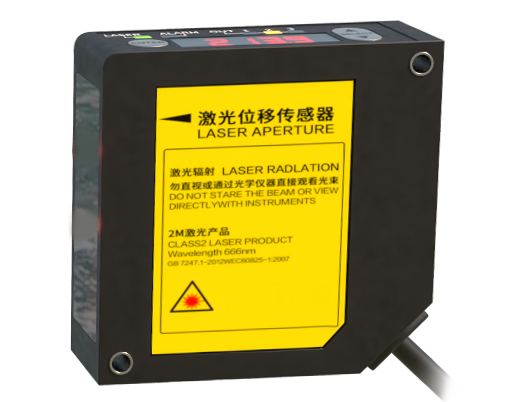
Environmental hardening is critical. Selecting sensors with high ingress protection (IP) ratings, integrated temperature compensation circuits, and robust housings can minimize the impact of harsh conditions. For challenging lighting environments, sensors with modulated laser light and narrow-band optical filters can effectively reject ambient light interference.
Adaptive sensing techniques can also be employed. Some modern laser sensors offer automatic surface compensation algorithms that adjust the laser power or receiver gain based on the detected signal strength. For applications with varying surface types, teaching the sensor to multiple reference surfaces can improve adaptability.
Regular verification and maintenance form the backbone of long-term accuracy. Implementing routine checks with calibration gauges and documenting performance trends can help identify drift before it impacts production quality. Predictive maintenance, based on sensor performance data, can schedule cleaning or recalibration proactively.
In conclusion, laser sensor detection offset is an inherent challenge in precision industrial applications, stemming from a complex interplay of environmental, target-related, and system factors. By thoroughly understanding these root causes and implementing a comprehensive strategy encompassing proper sensor selection, meticulous installation, rigorous calibration, and proactive maintenance, engineers can significantly reduce offset errors. This ensures that laser sensing systems deliver the high levels of precision and reliability demanded by modern manufacturing, robotics, and metrology, ultimately safeguarding product quality and optimizing production processes.