In the realm of industrial automation and control, proximity sensors operating effectively at a distance of 1 meter represent a critical category of non-contact detection devices. These sensors, often termed long-range proximity sensors, are engineered to detect the presence or absence of an object within a nominal range of one meter without any physical contact. This capability is paramount in applications demanding hygiene, safety, or where the target object is fragile or in constant motion. The operational principle hinges on various technologies, with inductive, capacitive, and ultrasonic being the most prevalent for achieving this specific range.
Inductive proximity sensors with a 1m range are predominantly used for detecting metallic objects. They generate an electromagnetic field and detect changes caused by eddy currents induced in a metal target. Achieving a 1-meter sensing distance with inductive technology typically requires a larger sensor coil and sophisticated electronics to amplify the signal, making them suitable for detecting large machinery parts, vehicles, or metal containers in logistics and heavy industry. Their key advantages include high switching frequency, robustness in harsh environments (resistant to dust, oil, and coolants), and exceptional long-term stability. However, they are inherently limited to ferrous and non-ferrous metals.
Capacitive proximity sensors can also be configured for 1m detection, though this is less common for standard models. They detect both metallic and non-metallic materials—liquids, plastics, wood, or granular substances—by sensing changes in capacitance. To achieve a one-meter range, these sensors often require a large sensing surface and are highly sensitive to environmental factors like humidity and temperature. They find niche applications in level detection of bulk materials in silos or detecting large non-metallic objects on conveyor systems, where other sensor types fail.
Ultrasonic sensors are arguably the most versatile technology for reliable 1-meter proximity sensing across a wide variety of materials and surfaces. They operate by emitting high-frequency sound waves and measuring the time taken for the echo to return. This time-of-flight principle allows for precise distance measurement, not just detection. With a 1m range being well within their standard capabilities, ultrasonic sensors excel in applications involving transparent objects, liquid level control, or uneven surfaces. They are largely unaffected by color, transparency, or dust, though factors like air turbulence, temperature gradients, and highly absorbent materials can influence performance.
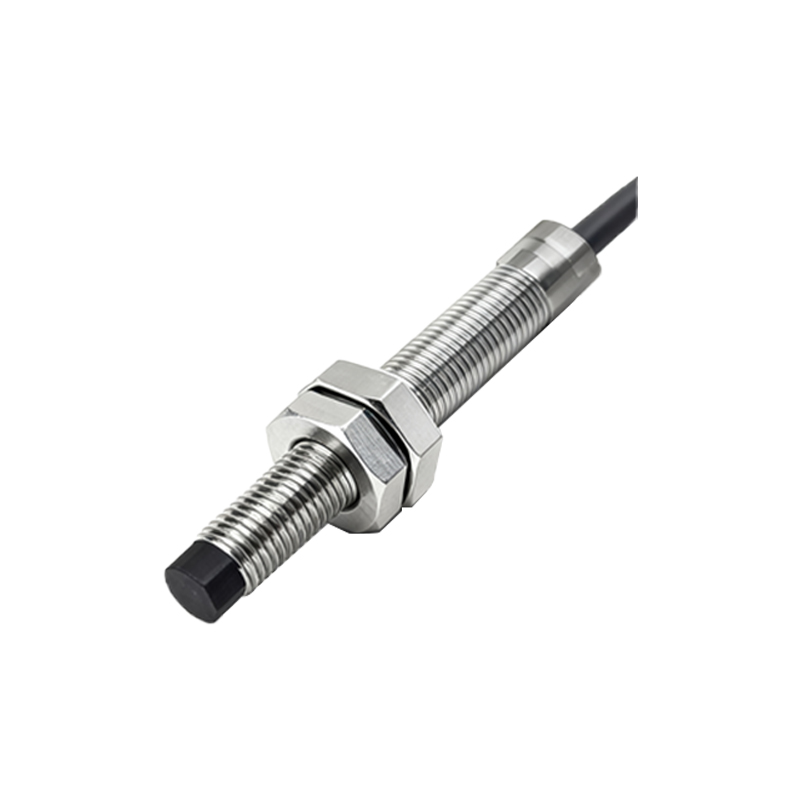
The selection of a 1m proximity sensor is dictated by several critical parameters beyond just the sensing distance. The sensing object's material, size, and shape directly impact the effective range. Environmental conditions are crucial; for instance, inductive sensors are ideal for dirty, metallic environments, while ultrasonic sensors perform better in controlled atmospheres. The required response time and switching frequency determine if the sensor can keep pace with high-speed automation lines. Installation considerations, such as the sensor's housing material (often nickel-plated brass or stainless steel for durability), mounting style, and connection type (pre-wired or connector-based), are vital for long-term reliability.
Typical industrial applications for 1m proximity sensors are diverse. In automotive manufacturing, they are used for positioning robot arms near vehicle chassis. In packaging, they detect the presence of large pallets or containers. In material handling, they serve as anti-collision devices on automated guided vehicles (AGVs) or crane systems. In warehouse management, they monitor the filling level of large bins or the passage of goods through portals.
In conclusion, the 1-meter proximity sensor is a sophisticated tool, not a generic component. Its successful deployment hinges on a thorough understanding of the target object, the operating environment, and the specific demands of the application. Choosing between inductive, capacitive, and ultrasonic technologies requires a careful trade-off between material compatibility, environmental robustness, and cost. By meticulously evaluating these factors, engineers can leverage the non-contact, reliable detection offered by these sensors to enhance safety, efficiency, and automation in complex industrial systems.