In the rapidly evolving landscape of industrial automation and quality control, the demand for high-precision, non-contact measurement solutions has never been greater. Multi-point laser distance sensors have emerged as a pivotal technology, offering unparalleled accuracy, speed, and flexibility for a wide range of applications. Unlike traditional single-point sensors, these advanced devices utilize multiple laser beams to simultaneously measure distances at several discrete points across a target surface or object. This capability fundamentally transforms inspection, monitoring, and guidance processes across sectors such as automotive manufacturing, electronics assembly, logistics, and aerospace engineering.
The core operational principle of a multi-point laser distance sensor is based on laser triangulation or time-of-flight (ToF) measurement. In a triangulation-based system, a laser diode projects a structured pattern of multiple points onto the target. A high-resolution CMOS or CCD image sensor, positioned at a known angle, captures the reflection of this pattern. Sophisticated onboard processors then analyze the displacement of each point in the captured image. By applying trigonometric calculations, the sensor determines the precise distance to the target for each individual laser point. Time-of-flight variants, often used for longer ranges, measure the phase shift or the direct flight time of laser pulses to calculate distance. The integration of multiple measurement points within a single compact housing is achieved through advanced optical design, often employing diffractive optical elements (DOEs) or micro-lens arrays to generate the precise point matrix.

The advantages of deploying multi-point laser sensors are substantial. Firstly, they dramatically increase measurement throughput. Instead of scanning a single point across a surface—which consumes valuable time and may require complex mechanical staging—a multi-point sensor captures an entire profile or set of key dimensions in a single, instantaneous measurement. This is critical for high-speed production lines where cycle times are measured in milliseconds. Secondly, they enable comprehensive profile and contour analysis. By measuring several points along an edge, seam, or surface, these sensors can detect warping, bending, gaps, and step heights that a single-point measurement would miss. For instance, in automotive body-in-white assembly, a multi-point sensor can verify the flushness and gap dimensions of multiple door panels simultaneously, ensuring perfect fit and finish.
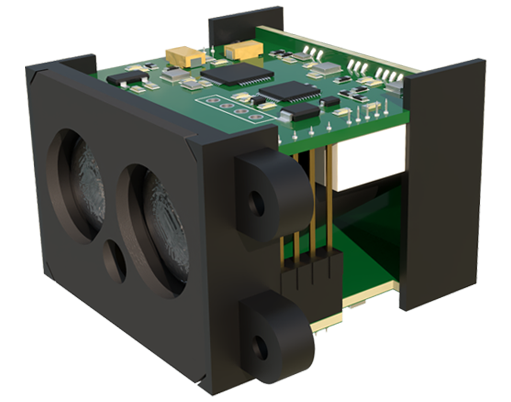
Furthermore, these sensors offer exceptional robustness in challenging industrial environments. Modern units are typically housed in IP67-rated enclosures, protecting them from dust, moisture, and mechanical vibration. They are largely immune to variations in ambient light and can reliably measure objects with diverse surface properties, from specular metals to dark, absorbent materials, thanks to adjustable laser power and advanced filtering algorithms. The integration of industrial communication protocols like EtherCAT, PROFINET, or IO-Link allows for seamless data streaming into PLCs and supervisory systems, enabling real-time process control and closed-loop feedback.
Practical applications are vast and growing. In electronics manufacturing, they precisely measure the coplanarity of Ball Grid Array (BGA) components or the height of solder paste deposits. In logistics and warehousing, they are used for pallet profiling, dimensioning packages, and guiding robotic arms for depalletizing. In the metals industry, they monitor the thickness and flatness of rolled sheets at multiple points across the width. The technology is also indispensable in robotics, providing rich 3D profile data for bin-picking, assembly verification, and robotic guidance without the cost and complexity of full 3D vision systems.
When selecting a multi-point laser distance sensor, engineers must consider key parameters: the number and spatial arrangement of measurement points, measurement range, repeatability (often in the micron range), sampling rate, and the required interface. The choice between triangulation and ToF technology depends on the required range, accuracy, and target surface. As Industry 4.0 drives the need for more data-driven insights, the role of these sensors as critical data acquisition nodes on the smart factory floor will only expand. Their ability to deliver dense, accurate dimensional data in real-time is foundational for predictive maintenance, statistical process control, and digital twin models.
In conclusion, multi-point laser distance sensors represent a significant leap beyond single-point measurement, offering a powerful synergy of speed, detail, and reliability. By providing a multi-dimensional snapshot of an object's geometry in a single shot, they empower engineers to achieve new levels of quality assurance, process efficiency, and automation intelligence. As optical and processing technologies continue to advance, we can expect these sensors to become even more capable, compact, and integral to the factories of the future.