In the realm of industrial automation and precision measurement, laser distance sensors have emerged as indispensable tools, with the SKD series representing a significant advancement in this technology. These sensors utilize the principle of time-of-flight or phase-shift measurement, emitting a laser beam towards a target and calculating the distance based on the time or phase difference of the reflected signal. The SKD series is engineered for robustness, high accuracy, and reliability in demanding environments, making it a preferred choice across various sectors.
The core technology behind SKD laser distance sensors involves a modulated laser diode and a sensitive photodetector. The laser emits short pulses or a continuous wave modulated at a specific frequency. When the beam hits a target, it reflects back to the sensor. The onboard processor then analyzes the signal, precisely measuring the elapsed time or phase shift to determine the distance with resolutions often down to sub-millimeter levels. This non-contact measurement method eliminates mechanical wear and allows for high-speed data acquisition, which is critical in dynamic industrial processes.
One of the standout features of the SKD series is its exceptional performance under challenging conditions. These sensors are typically housed in rugged, IP67-rated enclosures, providing protection against dust, moisture, and mechanical shocks. They maintain high accuracy across a wide temperature range, ensuring consistent operation in settings from cold storage facilities to hot manufacturing floors. Furthermore, advanced models incorporate background light suppression and filtering algorithms to minimize interference from ambient light sources, guaranteeing reliable readings even in brightly lit environments.
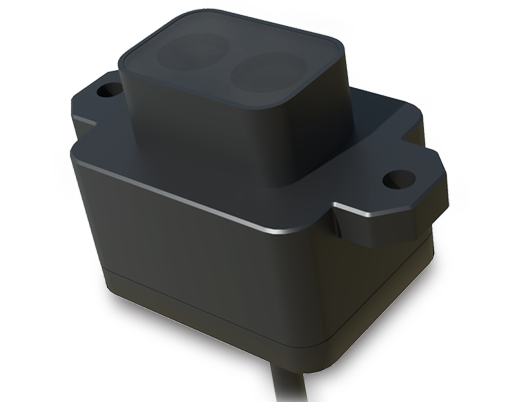
The applications of SKD laser distance sensors are vast and varied. In manufacturing and assembly lines, they are used for precise positioning of components, thickness measurement of materials, and fill level monitoring in containers. The logistics and warehousing industry leverages these sensors for pallet dimensioning, vehicle guidance, and automated storage and retrieval systems (AS/RS). In robotics, SKD sensors provide essential feedback for navigation, obstacle detection, and precise manipulation tasks, enhancing the autonomy and efficiency of robotic systems. The construction sector also benefits, employing them for alignment, monitoring structural deformations, and surveying.
Integration of SKD sensors into larger control systems is streamlined through multiple communication interfaces. Common protocols include analog outputs (4-20 mA, 0-10 V), digital interfaces like RS-232, RS-485, and industrial Ethernet options such as EtherNet/IP or PROFINET. This flexibility allows seamless connectivity with PLCs (Programmable Logic Controllers), SCADA systems, and industrial PCs, enabling real-time data processing and automated decision-making. Many models also feature programmable logic and multi-point measurement capabilities, allowing for customized application setups without external controllers.
When selecting an SKD laser distance sensor for a specific application, several parameters must be considered. The measuring range is primary, with SKD sensors available from short-range (a few centimeters) to long-range (over 100 meters) options. Accuracy and repeatability specifications are crucial for precision tasks. The response time or measurement rate determines how quickly the sensor can update readings, which is vital for high-speed processes. The type of target surface also influences performance; while most sensors work well on diffuse surfaces, special models or settings might be required for reflective, transparent, or dark materials.
Maintenance of SKD sensors is generally minimal due to their solid-state design. However, keeping the optical lens clean from dust, oil, or debris is essential to maintain optimal performance. Regular verification against a known reference distance can help ensure ongoing accuracy. Manufacturers typically provide configuration software that simplifies parameter setting, calibration, and diagnostics, facilitating easy setup and troubleshooting.
Looking ahead, the evolution of SKD laser distance sensors continues, driven by trends towards Industry 4.0 and the Industrial Internet of Things (IIoT). Future developments may include enhanced connectivity with wireless protocols, integrated AI for smarter data interpretation and predictive maintenance, and even greater miniaturization. The push for higher speeds, longer ranges, and improved accuracy in more compact and cost-effective packages will persist, solidifying the role of laser distance measurement as a cornerstone of modern industrial automation.
In conclusion, SKD laser distance sensors represent a mature yet continuously improving technology that delivers critical precision, reliability, and versatility. Their ability to provide accurate, non-contact distance measurements in real-time makes them a fundamental component in enhancing productivity, quality control, and automation across a diverse spectrum of industries.