In the realm of industrial automation and measurement technology, laser sensors stand out as pivotal components due to their exceptional accuracy, rapid response times, and non-contact operation. These devices utilize laser beams to detect, measure, or identify objects, making them indispensable in applications ranging from manufacturing and robotics to automotive and aerospace industries. Understanding how laser sensors detect objects involves delving into their fundamental principles, types, and operational mechanisms.
At its core, a laser sensor operates by emitting a focused beam of coherent light—typically from a laser diode—toward a target object. The light interacts with the object's surface, and the sensor analyzes the reflected or scattered light to gather data. This process relies on various detection methods, with the most common being triangulation, time-of-flight (ToF), and laser Doppler vibrometry.
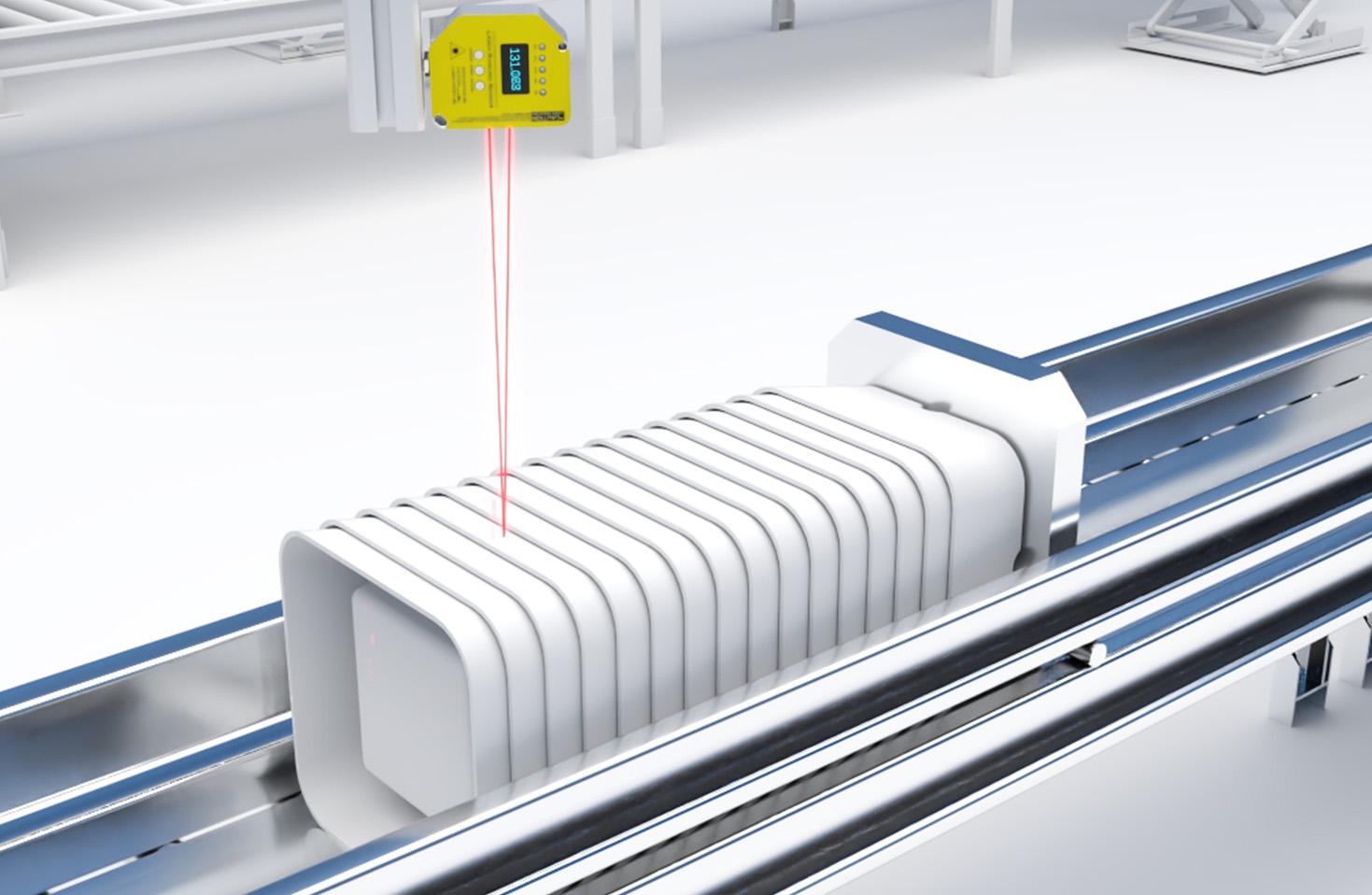
Triangulation-based laser sensors are widely used for precise distance and position measurements. In this method, the sensor projects a laser spot onto the target. A receiver, such as a CCD or CMOS array, captures the reflected light at an angle relative to the emitter. By calculating the geometric relationship between the emitter, receiver, and the position of the laser spot on the sensor array, the device determines the object's distance with high resolution, often within micrometers. This technique is ideal for applications like quality control, where detecting minute surface defects or dimensional variations is critical.
Time-of-flight laser sensors, on the other hand, measure distance based on the time it takes for a laser pulse to travel to the target and back. These sensors emit short laser pulses and use a high-speed photodetector to capture the returning light. By calculating the elapsed time and knowing the speed of light, the sensor computes the distance to the object. ToF sensors excel in long-range detection and are commonly used in autonomous vehicles for obstacle avoidance, as well as in logistics for inventory management, where they can quickly scan large areas.
Another advanced method is laser Doppler vibrometry, which detects vibrations or movements by analyzing the frequency shift in reflected laser light due to the Doppler effect. This allows for non-contact measurement of surface velocities and displacements, making it valuable in structural health monitoring and precision engineering.

Laser sensors also incorporate sophisticated electronics to enhance detection capabilities. Signal processing algorithms filter out ambient light interference and noise, ensuring reliable performance even in challenging environments like bright sunlight or dusty conditions. Many modern laser sensors feature integrated microprocessors that enable real-time data analysis, adaptive threshold settings, and communication via industrial protocols such as IO-Link or Ethernet/IP.
The applications of laser sensors are vast and growing. In manufacturing, they facilitate automated inspection, part counting, and alignment tasks. For instance, in semiconductor production, laser sensors verify wafer positioning with nanometer-level accuracy. In robotics, they provide essential feedback for navigation and object manipulation, enabling collaborative robots to operate safely alongside humans. Automotive industries rely on laser sensors for crash testing, paint thickness measurement, and assembly line automation. Additionally, in the medical field, laser sensors assist in diagnostic imaging and surgical guidance, showcasing their versatility.
Key advantages of laser sensors include their non-contact nature, which prevents wear and tear on both the sensor and target, and their ability to detect objects regardless of material properties like color or texture—though highly reflective or transparent surfaces may require specialized configurations. They also offer high-speed detection, with some models capable of thousands of measurements per second, making them suitable for dynamic processes.
However, challenges exist, such as sensitivity to environmental factors like temperature fluctuations or airborne particles. To mitigate these, manufacturers design sensors with protective housings, temperature compensation, and robust calibration routines. Regular maintenance and proper installation are crucial to sustain optimal performance.
Looking ahead, innovations in laser sensor technology continue to emerge. Miniaturization is enabling integration into compact devices, while advancements in AI and machine learning are enhancing pattern recognition and predictive analytics. The rise of Industry 4.0 and the Internet of Things (IoT) is driving demand for smart laser sensors that can communicate data seamlessly across networks, contributing to smarter, more efficient industrial ecosystems.
In summary, laser sensors detect objects through precise light-based interactions, leveraging methods like triangulation and time-of-flight to deliver accurate, real-time data. Their role in modern industry is transformative, supporting automation, quality assurance, and safety. As technology evolves, these sensors will likely become even more integral to our interconnected world, pushing the boundaries of what is detectable and measurable.