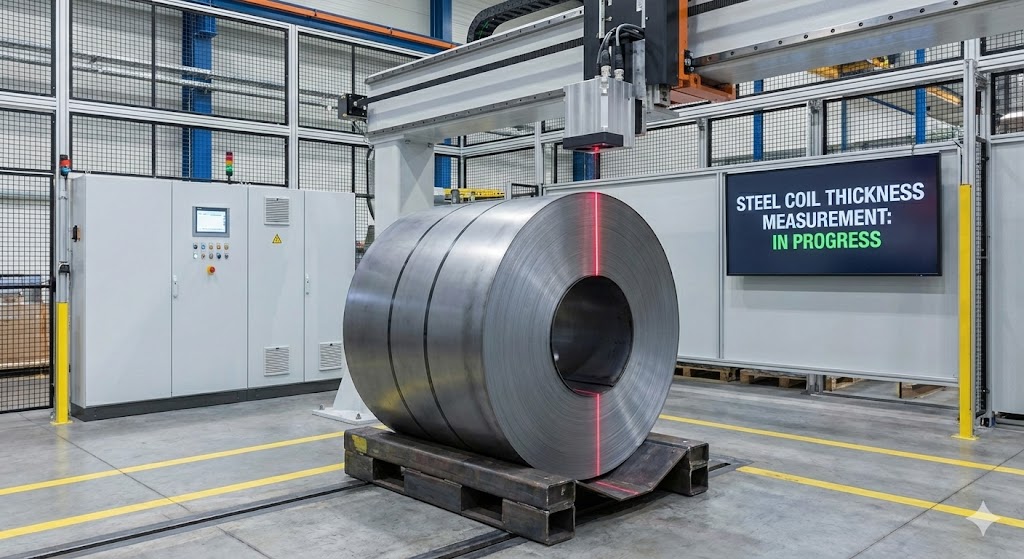
Inductive laser sensors represent a sophisticated fusion of electromagnetic induction principles and laser technology, designed to meet the demanding requirements of contemporary industrial automation. These sensors operate by generating an electromagnetic field through an inductive coil; when a metallic target enters this field, eddy currents are induced, altering the coil's impedance. This change is precisely detected and processed. Simultaneously, integrated laser components provide highly accurate positioning and alignment capabilities, often using visible red or infrared laser beams for precise targeting and distance measurement. The synergy between inductive sensing and laser guidance enables these devices to excel in applications where both proximity detection of metals and exact spatial referencing are critical.
In industrial environments, inductive laser sensors are deployed across diverse sectors. In automotive manufacturing, they ensure precise positioning of metal components on assembly lines, verifying part presence and alignment before robotic welding or machining. The packaging industry utilizes them to detect metallic seals or caps on high-speed filling lines, with lasers aiding in the exact placement of labels or sensors relative to moving targets. Within material handling and logistics, these sensors monitor the position of metallic pallets or guides on conveyor systems, preventing misalignment and jams. A key advantage is their robustness: housed typically in stainless steel or ruggedized polymer casings, they resist common industrial hazards such as dust, coolant splashes, vibrations, and electromagnetic interference from nearby motors or drives. This durability ensures reliable operation in harsh conditions, from machine tool workshops to food processing plants.

The technical specifications of inductive laser sensors highlight their performance. Sensing ranges vary, with standard models detecting ferrous metals like steel from a few millimeters up to 15-20 millimeters, while non-ferrous metals such as aluminum or copper may have reduced ranges due to lower conductivity. Laser components often feature Class 2 safety ratings, with typical alignment accuracies within ±0.5 millimeters. Output signals are versatile, including analog (4-20 mA, 0-10 V) for continuous distance measurement and digital (PNP/NPN, IO-Link) for discrete switching. Advanced models incorporate smart features like programmable switching points, temperature compensation, and diagnostic functions communicated via industrial protocols. This programmability allows fine-tuning for specific tasks, such as ignoring non-target metals or adapting to varying surface finishes.
Installation and integration require careful consideration. Mounting position relative to the target, environmental factors like ambient light for the laser, and potential shielding effects from surrounding metal structures must be evaluated. Regular maintenance involves lens cleaning for the laser aperture and checking for physical damage to the sensing face. Calibration may be needed periodically to maintain accuracy, especially in precision applications. Compared to standalone inductive sensors or optical laser sensors, the combined inductive laser type offers a unique value proposition: it reduces the need for multiple sensor setups, saving space and wiring complexity while providing dual verification—inductive detection confirms material type (metal), and laser measurement confirms position.
Future trends point toward increased miniaturization, enhanced connectivity with Industrial Internet of Things (IIoT) frameworks, and improved energy efficiency. Integration with machine vision systems and AI-driven predictive maintenance algorithms is also emerging, enabling smarter quality control. For engineers and system integrators, selecting the right inductive laser sensor involves analyzing application requirements—target material, required precision, environmental conditions, and communication needs. By leveraging their dual capabilities, these sensors significantly enhance automation reliability, reduce downtime, and contribute to lean manufacturing goals, solidifying their role as indispensable components in modern industrial sensing solutions.