In the realm of industrial automation and precision measurement, laser sensors have become indispensable tools due to their high accuracy, non-contact operation, and rapid response times. A critical aspect of their functionality is the reset principle, which ensures reliable performance and consistency in various applications. This article delves into the technical underpinnings of how laser sensors reset, exploring the mechanisms, common methods, and practical implications for engineers and technicians.
Laser sensors operate by emitting a focused beam of light toward a target object and detecting the reflected or scattered signal. The sensor processes this signal to determine parameters such as distance, position, or presence. Over time, environmental factors, operational wear, or signal interference can cause drift or errors in measurements. The reset function addresses this by recalibrating the sensor to a known reference state, thereby restoring accuracy.
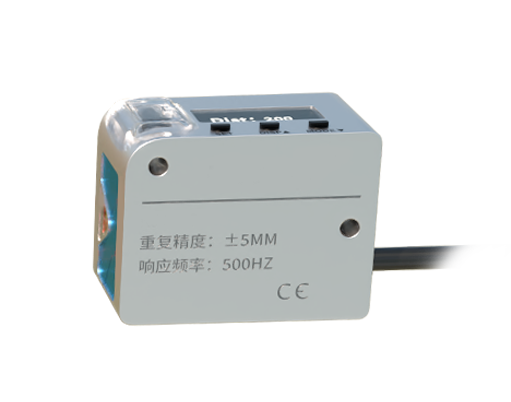
The reset principle typically involves two key components: hardware and software. On the hardware side, sensors may incorporate internal circuits or mechanical adjustments that realign optical elements or reset electronic counters. For instance, some models use a built-in reference surface or a calibration target within the device. When a reset command is initiated—either manually via a button or automatically through a control system—the sensor directs the laser beam to this reference, measures the baseline signal, and adjusts its output accordingly. This process often includes zero-point calibration, where the sensor sets its output to a predefined value when no target is present, ensuring that subsequent measurements are relative to this stable point.
Software plays an equally vital role. Modern laser sensors are integrated with microprocessors that execute reset algorithms. These algorithms analyze historical data, compensate for temperature variations, and filter out noise. In automated systems, resets can be triggered periodically based on time intervals or after specific events, such as a power cycle or detected anomaly. For example, in conveyor belt applications, a sensor might reset after each item passes to maintain consistent detection thresholds. The software may also store calibration profiles, allowing quick restoration without manual intervention.
Common reset methods include power-on reset, where the sensor initializes upon startup; external trigger reset, activated by a signal from a PLC or controller; and adaptive reset, which uses continuous monitoring to adjust dynamically. Each method has its advantages: power-on resets are simple but may not address mid-operation drifts, while adaptive resets offer precision at the cost of higher complexity. Engineers must select the appropriate method based on factors like environmental stability, required accuracy, and system integration.

In practice, understanding the reset principle is crucial for troubleshooting and optimization. For instance, in automotive assembly lines, laser sensors measure part dimensions, and frequent resets ensure compliance with tight tolerances. Failure to reset properly can lead to production errors or downtime. Best practices include regular maintenance, using shielded cables to reduce electromagnetic interference, and following manufacturer guidelines for calibration intervals. Additionally, advancements like self-diagnostic features and IoT connectivity are enhancing reset capabilities, enabling predictive maintenance and remote management.
Overall, the reset principle of laser sensors is a foundational element that underpins their reliability in demanding industrial settings. By combining robust hardware with intelligent software, these devices maintain peak performance, contributing to efficiency and quality across sectors from manufacturing to robotics. As technology evolves, reset mechanisms will continue to integrate smarter, more autonomous features, further solidifying the role of laser sensors in the future of automation.