In the realm of industrial automation and machinery, the reliability and precision of sensing components are paramount. Among the myriad of options available, the E2E-X10MF1 proximity sensor stands out as a robust and versatile solution for demanding applications. This inductive proximity sensor, designed to detect metallic objects without physical contact, is engineered to deliver consistent performance in challenging environments. Its compact cylindrical housing, typically constructed from nickel-plated brass, offers excellent resistance to corrosion and mechanical stress, ensuring longevity even in harsh industrial settings.
The E2E-X10MF1 operates on a fundamental principle of electromagnetic induction. When a metallic target enters its sensing range, it disrupts the sensor's oscillating magnetic field, triggering a change in the internal circuit state. This model is specifically tuned to detect ferrous metals, such as iron and steel, with a nominal sensing distance of 10 mm. One of its key specifications is its flush-mountable design, which allows for installation without a gap between the sensor face and the mounting surface. This feature is crucial for preventing damage from lateral forces and for applications where space constraints are a concern. The sensor outputs a digital signal, typically in a normally open (NO) configuration, compatible with standard programmable logic controllers (PLCs) and other control systems.
Electrical characteristics of the E2E-X10MF1 are tailored for industrial use. It commonly operates on a DC supply voltage range, such as 10-30 VDC, with low current consumption. The output is often in the form of a solid-state NPN transistor, providing a sinking output that is widely used in control circuitry. Its switching frequency is sufficiently high to handle fast-moving production lines, making it suitable for tasks like counting, positioning, and end-of-travel detection. Furthermore, it incorporates built-in protection against short-circuit, reverse polarity, and surge voltages, which enhances system reliability and reduces downtime due to electrical faults.
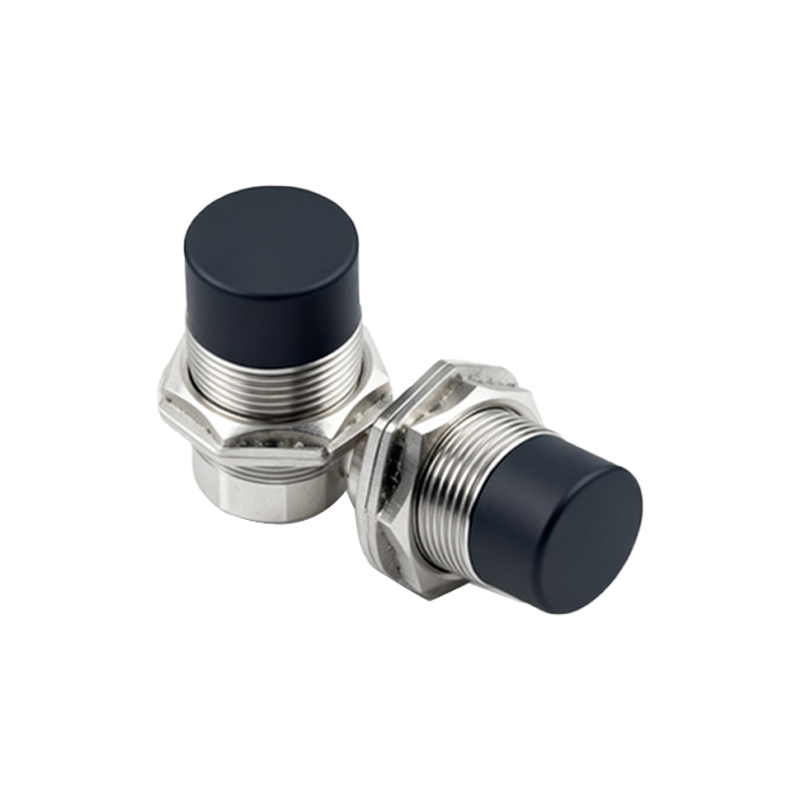
Environmental robustness is a hallmark of this sensor. It typically boasts an ingress protection rating of IP67, meaning it is dust-tight and can withstand temporary immersion in water. This makes the E2E-X10MF1 ideal for washdown areas in food processing, automotive manufacturing, or outdoor machinery where exposure to coolants, oils, and water jets is common. Its operating temperature range is broad, allowing functionality in both cold storage and high-temperature industrial ovens, provided specifications are adhered to.
Application scenarios for the E2E-X10MF1 are extensive. In automotive assembly lines, it is used to verify the presence of engine blocks or to control robotic welding arms. In packaging machinery, it detects metal lids or cans for precise filling and capping operations. Material handling systems employ these sensors to monitor conveyor belt jams or to confirm the position of metal pallets. Its reliability in detecting metallic objects makes it indispensable for safety interlocks on machine guards, ensuring operator protection by halting equipment when a guard door is opened.
When selecting and installing the E2E-X10MF1, several best practices should be observed. Ensure the target material is within the specified ferrous metal group for optimal sensing distance. Avoid mounting the sensor near other large metal structures or parallel to other sensors to prevent mutual interference. Proper wiring is essential; using shielded cables in electrically noisy environments can prevent false triggering. Regular maintenance, though minimal, involves checking for physical damage, accumulation of metallic debris on the sensing face, and verifying electrical connections.
In comparison to other sensing technologies like capacitive or photoelectric sensors, the inductive E2E-X10MF1 offers distinct advantages for metal detection. It is unaffected by color, transparency, or surface finish of the target, and is generally more immune to environmental contaminants like dust, smoke, or light interference. However, it is limited to metallic objects, which is a consideration for applications involving non-metallic materials.
In conclusion, the E2E-X10MF1 proximity sensor represents a critical component in modern industrial automation. Its durable construction, precise metal detection capabilities, and environmental resilience make it a trusted choice for engineers and maintenance personnel. By understanding its specifications, operating principles, and application guidelines, professionals can effectively integrate this sensor to enhance machine efficiency, improve safety, and ensure continuous production flow. As industries advance toward smarter manufacturing, the role of reliable sensors like the E2E-X10MF1 remains foundational to operational success.