Laser matrix sensors represent a significant advancement in the field of electrical engineering, offering unparalleled precision and versatility in various industrial applications. These sensors operate by emitting a grid or matrix of laser beams, which interact with target objects to capture detailed spatial data. Unlike traditional single-point laser sensors, a laser matrix sensor can simultaneously measure multiple points across a surface, enabling comprehensive 3D profiling and real-time monitoring. This capability is particularly valuable in automation, robotics, and quality control processes where accuracy and speed are critical.
The core technology behind laser matrix sensors involves the integration of laser diodes, optical components, and advanced photodetectors. When the laser beams are projected onto an object, the reflected light is analyzed to determine distance, shape, and orientation. This data is processed using sophisticated algorithms, often embedded in microcontrollers or programmable logic controllers (PLCs), to generate actionable insights. For instance, in manufacturing lines, these sensors can detect minute defects in products, such as surface irregularities or dimensional inaccuracies, with sub-millimeter precision. This reduces waste and enhances overall production efficiency.
One of the key advantages of laser matrix sensors is their adaptability to harsh environments. They are designed to withstand factors like dust, vibration, and temperature fluctuations, making them suitable for use in sectors such as automotive, aerospace, and heavy machinery. Additionally, their non-contact nature minimizes wear and tear, ensuring long-term reliability. Engineers often integrate these sensors with IoT systems for predictive maintenance, where data from the sensors can forecast equipment failures before they occur, thereby preventing costly downtime.
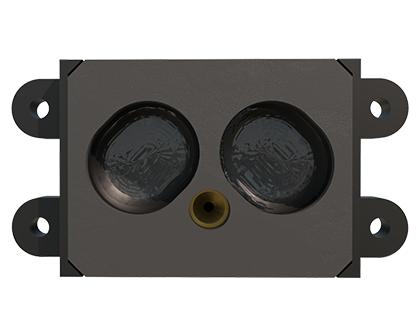
In robotics, laser matrix sensors enable precise object recognition and navigation. Autonomous robots equipped with these sensors can map their surroundings in real time, avoiding obstacles and performing complex tasks like picking and placing items with high accuracy. This is crucial in logistics and warehouse automation, where efficiency directly impacts operational costs. Furthermore, in the energy sector, these sensors are used for monitoring infrastructure, such as inspecting power lines or solar panels, to identify issues like corrosion or misalignment.
Despite their benefits, implementing laser matrix sensors requires careful consideration of factors like calibration, alignment, and data interpretation. Engineers must ensure that the sensor's field of view matches the application requirements and that the software is configured to filter noise effectively. Ongoing advancements in machine learning and artificial intelligence are expected to further enhance the capabilities of these sensors, allowing for more autonomous decision-making in industrial systems.

Overall, laser matrix sensors are transforming electrical engineering by providing detailed, real-time data that drives innovation and efficiency. As technology evolves, their applications are likely to expand, offering new solutions for complex challenges in automation, safety, and sustainability.