In the demanding landscape of industrial automation and process control, particularly within sectors like oil & gas, chemical manufacturing, mining, and pharmaceutical production, the deployment of reliable sensing technology is non-negotiable. Among the most critical components are laser explosion-proof sensors, designed to operate with precision and safety in areas where flammable gases, vapors, or dusts may be present. This guide delves into the intricacies of sourcing these specialized devices, covering key technical considerations, certification standards, and supply chain dynamics.
The fundamental principle of a laser explosion-proof sensor lies in its ability to perform precise measurement or detection tasks—such as distance measurement, level control, or object positioning—using a laser beam, while its housing and electrical components are engineered to prevent ignition of the surrounding hazardous atmosphere. Unlike standard laser sensors, these units are constructed to contain any potential spark or thermal effect within their robust enclosures. The core technologies often involve time-of-flight (ToF), triangulation, or confocal measurement principles, adapted with intrinsic safety barriers, flameproof (Ex d) enclosures, or pressurized (Ex p) designs.
When sourcing laser explosion-proof sensors, the paramount factor is compliance with international explosion-protection standards. Key certifications include ATEX (for the European Union), IECEx (international), and NEC/UL classifications (for North America, like Class I, Division 1). A reputable supplier must provide clear documentation for these certifications, specifying the exact zones (e.g., Zone 0, 1, 2 for gas; Zone 20, 21, 22 for dust) and gas groups (IIC, IIB, IIA) for which the sensor is approved. Never compromise on certification; an uncertified sensor poses a severe safety risk and can lead to catastrophic failures and legal liabilities.
Technical specifications require meticulous evaluation. Key parameters include measurement range, accuracy, repeatability, response time, and the laser's wavelength (commonly in the visible red or infrared spectrum). Environmental ratings like IP67/IP68/IP69K for ingress protection against dust and water are crucial, given the often harsh operating conditions. Additionally, consider the output signals (analog 4-20mA, digital IO-Link, Ethernet/IP, PROFINET) and their compatibility with your existing control systems. The sensor's housing material, typically stainless steel or ruggedized aluminum alloys, must resist corrosion from chemicals or saline atmospheres.
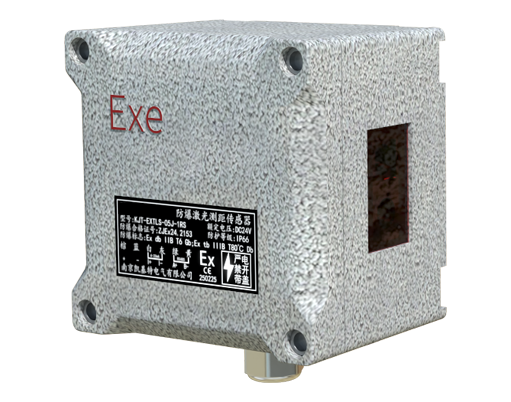
The global supply chain for these specialized components involves a mix of large, established automation conglomerates and niche, technology-focused manufacturers. Leading suppliers often have dedicated divisions for hazardous area products. When evaluating suppliers, assess their technical support capabilities, application engineering expertise, and lead times. A reliable partner should offer comprehensive datasheets, explosion protection documentation, and ideally, simulation tools or configurators to aid in product selection. Given the critical nature of these devices, a robust after-sales service, including calibration services and repair options, is a significant differentiator.
Market trends are pushing innovation in this field. There is a growing demand for sensors with integrated diagnostics and predictive maintenance features, communicated via industrial IoT protocols. Miniaturization is another trend, allowing for installation in more confined spaces without sacrificing performance or safety ratings. Furthermore, suppliers are increasingly offering customized solutions—tailoring mounting brackets, cable lengths, or laser parameters to specific application needs, from monitoring tank levels in refineries to controlling robotic arms in paint spray booths.
In conclusion, sourcing laser explosion-proof sensors is a strategic process that balances stringent safety requirements with precise operational performance. It necessitates a deep understanding of both the application's technical demands and the rigorous regulatory landscape. Partnering with certified, experienced suppliers who provide transparent technical data and strong support is essential for ensuring long-term operational safety, reliability, and compliance in any hazardous industrial environment.
