In the realm of industrial automation and control systems, proximity switches are indispensable components for non-contact object detection. Among the various configurations, the 3-wire NPN normally open (NO) proximity sensor stands out for its widespread application, particularly in systems with a common positive voltage supply. This article delves into the operational principles, wiring methodologies, and practical considerations for this specific sensor type, providing a detailed technical overview for electrical engineers and automation professionals.
A proximity switch, fundamentally, is a sensor that detects the presence or absence of a metallic (or sometimes non-metallic) object without physical contact. It operates on the principle of electromagnetic induction (for inductive types, the most common for metal detection) or capacitance. The "3-wire" designation refers to the number of electrical connections required: typically, a brown wire for the positive supply voltage (V+), a blue wire for the common or negative supply (0V or GND), and a black wire as the switched output signal. The "NPN" classification describes the type of semiconductor switching element used within the sensor. An NPN transistor functions as the output switch, where the emitter is connected to the negative supply line. The "NO" or Normally Open specification indicates the default state of the output circuit when no target is within the sensing range. In this state, the output (black wire) is effectively disconnected from the negative supply (blue wire). When a target enters the sensing field, the internal circuitry activates the NPN transistor, closing the switch and connecting the output line to the negative supply, thus creating a current path to ground.
The standard wiring configuration for a 3-wire NPN NO sensor is straightforward but requires precise connection to function correctly and avoid damage. The brown wire must be connected to the positive terminal of the DC power supply, typically ranging from 10-30V DC, with 24V DC being the industrial standard. The blue wire is connected to the negative terminal or ground (0V) of the same power supply. The critical connection is the black output wire. In an NPN NO configuration, this wire provides the switched negative or "sinking" signal. It must be connected to the load (e.g., a PLC input module, a relay coil, or an indicator lamp). The other side of this load is then connected to the positive supply voltage. This creates a circuit where, upon detection, the NPN transistor sinks current from the load to ground, completing the circuit and activating the load. It is paramount to verify the sensor's datasheet for voltage and current ratings to ensure compatibility with the load and power supply.
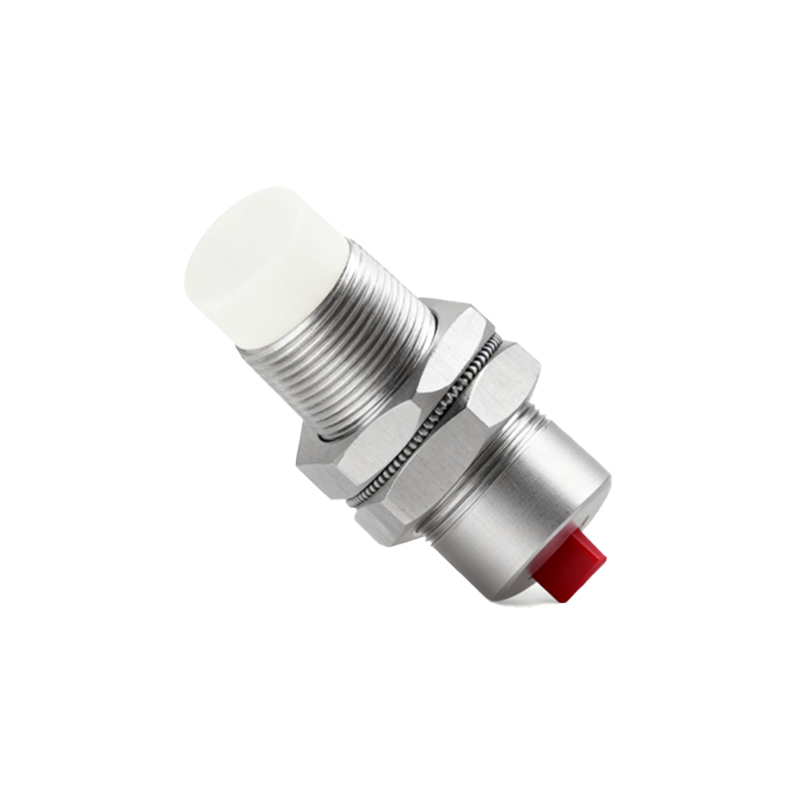
Understanding the sinking (NPN) nature of this output is crucial for system design. In regions like Europe and Asia, NPN sensors are prevalent. They are often preferred in systems where the PLC or controller input modules are designed to accept a sinking input, meaning the input point is internally connected to a positive voltage, waiting for a connection to ground to register a TRUE or ON signal. When the NPN NO sensor detects an object, it connects its output to ground, providing that path and activating the PLC input. This contrasts with PNP (sourcing) sensors, which switch the positive voltage.
Key advantages of the 3-wire NPN NO proximity switch include its simple interface with many microcontrollers and PLCs that have pull-up resistors on their input cards, its robustness in noisy industrial environments due to the switching to a common ground, and the safety aspect where a wire break in the output loop typically results in an "off" state (fail-safe for NO configuration). Common applications are extensive, ranging from part counting on conveyor belts, position sensing in machinery, end-of-travel limit detection, and presence verification in assembly jigs.
When selecting and applying these sensors, engineers must consider several factors. The sensing distance, as specified by the manufacturer, should be derated in practical installations to account for target material, size, and environmental conditions like temperature and humidity. The choice between shielded (flush-mountable) and unshielded (non-flush) models affects the mounting geometry and potential interference from adjacent metal. Furthermore, attention must be paid to the residual current or leakage current in the "off" state, which, although minimal, can sometimes be enough to inadvertently activate highly sensitive loads. Using a bleeder resistor in parallel with the load may be necessary in such cases.
In conclusion, the 3-wire NPN normally open proximity sensor is a fundamental building block in modern control systems. Its operation, centered on a sinking output that closes to ground upon detection, offers reliable and straightforward integration into a vast array of industrial applications. A thorough grasp of its wiring, the implications of its NPN output type, and its interaction with the load is essential for designing robust, efficient, and fail-safe automated processes.