In the realm of industrial automation and precision measurement, the red laser autofocus sensor stands as a cornerstone technology. Its fundamental principle revolves around triangulation. A focused red laser diode, typically with a wavelength of 650nm, projects a sharp spot onto a target surface. The diffusely reflected light is then captured by a position-sensitive detector (PSD) or a CMOS/CCD array at a known angle. Any change in the target's distance causes a proportional shift of the reflected spot on the detector. This displacement is processed by sophisticated onboard algorithms to calculate the exact distance with micron-level resolution. This non-contact, high-speed method offers a significant advantage over traditional mechanical probes, eliminating wear and enabling measurements on delicate or moving surfaces.
The architecture of a modern red laser autofocus sensor is a marvel of optoelectronic integration. Key components include the laser diode module, precision collimating optics, the receiving lens system, and the high-speed photodetector. The laser diode is driven by a constant current source to ensure stable output power and spot quality, which is critical for consistent measurement accuracy. Advanced models incorporate temperature compensation circuits to mitigate thermal drift, a common challenge in high-precision environments. The receiving optics are meticulously calibrated to filter ambient light and focus the reflected beam precisely onto the sensing element. The heart of the system, the processing unit, executes real-time calculations, often featuring programmable logic for setting tolerance windows, outputting analog (0-10V, 4-20mA) or digital signals (RS-485, Ethernet/IP), and triggering alarms for out-of-spec conditions.
Applications for these sensors are vast and critical across multiple sectors. In semiconductor manufacturing, they are indispensable for wafer alignment, bond line thickness measurement, and die attach inspection. Within the automotive industry, they ensure precise gap and flush measurements between body panels, and monitor the application of adhesives and sealants. 3D printing and CNC machining rely on them for bed leveling, tool height setting, and in-process part dimension verification. Their high repeatability and fast response time make them ideal for robotic guidance systems, where a robot arm uses the sensor to maintain a precise working distance from a variably positioned workpiece. Furthermore, in quality control labs, they provide non-destructive thickness profiling of films, coatings, and laminated materials.
Selecting the appropriate red laser autofocus sensor requires careful consideration of several technical parameters. The working distance, spot size, and measurement range must align with the physical constraints of the application. Resolution and linearity define the sensor's precision, while repeatability indicates its consistency. The sampling speed, often in the kilohertz range, must match the required throughput. Environmental factors are paramount; sensors rated with high IP codes (e.g., IP67) are necessary for dusty or washdown conditions. The choice of output interface must seamlessly integrate with the existing PLC, data acquisition system, or industrial PC. For applications involving highly reflective, transparent, or dark absorptive surfaces, specialized models with adjustable laser power or advanced filtering techniques are essential to maintain signal integrity.
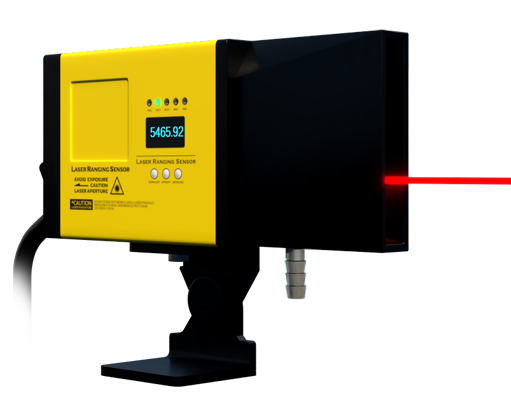
The future trajectory of red laser autofocus technology points toward greater intelligence and miniaturization. Integration with AI and machine vision is already underway, enabling sensors not only to measure distance but also to perform simple classification based on surface texture or defect detection. The development of blue-violet lasers offers potential for even smaller spot sizes on certain materials. Furthermore, the push for Industry 4.0 and IIoT (Industrial Internet of Things) is driving the adoption of sensors with embedded connectivity for predictive maintenance and centralized data analytics. As a mature yet continuously evolving technology, the red laser autofocus sensor remains an irreplaceable tool, delivering the uncompromising precision that modern automated manufacturing and quality assurance demand. Its role in enabling higher yields, reducing waste, and ensuring product consistency solidifies its position as a fundamental component in the engineer's toolkit.
SEO Keywords:red laser autofocus sensor, precision measurement, industrial automation, non-contact sensor, triangulation principle
SEO Description:Explore the technology behind red laser autofocus sensors, their operating principles based on laser triangulation, key applications in automation and manufacturing, and critical selection criteria for engineers.