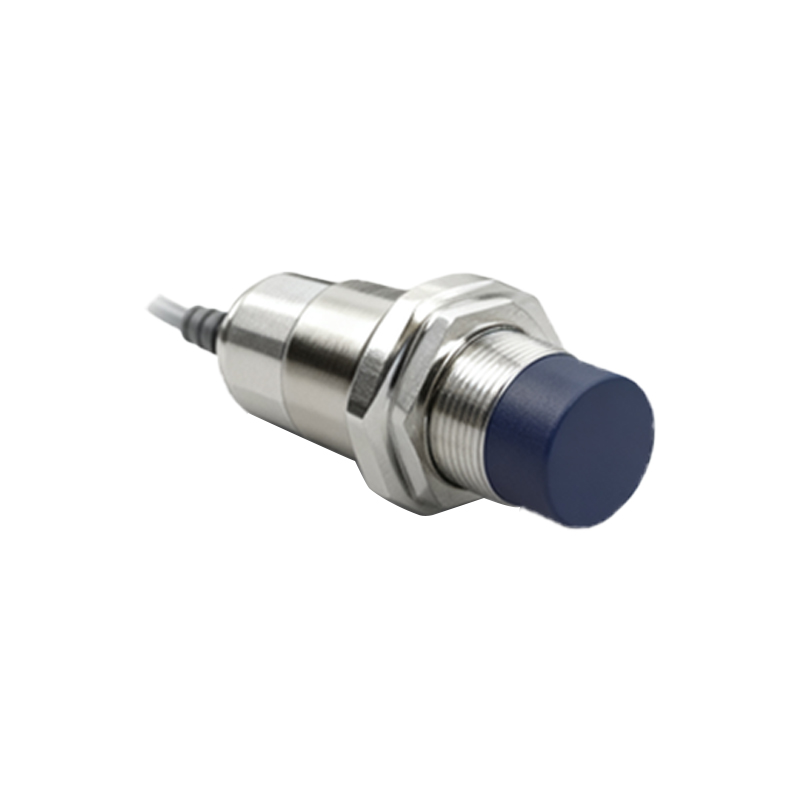
Proximity sensors are a cornerstone of modern industrial automation, providing non-contact detection of objects within a specific range. These devices operate on various principles, primarily inductive, capacitive, ultrasonic, and photoelectric sensing, each suited to different materials and environmental conditions. Their core function is to detect the presence or absence of an object without physical contact, thereby eliminating mechanical wear and enabling high-speed, reliable operation in demanding settings.
Inductive proximity sensors are the most common type in industrial environments. They generate an electromagnetic field and detect the eddy current losses caused when a metallic object enters this field. This makes them ideal for detecting metals, such as steel, aluminum, or copper, in machine tools, robotic arms, and conveyor systems. Their robustness against dirt, dust, and moisture ensures stable performance in harsh manufacturing floors. A key application is in CNC machining centers, where they provide precise position feedback for tool changers and workpiece clamps, ensuring machining accuracy and preventing collisions.
Capacitive proximity sensors, on the other hand, can detect both metallic and non-metallic materials, including liquids, plastics, glass, and wood. They function by measuring changes in capacitance caused by the presence of any material that alters the dielectric constant of the sensor's electrostatic field. This versatility finds use in level detection for tanks containing liquids or granular solids, packaging lines for detecting plastic or cardboard containers, and even in touch-sensitive control panels. For instance, in a bottling plant, a capacitive sensor can reliably detect the fill level of liquid in a glass or plastic bottle, triggering the filling mechanism to stop at the precise moment.
Ultrasonic sensors emit high-frequency sound waves and evaluate the echo reflected from a target object. They are excellent for long-range detection and can measure distance, not just presence. This makes them invaluable in applications like palletizing robots, where they gauge the height of a stack, or in automated guided vehicles (AGVs) for obstacle avoidance. Their ability to work with virtually any material, regardless of color or transparency, and in challenging environments with smoke or steam, provides a significant advantage over optical methods.
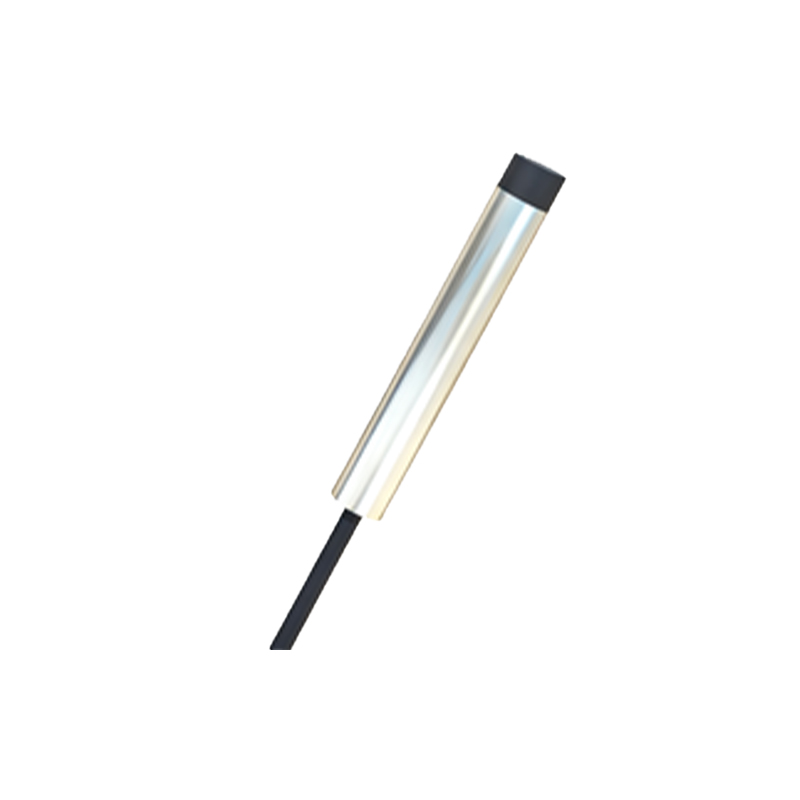
Photoelectric sensors use a light beam, typically infrared, visible red, or laser, to detect objects. They come in three main configurations: through-beam, retro-reflective, and diffuse reflective. Through-beam sensors offer the longest range and highest reliability, used in safety curtains and high-speed counting on production lines. Diffuse sensors, which detect light reflected directly from the target, are common for detecting objects at short ranges, such as in automated assembly stations. A critical industrial use is in the electronics manufacturing sector, where photoelectric sensors with precise laser beams verify the placement of miniature surface-mount components on printed circuit boards.
The integration of proximity sensors into Programmable Logic Controllers (PLCs) and Industrial Internet of Things (IIoT) systems has amplified their utility. They provide the essential digital or analog input signals that drive automated sequences, enable predictive maintenance by monitoring equipment vibration or alignment, and contribute to data collection for overall equipment effectiveness (OEE) calculations. For example, an inductive sensor monitoring the rotation of a motor shaft can feed data into a control system to detect slippage or stalling before a catastrophic failure occurs.
In summary, the fundamental purpose of a proximity sensor is to enable precise, reliable, and contactless sensing. Their applications span the entire spectrum of industry, from simple object detection on a conveyor to complex positioning in robotic welding cells. The choice of sensor type—inductive, capacitive, ultrasonic, or photoelectric—depends entirely on the target material, required sensing distance, environmental conditions, and the specific needs of the application. As automation advances towards smarter, more connected factories, the role of these sensors as the "sensory organs" of machinery becomes increasingly critical, ensuring efficiency, safety, and quality in production processes worldwide.