Laser vision sensors represent a critical advancement in industrial automation, combining laser triangulation, imaging, and sophisticated algorithms to deliver precise, non-contact measurement and inspection capabilities. At its core, a laser vision sensor operates by projecting a structured laser line or pattern onto a target object. A high-resolution camera, positioned at a known angle relative to the laser emitter, captures the deformation or displacement of this laser line. This deformation is directly caused by the object's surface topography, height variations, or presence. The fundamental principle employed is laser triangulation. By knowing the fixed baseline distance between the laser source and the camera, and the angle of the camera, the sensor's onboard processor can calculate the precise three-dimensional coordinates of points along the laser line using trigonometric relationships. Any deviation of the laser line in the camera's field of view corresponds to a change in the object's distance or profile.
The hardware architecture typically consists of three main components: the laser diode module, the imaging sensor (usually a CMOS or CCD camera), and a dedicated processing unit. The laser diode generates a coherent, focused beam that is often converted into a fan-shaped plane or a structured pattern to cover a larger inspection area. The camera is equipped with specialized optics, often including filters to block ambient light and enhance the contrast of the laser line. The processing unit executes complex algorithms for tasks such as sub-pixel centroid calculation to find the laser line with extreme accuracy, noise reduction, and coordinate transformation.
Software and algorithms are what transform raw image data into actionable information. Key processing steps include image acquisition, laser line extraction, 3D point cloud generation, and feature analysis. Advanced sensors utilize calibration procedures to map pixel coordinates from the 2D camera image into real-world 3D coordinates, compensating for lens distortion and system geometry. Once a 3D profile is reconstructed, the sensor can perform a multitude of inspections: measuring dimensions (height, width, volume), detecting presence/absence, identifying defects like scratches or dents, guiding robots for precise bin-picking or assembly, and verifying part alignment.
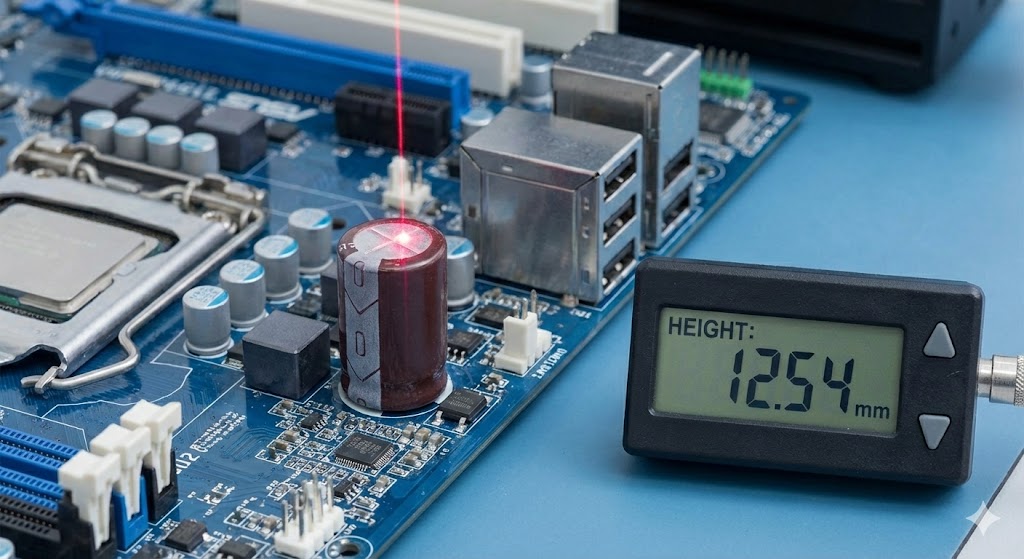
The advantages of laser vision over traditional 2D vision or simple photoelectric sensors are substantial. It provides explicit height and depth information, making it immune to color or texture variations that can confuse 2D systems. It excels in applications with low contrast or reflective surfaces. Furthermore, the speed of modern processors allows for high-speed profiling, enabling real-time, 100% inspection on fast-moving production lines.
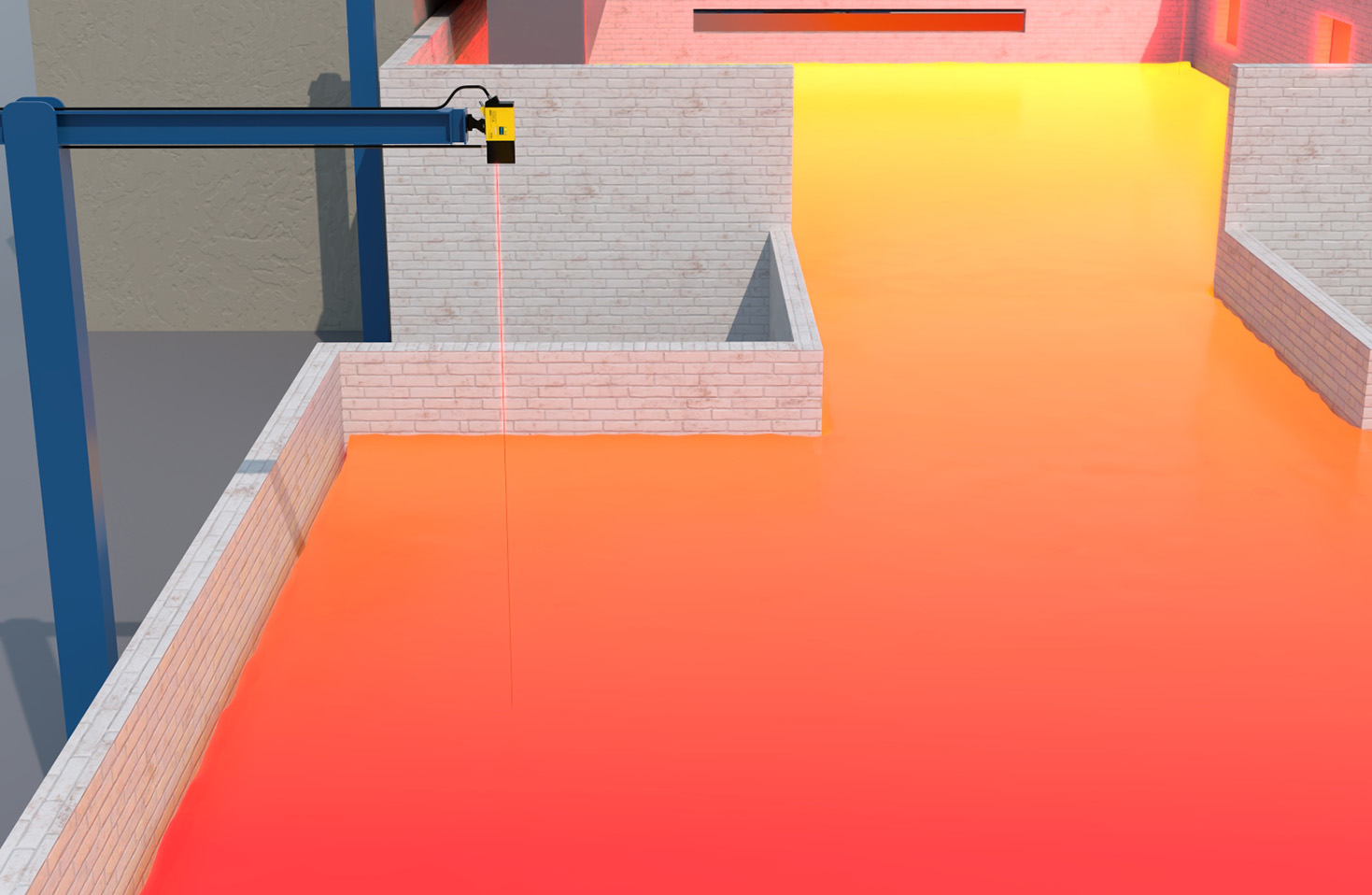
In practical industrial settings, laser vision sensors are deployed across diverse sectors. In automotive manufacturing, they inspect weld seams, measure panel gaps, and verify the correct assembly of components. In electronics, they measure coplanarity of chip leads, inspect solder paste height, and align components for placement. In logistics and packaging, they measure box dimensions for volumetric weighing and check fill levels. Robotic guidance is another dominant application, where sensors provide real-time 3D data for robots to locate and pick randomly oriented parts from bins—a task known as random bin picking.
When selecting and integrating a laser vision sensor, engineers must consider several parameters. These include measurement range, resolution (sometimes in the micron range), scanning speed (often expressed in profiles per second), stand-off distance, and the sensor's environmental robustness (IP rating, resistance to vibration). The choice of laser class (typically Class 2 or Class 2M for safety) and wavelength is also important for different material properties.
Looking forward, the integration of laser vision with AI and machine learning is pushing boundaries further. AI algorithms can learn complex defect patterns that are difficult to describe with traditional rule-based programming, enhancing inspection reliability. Furthermore, the miniaturization of components and the development of more powerful, energy-efficient processors are leading to more compact and capable sensors.
In conclusion, laser vision sensor technology is a cornerstone of modern smart manufacturing and Industry 4.0. By providing accurate, reliable, and high-speed 3D data, it enables unprecedented levels of automation, quality control, and operational efficiency. Its principle, rooted in laser triangulation, is elegantly simple, yet its implementation and applications continue to evolve, driving innovation in automated inspection and measurement across the global industrial landscape.