In demanding industrial environments where extreme heat is a constant factor, the reliability and accuracy of sensing technology are pushed to their limits. High temperature proximity sensors, specifically engineered to operate at 500°C and beyond, represent a critical advancement for sectors such as metal processing, glass manufacturing, aerospace, and energy production. These sensors are not merely standard components with enhanced tolerances; they are fundamentally redesigned systems built from the ground up to withstand thermal, mechanical, and electromagnetic challenges inherent in high-heat zones.
The core challenge at 500°C is material science. Standard electronics and sensor housings rapidly degrade. Therefore, these specialized proximity sensors utilize advanced materials like high-nickel alloys (e.g., Inconel), specialized ceramics, and high-temperature co-fired ceramic (HTCC) substrates for internal circuits. Sensing elements, often based on inductive, capacitive, or eddy-current principles, are designed with materials whose magnetic and electrical properties remain stable across a wide temperature range. This material stability is paramount to prevent signal drift, which could lead to catastrophic measurement errors in processes like continuous casting of steel or turbine blade clearance monitoring.
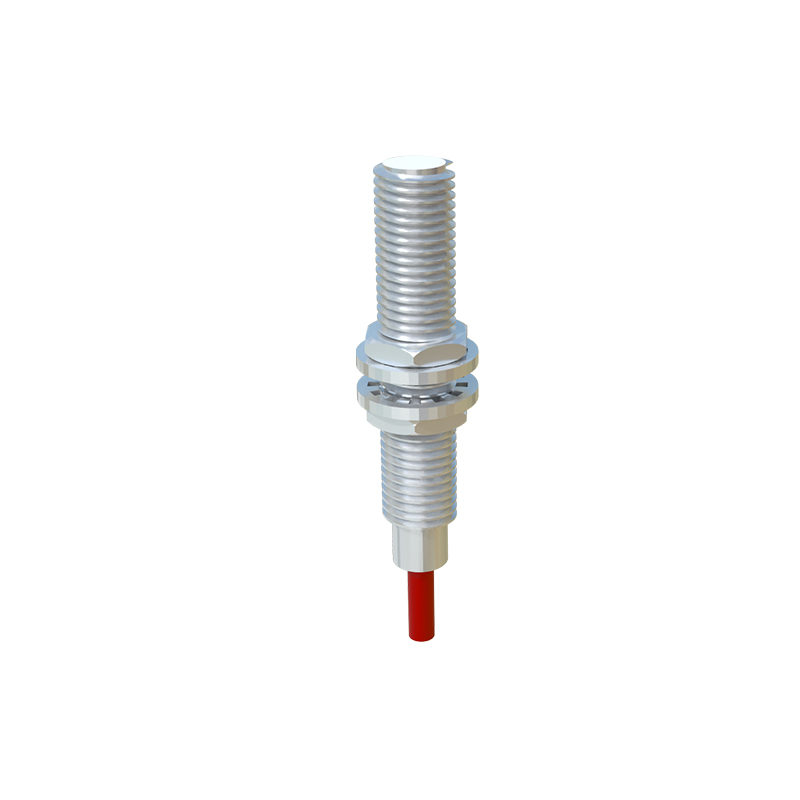
Thermal management is another cornerstone of design. While the sensor tip must survive the ambient 500°C, the internal electronics and signal conditioning circuitry cannot. Engineers employ sophisticated thermal barrier designs, including air gaps, vacuum insulation, and active cooling channels where permissible. The cabling is equally critical, requiring mineral-insulated (MI) cables or other high-temperature sheathing to protect the signal integrity from the sensor head back to the control unit located in a cooler area.
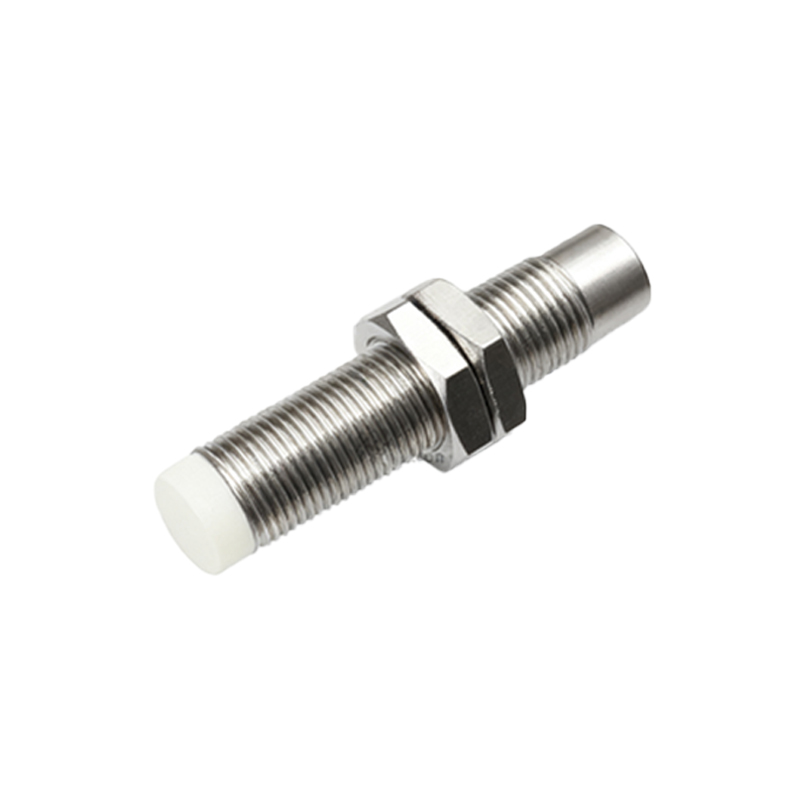
From an application perspective, the value of a 500°C-rated proximity sensor is immense. In a glass furnace, they provide non-contact position feedback for actuators and dampers, operating reliably amidst radiant heat. Within gas turbine engines, they monitor rotor shaft displacement and blade tip clearance, delivering data essential for efficiency and safety at temperatures where few other sensors can function. In metal forging and heat treatment lines, these sensors ensure precise positioning of red-hot billets and components on conveyor systems, enabling automation in previously manual or hazardous processes.
The selection and integration of such a sensor require careful consideration. Key parameters include not just the temperature rating, but also the sensing distance (which can be affected by thermal expansion), the target material (as the properties of the target itself change with temperature), and the required output signal (e.g., analog 4-20mA, digital IO-Link). IO-Link communication, in particular, is becoming a valuable feature, allowing for detailed parameterization, diagnostics, and condition monitoring directly from the sensor, facilitating predictive maintenance.
Installation is a discipline in itself. Proper mounting, with attention to heat sinking and protection from direct flame impingement or molten splash, is crucial. Regular maintenance checks should focus on the integrity of the housing and cabling. Despite their ruggedness, these sensors are precision instruments; contamination buildup on the sensing face can impair performance and must be addressed per the manufacturer's guidelines.
Looking forward, the evolution of high-temperature proximity sensors is tied to advancements in wide-bandgap semiconductors (like Silicon Carbide), additive manufacturing for complex ceramic housings, and smarter embedded diagnostics. The drive for greater efficiency and autonomy in extreme industrial processes will continue to fuel innovation, pushing operational limits even higher.
In conclusion, a 500°C high-temperature proximity sensor is an engineered solution to an extreme problem. It embodies a synergy of advanced materials, intelligent thermal design, and robust sensing principles. For engineers and plant managers operating in the inferno of modern industry, specifying and deploying these sensors correctly is not just an operational detail—it is a fundamental requirement for safety, precision, and productivity in the most punishing environments.