In industrial automation, the M18 proximity sensor stands as a quintessential component, renowned for its standardized dimensions, robust construction, and versatile detection capabilities. The "M18" designation refers specifically to the sensor's threaded barrel diameter of 18 millimeters, a size that has become an industry benchmark. This diameter, combined with standard thread pitches like 1mm or 1.5mm, ensures seamless integration into a vast array of mounting fixtures and machine designs globally. The typical length of an M18 sensor body ranges from approximately 40mm to 70mm, depending on the sensing technology, sensing range, and housing material, which is often nickel-plated brass, stainless steel, or PBT plastic for specific environmental resistances.
The physical size of the M18 sensor is a critical factor in its widespread adoption. Its compact form factor allows for installation in space-constrained applications where larger sensors would be impractical. Despite its relatively small stature, the M18 housing is engineered to protect internal electronics from common industrial hazards. Most models achieve an IP67 or IP68 ingress protection rating, making them resistant to dust, oil, and temporary or prolonged immersion in water. This durability is essential for harsh environments found in automotive manufacturing, packaging lines, and material handling systems.
Beyond the core dimensions, the sensing face and operational range are key performance parameters. The standard sensing distance for a shielded (flush-mountable) inductive M18 sensor detecting mild steel is typically 5mm or 8mm. Unshielded (non-flush) variants may offer slightly longer ranges, such as 10mm. For capacitive M18 sensors used for non-metallic object detection, or for ultrasonic models, the range can be significantly greater. The choice between inductive, capacitive, magnetic, and ultrasonic technologies housed in an M18 body depends entirely on the target material and application requirements. Inductive sensors, the most common, detect metals only. Capacitive sensors detect a wider variety of materials, including liquids, plastics, and wood, by measuring changes in capacitance.
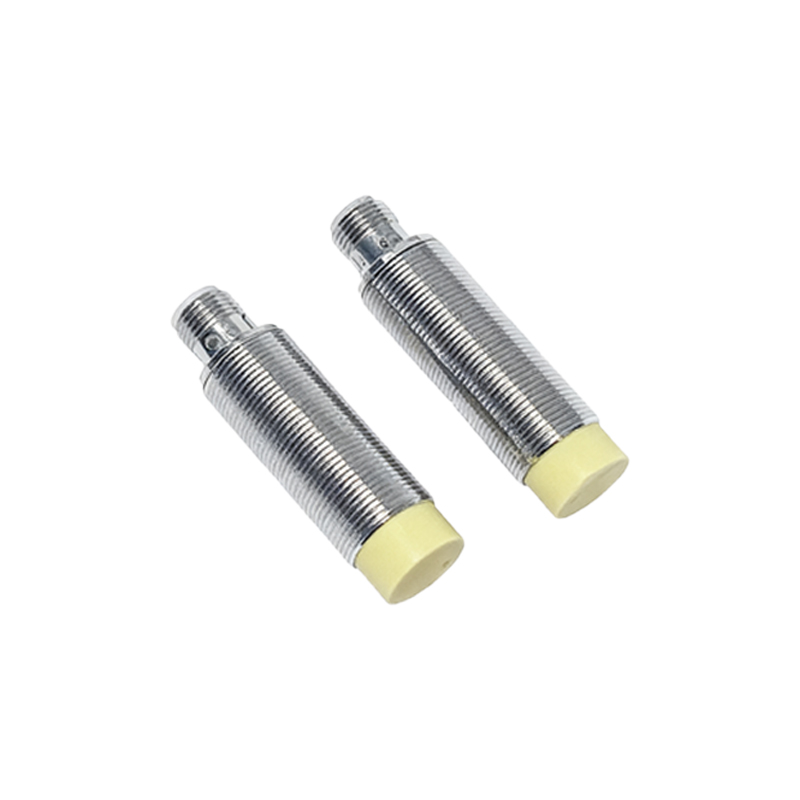
Electrical characteristics and output configurations are standardized within the M18 form factor. Most sensors operate on a DC supply voltage ranging from 10-30V DC, with 2-wire or 3-wire (NPN or PNP) output configurations. The output is typically a solid-state switch, capable of driving relays, PLC inputs, or other control circuitry. The presence of an LED status indicator, usually integrated into the rear or side of the housing, is a standard feature for diagnostic purposes, providing visual confirmation of power and output switching.
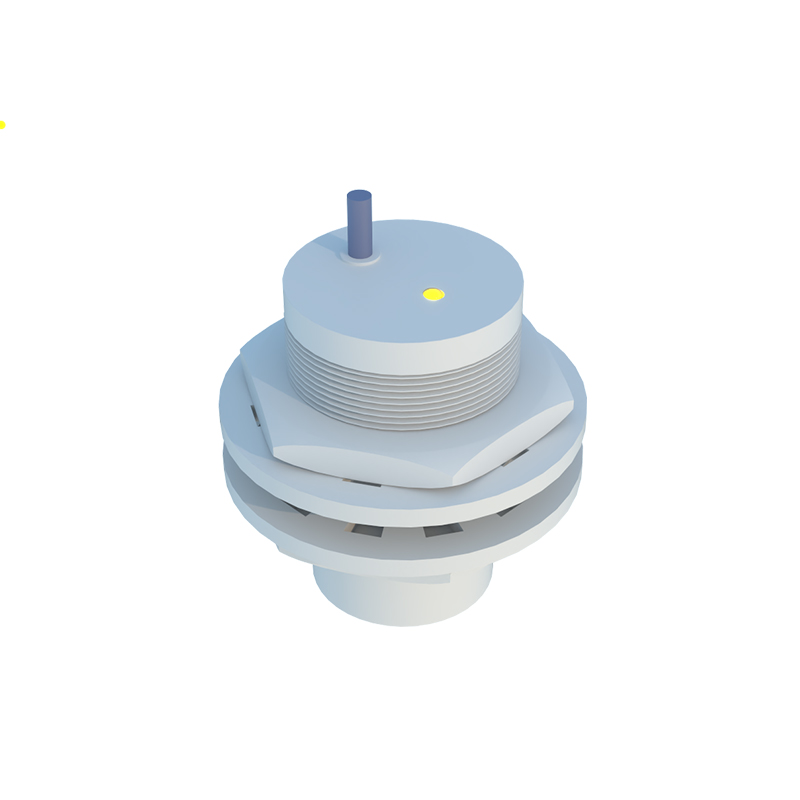
The selection of an M18 sensor is not merely about its 18mm diameter. Engineers must consider the required sensing distance, the target material's properties, the required switching frequency, and the environmental conditions. For instance, in a high-speed bottling plant, a capacitive M18 sensor might be chosen to detect liquid levels in plastic bottles, requiring a specific sensing range and a housing material resistant to chemical splashes. In a metal stamping press, an inductive M18 sensor with a 8mm range and a heavy-duty stainless-steel housing would be specified for precise position detection of a metal component, enduring vibration and metallic debris.
Installation practices are straightforward but crucial for reliable operation. Proper mounting involves ensuring the correct clearance around the sensing face, especially for unshielded sensors which have a larger lateral detection field. Shielded sensors can be mounted flush with metal surfaces without affecting their performance, a significant advantage in machine design. Wiring must conform to the sensor's datasheet, paying close attention to polarity for DC models and ensuring proper grounding to minimize electrical noise interference.
In summary, the "M18" in a proximity sensor specifies a 18mm threaded barrel, but this compact package encompasses a sophisticated device tailored for industrial reliability. Its standardized dimensions facilitate interchangeability and simplify inventory management for maintenance teams. From detecting the position of a robotic arm to counting products on a conveyor, the M18 sensor's size, coupled with its performance and durability, makes it an indispensable workhorse in modern industrial control systems. Its continued evolution, including versions with IO-Link communication for digital data exchange, ensures the M18 form factor will remain a cornerstone of sensor technology, bridging the gap between physical measurement and digital control.
SEO Keywords:M18 proximity sensor dimensions, inductive sensor range, industrial automation sensors, proximity sensor installation, M18 sensor applications
SEO Description:Explore the standard dimensions and technical specifications of M18 proximity sensors, including sensing ranges, housing materials, and key selection criteria for industrial automation applications.