In industrial automation and control systems, proximity sensors are fundamental components for detecting the presence or absence of objects without physical contact. A common point of inquiry and occasional confusion arises when these sensors seemingly activate or indicate detection even when no target object is visibly or physically contacting the sensing face. This phenomenon is not typically a malfunction but rather a fundamental characteristic of their operating principles. Understanding the "why" behind this behavior is crucial for proper selection, installation, and troubleshooting.
Proximity sensors, by design, are non-contact devices. They generate an electromagnetic field or a beam of light and react to a change in that field or beam. The core principle is detection through field disturbance, not physical touch. The most prevalent types are inductive, capacitive, and photoelectric sensors. Each interacts with the environment in a distinct way, which explains scenarios of unexpected activation.
Inductive proximity sensors generate an oscillating electromagnetic field from a coil in their face. When a metallic object (the target) enters this field, it induces eddy currents on the object's surface. This causes a load on the oscillator, which is detected by the sensor's circuitry, triggering a switching signal. A sensor might activate without "contact" if a small metallic chip, foil, or even a conductive paint fleck is within its sensing range. Furthermore, the sensing range is specified for standard mild steel. Different metals like aluminum, copper, or brass have different "reduction factors," meaning they can be detected but at a shorter effective distance. A sensor calibrated for steel might intermittently detect a larger piece of aluminum at the very edge of its reduced range, appearing as if it's detecting nothing. Electrical noise from nearby high-power cables, variable frequency drives (VFDs), or welding equipment can also induce signals in the sensor's coil, mimicking the presence of a metal target.
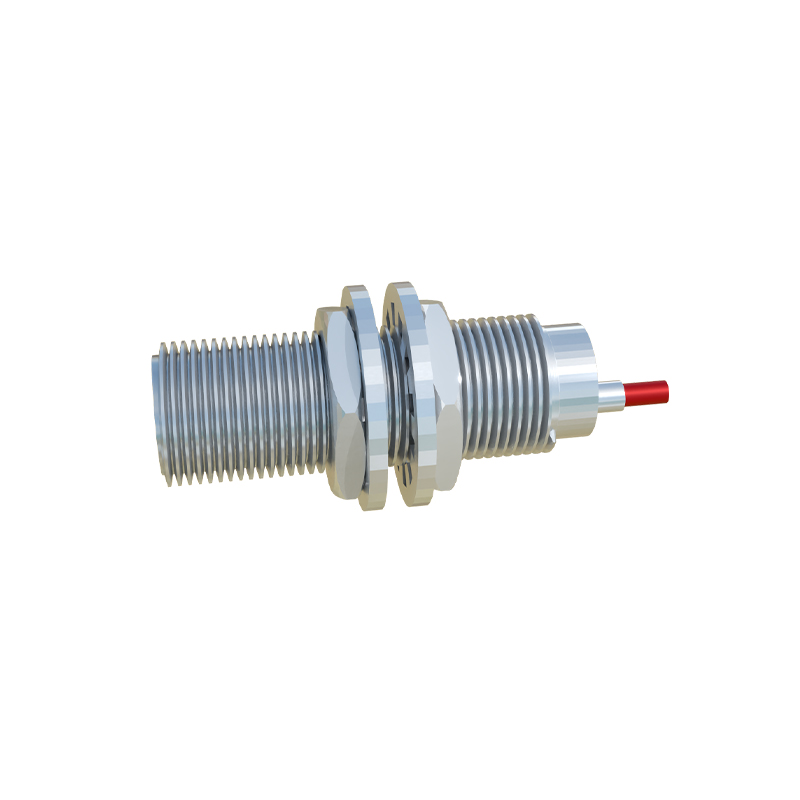
Capacitive proximity sensors create an electrostatic field. They can detect both metallic and non-metallic materials (plastics, wood, liquids, granules) by measuring changes in capacitance. This sensitivity makes them prone to "false" triggers from environmental factors. A common issue is the influence of the mounting background or surrounding materials. If a capacitive sensor is mounted too close to a metal bracket or a conductive surface, that background itself becomes part of the capacitive field. Any change, such as a buildup of dust, moisture condensation, or even a person walking nearby, can alter the capacitance enough to trigger the sensor. Similarly, changes in humidity or temperature can affect the dielectric constant of the air or the target material, leading to unstable sensing.
Photoelectric sensors, which use a light beam (visible red, infrared, or laser), activate when an object interrupts or reflects this beam back to the receiver. Activation without a solid object in the path can occur due to reflective interference. Dust, steam, oil mist, or even intense ambient light can scatter or reflect the beam sufficiently to trigger the receiver. For retro-reflective models using a reflector, any shiny surface (like a forklift or a polished machine part) passing by could momentarily reflect the beam back. For diffuse sensors, a highly reflective background or a change in the color/reflectivity of the conveyor belt might be misinterpreted as a target object.
Beyond sensor-type specifics, several universal factors contribute to non-contact activation. First is the Effective Sensing Distance (Sn). This is the nominal range under specified conditions. Manufacturing tolerances, supply voltage variations, and temperature drifts can cause the actual sensing point to vary, typically by ±10%. A sensor might reliably detect a target at 9mm, but under certain conditions, its field might extend to 9.9mm, just enough to graze an unintended object. Second is electrical interference (EMI/RFI), as mentioned, which can be induced into sensor wiring or circuitry. Third is mechanical misalignment or vibration, which can subtly change the relative position between the sensor and potential interferers.
Troubleshooting such issues requires a systematic approach. Begin by verifying the sensor's specifications: type, sensing range, and target material. Inspect the sensing area for any minute contaminants, supporting structures, or moving parts that could enter the detection field. Check the installation for secure mounting and proper spacing from metal backgrounds (especially for capacitive sensors). Evaluate the electrical environment for sources of noise and ensure sensors and cables are properly shielded and grounded according to guidelines. Many modern sensors feature LED indicators that show switching status; observing these during the unexpected activation can provide vital clues. Sometimes, selecting a sensor with a different technology (e.g., switching from capacitive to ultrasonic for level detection) or one with adjustable sensitivity or hysteresis is the most effective solution.
In conclusion, a proximity sensor activating without physical contact is a normal operational aspect rooted in its physics-based detection method. It underscores the importance of viewing these devices not as