In the realm of industrial automation, reliable and precise object detection is paramount. Among the myriad of sensing solutions available, inductive proximity sensors stand out for their durability and non-contact operation. The E2B-M18KN05, a prominent model from Omron's extensive lineup, exemplifies these qualities. This article delves into the technical specifications, operational principles, and practical applications of this robust sensor, providing a comprehensive guide for engineers and procurement specialists.
The E2B-M18KN05 is an inductive cylindrical proximity sensor with an M18 threaded barrel. Its core function is to detect the presence of metallic objects without physical contact. The "KN" in its model designation indicates a standard sensing distance of 5mm and a normally open (NO) output configuration. This sensor operates on a DC supply voltage, typically ranging from 10 to 30 VDC, making it compatible with most industrial control systems like PLCs (Programmable Logic Controllers). The output is a solid-state NPN transistor, which sinks current to the common negative line when an actuating object is detected.
The working principle is based on electromagnetic induction. Inside the sensor's face, an oscillator generates a high-frequency electromagnetic field. When a metallic target enters this field, eddy currents are induced on the target's surface. This causes a change in the oscillation amplitude within the sensor's coil, which is detected by a threshold circuit. Subsequently, the circuit triggers the output transistor to switch states. This entire process is exceptionally fast and wear-free, as no moving parts are involved. A key feature of the E2B-M18KN05 is its embedded protection circuits. It includes reverse polarity protection, safeguarding the device from damage if power wires are accidentally connected incorrectly. Furthermore, it boasts short-circuit protection, which is crucial for preventing damage to the output transistor in fault conditions, thereby enhancing system reliability and reducing downtime.
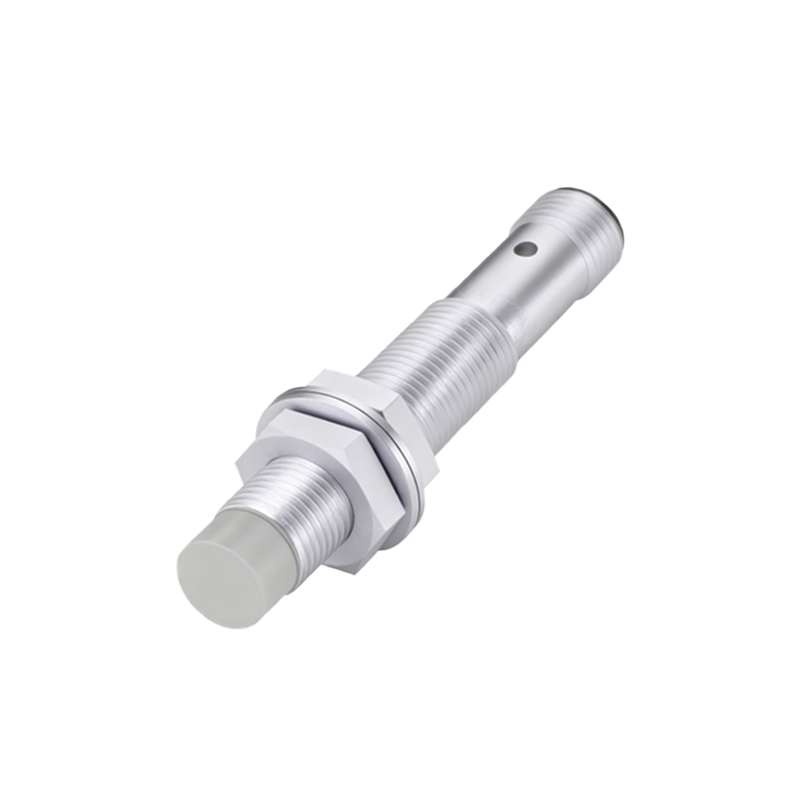
The construction of the E2B-M18KN05 is designed for harsh industrial environments. It features a nickel-plated brass barrel offering good corrosion resistance. The sensing face is made of a specialized plastic (PBT) that allows the electromagnetic field to pass through while protecting the internal components from physical impact and chips. Many variants are available with an IP67 rating, meaning they are dust-tight and can withstand temporary immersion in water, making them suitable for washdown areas in food and beverage or pharmaceutical applications.
When integrating the E2B-M18KN05, several critical factors must be considered. First is the target material. Inductive sensors are primarily sensitive to ferrous metals like iron and steel, which provide the longest sensing range. Non-ferrous metals like aluminum, brass, or copper have a reduced effective sensing distance, often requiring a correction factor. The sensor's datasheet provides specific reduction factors. Second, the target size must be equal to or greater than the sensor's face diameter to ensure reliable detection. For smaller targets, the effective sensing distance decreases. Third, installation is straightforward but requires attention to detail. The sensor should be mounted securely using its M18 threads. It is vital to maintain the specified lateral and flush mounting clearances from surrounding metal to prevent false triggering or a reduced sensing range. The standard wiring configuration involves three wires: brown for positive supply voltage (V+), blue for negative/common (V-), and black for the load output.
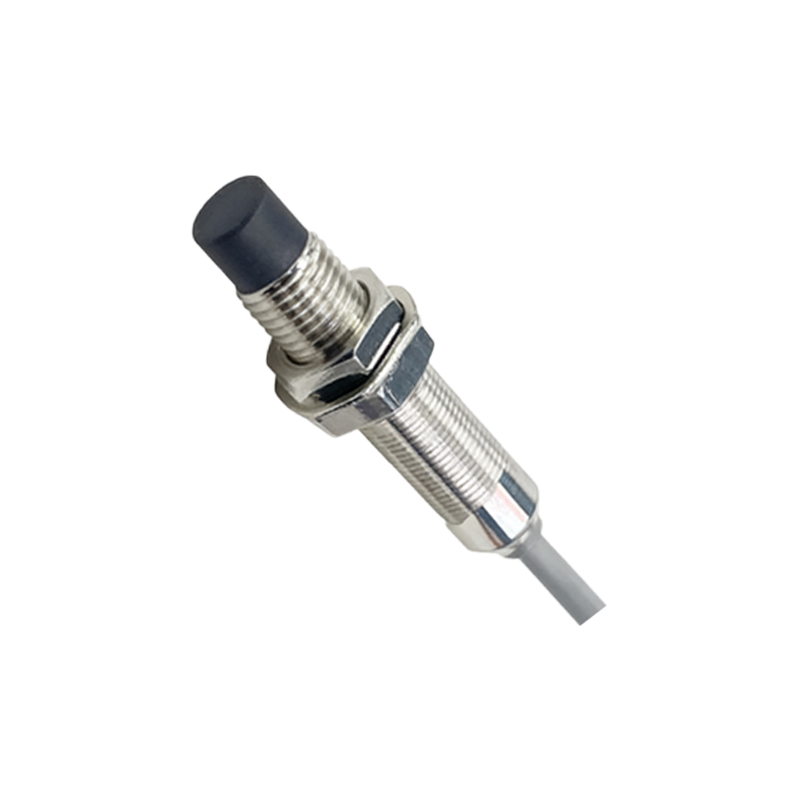
The applications for the E2B-M18KN05 are vast across manufacturing and processing industries. Common uses include position verification of machine parts, such as checking if a cylinder is fully extended or retracted. They are integral in counting metallic objects on conveyor lines, detecting the presence of a workpiece in a machining center, or serving as end-of-travel limit switches. Their robustness makes them ideal for metal stamping, automotive assembly, and packaging machinery.
Selecting the correct sensor involves matching its specifications to the application needs. For the E2B-M18KN05, confirm the required sensing distance, output type (NPN NO), voltage range, and environmental protection rating. Always consult the official manufacturer's datasheet for the most accurate and detailed information, including temperature ranges, response frequency, and housing material specifications. Proper selection and installation ensure optimal performance, longevity, and contribute to a seamless and efficient automated operation, minimizing maintenance interventions and supporting continuous production flow.