Proximity sensors are indispensable components in modern industrial automation, robotics, and countless electronic systems. Their primary function is to detect the presence or absence of an object within a specified range without any physical contact. This non-contact detection offers significant advantages, including high reliability, long operational life, and the ability to function in harsh environments. As a seasoned electrical engineer, understanding the distinct types, operating principles, and application-specific strengths of each proximity sensor is crucial for optimal system design. This guide delves into the main categories of proximity sensors prevalent in the industry.
The most fundamental categorization is based on the underlying detection technology. The first major type is the Inductive Proximity Sensor. These sensors generate an electromagnetic field using a coil and oscillator. When a metallic object (typically ferrous metals like steel or iron, though specific models can detect non-ferrous metals) enters this field, it induces eddy currents. This causes a change in the oscillation amplitude, which is detected by the sensor's circuitry, triggering an output signal. Inductive sensors are exceptionally robust, immune to dust, oil, and moisture, making them ideal for metal detection in manufacturing, machine tools, and automotive assembly lines. Their detection range is limited and varies with the target metal type.
The second primary type is the Capacitive Proximity Sensor. These sensors function by generating an electrostatic field. They can detect both metallic and non-metallic objects—such as liquids, plastics, glass, wood, and granules—by sensing changes in capacitance. When any material with a dielectric constant different from air enters the sensing field, it alters the capacitance of the oscillator circuit, triggering detection. This versatility makes capacitive sensors perfect for applications like level detection in tanks (liquid or powder), material handling, and presence detection of non-metallic products. They can be sensitive to environmental factors like humidity and require careful calibration.
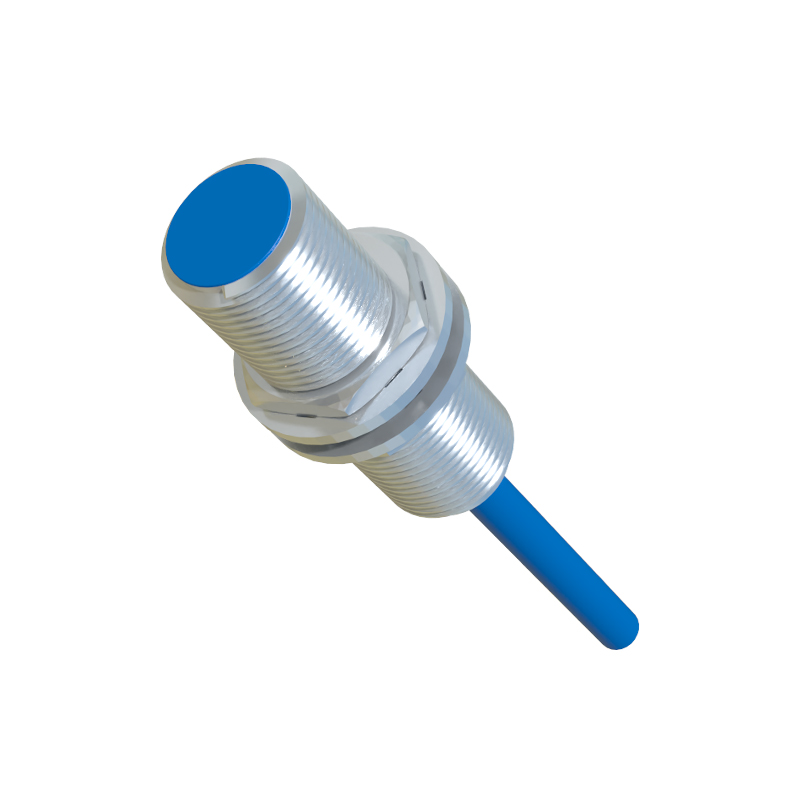
Ultrasonic Proximity Sensors represent a third major category. They operate on the principle of echolocation. The sensor emits high-frequency sound waves (ultrasound) and measures the time taken for the echo to return after bouncing off a target object. By calculating this time-of-flight, the sensor can determine both the presence and the distance to the object with high accuracy. Ultrasonic sensors are excellent for detecting objects of virtually any material, shape, or color, and they perform well in challenging conditions involving dust, smoke, or fog. Common applications include distance measurement, pallet detection, and liquid level sensing in transparent containers. Their performance can be affected by temperature variations and soft, sound-absorbing materials.
Photoelectric Sensors, while often considered a broad family, are a critical proximity detection solution. For proximity (diffuse) mode operation, the sensor contains both a light emitter (usually LED—infrared, red, or laser) and a receiver. It detects an object when the emitted light is reflected back to the receiver. Photoelectric sensors offer long sensing ranges and can detect small objects. They are highly effective for detecting a wide variety of materials but can be influenced by environmental factors like ambient light, color, and surface reflectivity of the target. They are widely used in packaging, material handling, and electronic assembly.
A fifth key type is the Magnetic Proximity Sensor (often Reed Switch or Hall Effect-based). These sensors detect the presence of a permanent magnet. Reed switches use ferromagnetic reeds that close or open in the presence of a magnetic field. Hall Effect sensors produce a voltage output when exposed to a magnetic field. They are extremely reliable for detecting position, particularly in pneumatic cylinders (as limit switches), in safety door interlocks, and in low-speed rotational sensing. Their operation is unaffected by non-magnetic contaminants.
Selecting the appropriate proximity sensor requires a systematic evaluation of several parameters: Target Material (metal, plastic, liquid), Required Sensing Distance, Environmental Conditions (temperature, presence of contaminants), Output Type Needed (PNP/NPN, analog, IO-Link), Switching Frequency, and Physical Size constraints. For instance, an inductive sensor is the default choice for detecting a steel gear tooth, while a capacitive sensor is necessary for monitoring plastic bottle caps on a conveyor. An ultrasonic sensor solves the problem of detecting clear glass panels, and a magnetic sensor reliably indicates cylinder piston position.
In conclusion, the landscape of proximity sensing technology offers tailored solutions for diverse engineering challenges. Inductive, capacitive, ultrasonic, photoelectric, and magnetic sensors each occupy a vital niche. Mastery of their distinct operational principles, limitations, and ideal application domains empowers engineers to design more efficient, reliable, and intelligent automated systems. Continuous advancements in sensing technology, including miniaturization, improved noise immunity, and integrated smart features like diagnostics, further expand the possibilities for innovation in system design and industrial IoT implementations.