In the rapidly evolving industrial automation landscape, proximity sensors have become indispensable components for object detection, positioning, and process control without physical contact. Their market pricing is influenced by a complex interplay of technology, specifications, and supply chain dynamics. This guide provides a detailed analysis of the cost structures for widely used proximity sensor types, helping engineers and procurement specialists make informed budgetary decisions.
Inductive proximity sensors, detecting metallic objects, represent a significant market segment. Basic shielded barrel-style sensors (e.g., M12 or M18 threaded housings) with a sensing range of 2-5mm typically range from $25 to $60 USD per unit for standard models from major global brands like Omron, Sick, or Pepperl+Fuchs. Prices can drop to $15-$35 for economy-tier or generic brands, often at the expense of longevity or environmental ratings. Factors causing price variance include housing material (stainless steel commands a premium over nickel-plated brass), sensing distance (longer-range models cost more), output type (PNP vs. NCP, analog, or IO-Link), and protection class (IP67 vs. IP69K). High-temperature or weld-field immune variants can exceed $100 per unit.
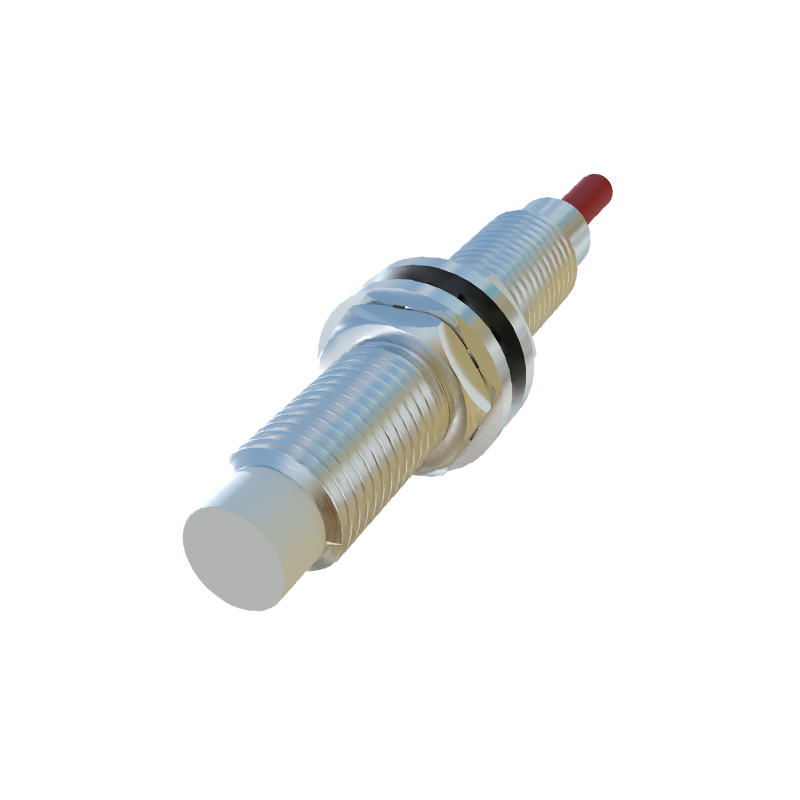
Capacitive proximity sensors, capable of detecting both metallic and non-metallic materials like liquids or plastics, generally carry a 10-25% price premium over comparable inductive models. A standard M30 capacitive sensor might be priced between $40 and $80. Specialized versions for level detection or with built-in sensitivity adjustment potentiometers are at the higher end of this spectrum.
Ultrasonic sensors, offering longer detection ranges (from centimeters to several meters), exhibit the widest price range. Simple, compact ultrasonic sensors start around $50-$75. However, advanced models with background suppression, precise analog output, or extensive parameterization capabilities can easily cost $150 to $400. The integration of advanced diagnostics and digital communication protocols (like IO-Link or PROFINET) is a primary cost driver.
Magnetic sensors (reed or Hall effect types), used primarily for cylinder position detection, are often the most economical. Basic tubular magnetic proximity switches can be found for $10 to $30. However, solid-state designs with higher switching frequencies and better resistance to shock may reach $40-$60.
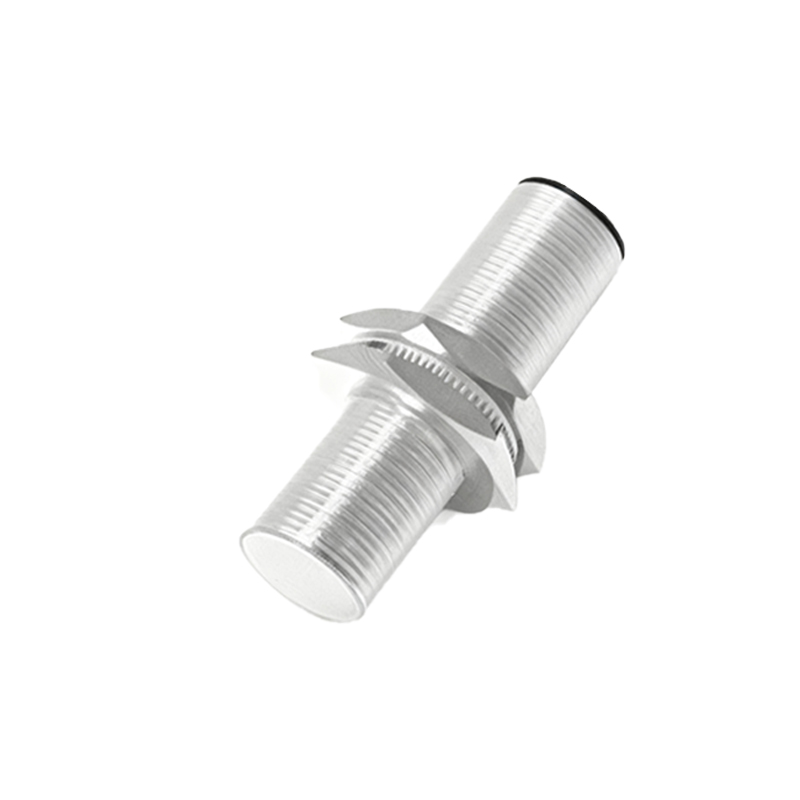
Photoelectric sensors, while not always classified strictly as "proximity" sensors in some taxonomies, are crucial for non-contact detection at greater distances. Diffuse reflective models start around $30-$50, while through-beam or precise background suppression models range from $60 to over $200, depending on range, light source (laser vs. LED), and housing design.
Beyond core technology, several universal factors critically impact market pricing:
1. Packaging and Form Factor: Miniature sensors (e.g., M5, M8) often cost more due to manufacturing complexity. Special shapes for niche applications also increase price.
2. Performance Specifications: Switching frequency, repeat accuracy, and hysteresis affect cost. A high-speed sensor for fast-moving parts will be priced higher than a standard-speed variant.
3. Environmental and Robustness Ratings: Sensors rated for extreme temperatures (e.g., -40°C to 100°C), high pressure washdown (IP69K), or corrosive environments (FDA-approved materials) involve specialized materials and sealing, adding 20-50% to the base cost.
4. Connectivity and Intelligence: The shift towards Industry 4.0 has made connectivity a key price differentiator. A basic sensor with a simple discrete output is the baseline. Adding analog output increases cost. Integrating a digital IO-Link interface, which provides condition monitoring, parameter storage, and process data, typically adds a 15-30% premium but offers significant lifecycle value.
5. Brand and Supply Channel: Established brands with global service networks and long-term availability guarantees command higher prices. List prices are often just a starting point; significant discounts are common for volume OEM contracts or distributor agreements. Lead times, especially for specialized models, can also influence spot-market pricing, with shortages leading to price surges.
6. Certifications: Sensors requiring specific international certifications (ATEX/IECEx for hazardous areas, UL, CE, CCC) undergo additional testing and design constraints, raising manufacturing costs.
In summary, the market for proximity sensors is highly stratified. For standard applications, competitive pricing is fierce, with many reliable options available below $50. For demanding applications requiring extreme robustness, precision, or smart features, investments of $100 to $400 per sensor are justified by enhanced reliability, reduced downtime, and richer data. Procurement strategy should therefore focus on total cost of ownership, factoring in installation, maintenance, and integration ease, rather than solely on the initial unit price. Engaging with technical distributors and evaluating samples for