In the realm of industrial automation, precision, reliability, and durability are non-negotiable. The XN10-T25-DU8 proximity sensor stands as a testament to these principles, offering a robust solution for non-contact object detection in demanding environments. This inductive proximity sensor is engineered to deliver consistent performance, making it a critical component in machinery, conveyor systems, and automated assembly lines.
The XN10-T25-DU8 is characterized by its tubular M12 housing, a standard form factor that ensures easy integration into existing system architectures. The "T25" designation typically refers to its sensing distance, which is 2.5mm for this shielded (flush-mountable) variant. This short-range, precise detection is ideal for applications requiring high accuracy in positioning or counting small metallic objects. The "DU8" suffix often indicates specific electrical characteristics, commonly a DC 3-wire configuration with NPN normally open (NO) and normally closed (NC) switching outputs, providing flexibility for different circuit logic requirements. Operating typically within a 10-30V DC range, it consumes low current, contributing to energy-efficient system design.
The core technology behind the XN10-T25-DU8 is electromagnetic induction. The sensor's face contains an oscillator circuit that generates a high-frequency electromagnetic field. When a metallic target (such as steel, aluminum, brass, or copper) enters this field, eddy currents are induced on the target's surface. This causes a change in the oscillation amplitude within the sensor, which is detected by a threshold circuit. This change triggers the solid-state output switch, signaling the presence of the object without any physical contact. This non-contact operation eliminates mechanical wear, ensuring a long operational life measured in millions of cycles.
Key performance specifications define its application scope. A repeat accuracy within microns guarantees dependable detection cycle after cycle. Its high switching frequency, often up to several kHz, allows it to detect objects moving at high speeds. The sensor is built to withstand industrial challenges, featuring an IP67 ingress protection rating. This makes it resistant to dust and temporary immersion in water, allowing reliable operation in washdown environments or areas with significant particulate matter. Furthermore, it exhibits strong immunity to electrical noise from variable frequency drives (VFDs) or welding equipment, a common concern in factory settings.
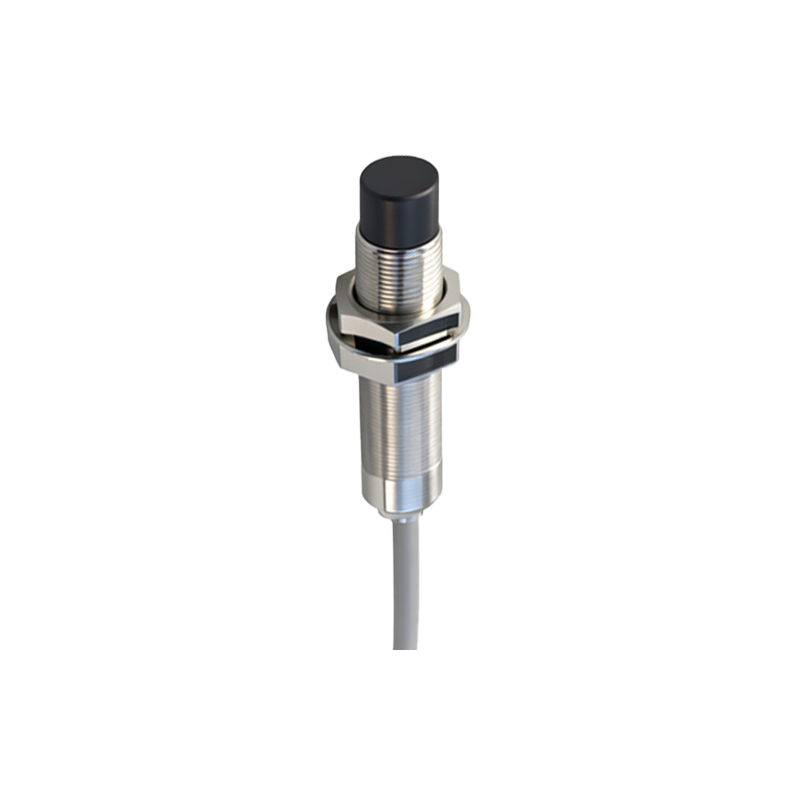
Installation and wiring are straightforward. The M12 threaded barrel allows for easy mounting using a standard locknut. Being a shielded (flush-mountable) type, it can be installed flush in a metal bracket without affecting its sensing characteristics, saving space and protecting the sensing face. The attached PVC cable or connector version provides for quick connection. When wiring, it is crucial to adhere to the manufacturer's datasheet: connect the brown wire (typically +V), blue wire (0V), and the black (NO output) or white (NC output) wire to the controller's input module. Always ensure proper grounding and use conduit in areas with excessive cable strain or exposure to chemicals.
The application potential for the XN10-T25-DU8 is vast. It is perfectly suited for end-of-stroke detection on pneumatic cylinders, verifying the position of machine parts. In packaging and material handling, it counts cans, bottles, or boxes on conveyor belts. It serves as a vital safety interlock, confirming the closure of guards or doors before machine initiation. Within CNC machinery, it provides tool presence verification or workpiece positioning. Its robustness also makes it suitable for harsh applications like mobile hydraulics or metal stamping presses.
For optimal performance, consider these practical tips. Ensure the target material is ferrous or non-ferrous metal within the specified sensitivity range. The sensing distance can vary slightly with different metals; steel is the standard reference. Maintain a clean sensing face, free from buildup of metal chips, grease, or other contaminants that could dampen the electromagnetic field. Always allow a safety margin; do not operate consistently at the absolute maximum sensing range. For mounting in metal, the shielded design is essential to prevent side-effects from the surrounding material. Finally, always cross-reference the exact manufacturer's catalog, as coding conventions like "DU8" can have nuanced differences between producers.
In conclusion, the XN10-T25-DU8 proximity sensor embodies a blend of precision engineering and practical resilience. Its dependable non-contact sensing, rugged construction, and standard interface make it a versatile and trustworthy workhorse for engineers and system integrators. By understanding its operating principles, specifications, and correct installation practices, professionals can leverage this sensor to enhance the reliability, safety, and efficiency of their automated systems, ensuring seamless operation in the interconnected world of modern industry.